The Genre of This Film
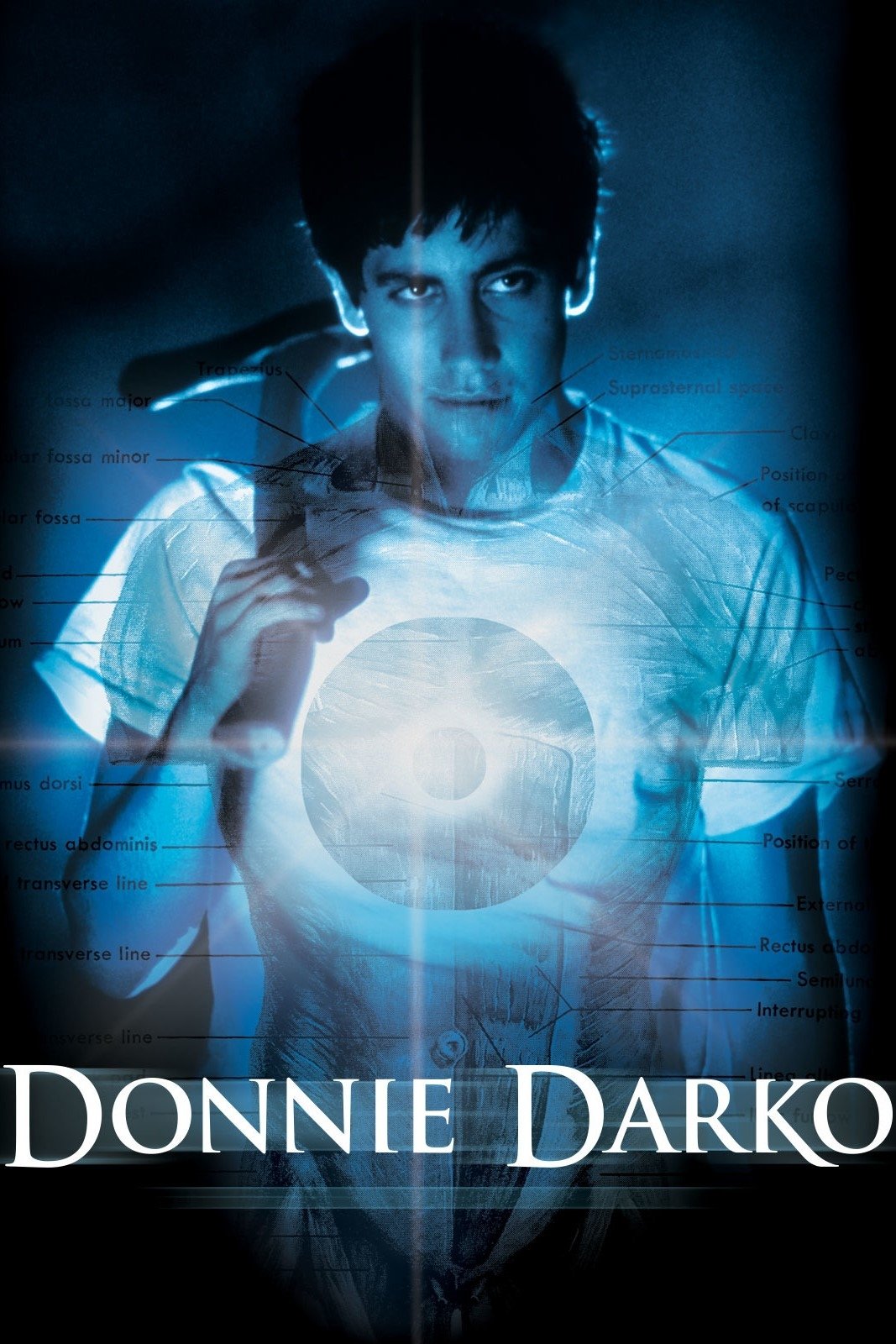
I’ll never forget the first time I watched Donnie Darko; it swept me into a moody labyrinth, where teenage angst collapsed into a twilight world of unraveling reality and unsettling possibility. For me, it remains one of the most deeply evocative science fiction dramas ever made. The film’s marrow is pure science fiction, but not in the shiny, intergalactic sense—instead, it gnaws at the edges of what science fiction means, rooting itself in time travel, alternate timelines, and the intangible weight of cause and effect. I identify it first and foremost as science fiction, but with robustly interwoven elements of psychological drama. The film hinges on the speculative: the idea that fractures in spacetime, wormholes, and quantum conundrums bleed into a somber suburban existence. That’s the beating heart of why, in my analysis, Donnie Darko so firmly belongs to this genre—it dives headlong into the scientific unknown while keeping one foot tethered in the raw emotion of human vulnerability.
Key Characteristics of the Genre
-
Common themes
When I think of science fiction, and especially this flavor that merges with psychological drama, the themes that leap out always swirl around the fabric of reality, the nature of time, destiny versus free will, and humanity’s perpetual struggle to grasp what lies beyond the veil of ordinary experience. I experience these films as inquiries into parallel universes or alternate outcomes, where science is not just backdrop but catalyst for existential crisis. Frequently, I notice a deep undercurrent of questioning—what does it mean to change fate, or even perceive it? Uncertainty, alienation, technological anxiety, and the limits of the human psyche intertwine, often asking both characters and viewers to interrogate the rules governing their world. -
Typical visual style
My strongest associations with the visual style in science fiction, especially those tangled with psychological drama, are muted palettes, atmospheric lighting, and surrealistic flourishes that pull the familiar just out of focus. I repeatedly see filmmakers relying on dreamlike sequences, jarring edits, and subtle visual cues—a flicker of a figure, a shadow in a mirror, a clock running backward—to unsettle me, mirroring the instability of the story’s reality. There’s a kind of visual tension at work: suburban normalcy is rendered eerily alien by low-light cinematography, disorienting camera angles, and a persistent play between the mundane and the extraordinary. Special effects, when used, tend to be understated rather than bombastic; their intrusion into the world is as much about mood and uncertainty as spectacle. -
Narrative structure
Science fiction dramas often forgo traditional linear narratives. Every time I reflect on my experiences with these films, I notice how the structure itself becomes part of the point—stories might leap between timelines, present events out of order, or nest realities within realities. Unreliable narration is also common: I’m forced to question whether what I see is occurring within the film’s physical world or merely in a character’s mind. Twisting frameworks that loop back on themselves, stories that seed mysteries before offering answers, and conclusions that deliberately deny closure all dominate my memory of the genre. The narrative is not only what drives the plot but also what forces me, as an audience member, to participate in reconstructing meaning. -
Character archetypes
For me, the genre comes alive through a handful of recurring archetypes: the troubled visionary (plagued by visions or theories that distance them from their community), the skeptical authority figure (anchored in mathematics, science, or conventional logic), and the enigmatic guide (often leading the protagonist toward hidden truths or deeper chaos). I recognize outsiders—the ones unable or unwilling to assimilate into their society—as a hallmark of science fiction drama. Secondary characters frequently serve as foils or manifestations of the protagonist’s anxieties, whether as family members baffled by inexplicable events, friends lured into the protagonist’s orbit, or even spectral figures whose purpose only emerges as the plot unfurls.
How This Film Exemplifies the Genre
What has always floored me when observing Donnie Darko is the way it so thoroughly embodies these genre-defining qualities—not just borrowing sci-fi motifs, but transforming them into something uniquely personal and threatening. Right from the opening minutes, I’m thrust into Donnie’s disorienting world, where the line between dream and waking life dissolves through a mixture of haunting imagery, cryptic dialogue, and synchronized oddity. Time travel isn’t window dressing; it’s the very framework that structures both the narrative and Donnie’s own psychological turmoil. The recurring symbol of the jet engine and the spectral presence of Frank the rabbit aren’t just plot devices but keys that unlock the unsettling logic governing Donnie’s universe. As I watch, I find the film’s refusal to offer definitive answers is not a flaw but a deep commitment to the genre’s spirit—forcing both character and viewer to wrestle with uncertainty, the tantalizing prospect of alternate outcomes, and the terrifying freedom of choice.
The film’s visual sensibility is equally devoted to its genre roots. Every shadow-drenched hallway, every underlit classroom, and every gently distorted camera angle underscores a hidden threat lurking beneath the surface of suburbia. The mood is saturated by the sense that time is actively warping around Donnie; clocks, calendars, and date stamps intrude into otherwise ordinary scenes, their presence ominous and surreal. Effects like the liquid-silver “spears” that guide Donnie toward possible futures are subtle enough to feel almost hallucinogenic, reinforcing that in this universe, even science itself is unsteady.
When I track the film’s structure, I’m met with a recursive loop—days reset and replay, meaning is distributed in scattered clues, and the plot only gradually knits itself together. My experience is one of gradually dawning comprehension, where the end circles back to the beginning with grave, emotive closure. Yet the ambiguity lingers, the story refusing to resolve itself with clinical neatness—just like so many of the strongest works in science fiction drama.
At its center, Donnie models the archetypal troubled visionary, standing both inside and outside his world, grasping for understanding. The adult authorities—teachers, therapists, parental figures—do not possess the answers, operating instead as anchors for the rational expectations of society. Frank is the ultimate enigmatic guide, operating outside reality but shaping Donnie’s every step. To me, this configuration of archetypes is the genre at its most potent.
Other Essential Films in This Genre
- Primer (2004) – This film stands out whenever I reflect on rigorously cerebral science fiction. It explores time travel through a fragmented, elliptical narrative, demanding that viewers reconstruct both events and causality. Like Donnie Darko, it challenges not only my understanding of the plot but the very reliability of what I’m watching.
- Stalker (1979) – Tarkovsky’s take on the genre strips away most trappings of spectacle, focusing instead on metaphysical anxiety. Its central journey through “The Zone”—a mysterious, mutable landscape that warps mind and matter—reminds me of how the best science fiction drama uses setting and ambiguity as conduits for existential questioning.
- Coherence (2013) – Whenever I revisit science fiction that bends time and space, I’m reminded of how effective minimalism can be. Coherence traps its characters in a single house during a cosmic anomaly, creating an escalating nightmare of alternate realities. The film’s tense, reality-shifting construction taps directly into the unnerving, speculative energy that makes Donnie Darko so resonant for me.
- The Butterfly Effect (2004) – I often pair this film with Donnie Darko in my mind, as both examine how seemingly trivial changes ripple through time. It lays out the science fiction drama formula with raw emotional stakes and a narrative built around recursive choices and regret.
Why This Genre Continues to Endure
From my perspective, the lasting allure of science fiction drama lies in its ability to let me wander between certainty and doubt, hope and despair. There’s something deeply gratifying in peeling back the layers of what-if, as if the act of watching is itself a leap into a parallel universe. Films like Donnie Darko persist because they speak not just to the future of humanity, but to my own individual longing to see beneath the surface of things—to believe that hidden currents might sculpt my fate.
As technology and science evolve in the real world, I find the questions woven through this genre have never felt more urgent: What is real? Who controls the future? What responsibilities come with the power to alter events, even in small ways? The blend of psychological insight and speculative storytelling creates a rich soil for emotional engagement, encouraging me to empathize with flawed, searching protagonists as they navigate an uncertain cosmos.
Above all, science fiction drama endures because it provides a mirror for the magnitude of our most personal fears: the fear that reality isn’t fixed, that identity might fracture, that the universe responds to our choices. These films invite us not only to observe other worlds, but to revisit our own—rewriting, reliving, and, perhaps, understanding the shape of our lives through the lens of cinematic imagination.
If you’re interested in how viewers respond beyond technique, you may want to explore audience and critical reception.
🎬 Check out today's best-selling movies on Amazon!
View Deals on Amazon