The Genre of This Film
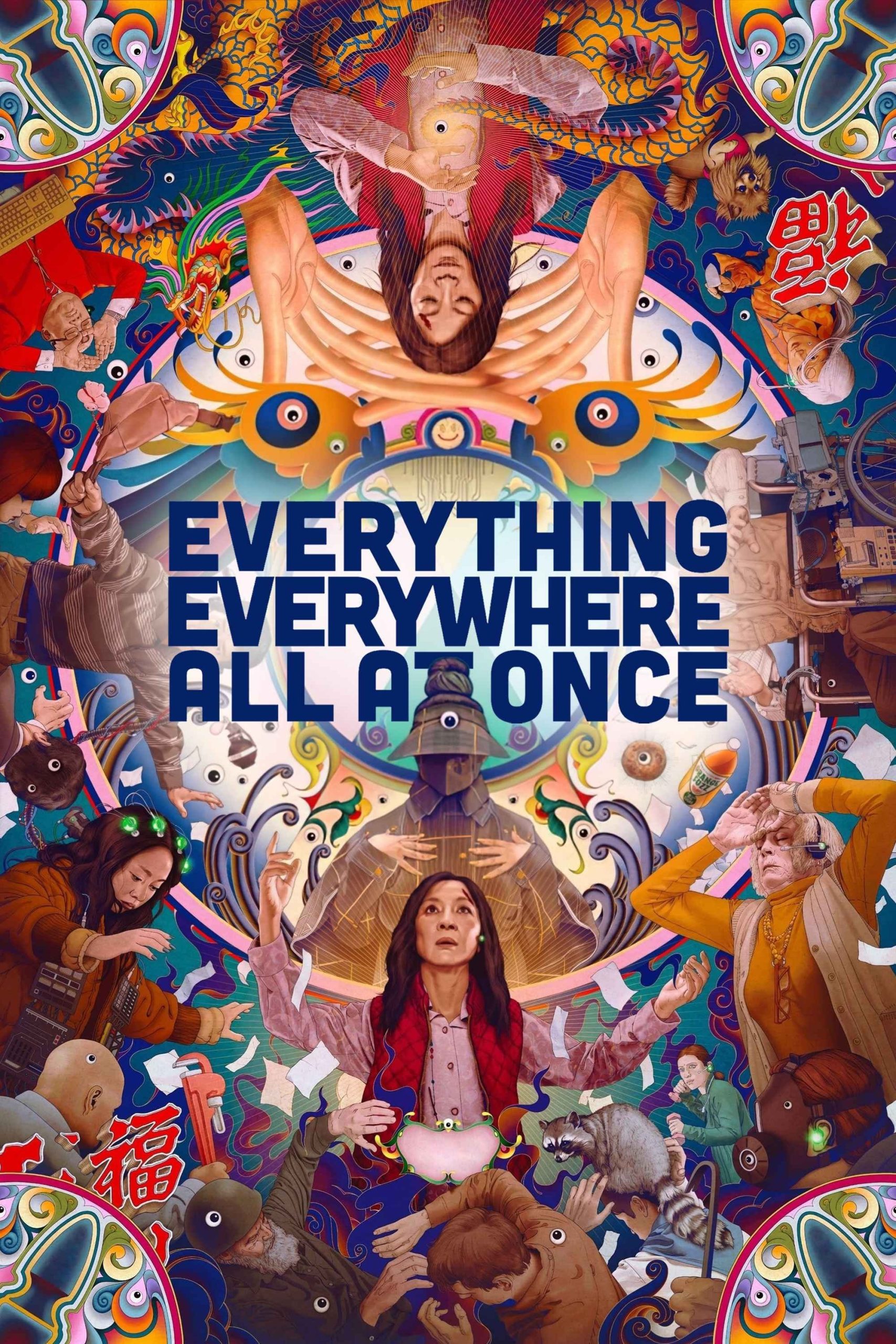
From the very first scenes of “Everything Everywhere All At Once,” I found myself enveloped by a playful chaos that felt simultaneously unfamiliar and intimately recognizable. To me, the film is above all a work of science fiction—specifically, the subcategory of multiverse sci-fi. While it brims with elements of absurdist comedy, action, fantasy, and even family drama, I see its most persistent qualities rooted in science fiction’s core: the fearless use of speculative ideas to unravel the boundaries between the possible and the impossible. Its depiction of parallel universes that exist simultaneously and a central character who lives multiple lives across infinite realities solidifies it for me as an inspired exploration of sci-fi, making the strange feel personal and the cosmic distinctly human.
Key Characteristics of the Genre
- Common themes
- Typical visual style
- Narrative structure
- Character archetypes
I’ve always felt that science fiction thrives on probing questions that linger just outside the reach of everyday life. The genre constantly asks: Who would I be if my choices changed? Where might our technology take us? What does it really mean to be alive? In the multiverse subgenre, I notice the most tantalizing theme is the existence of infinite versions of each person and the resulting questions of identity, consequence, and connection. Often, it’s about confronting the fact that reality is just one of many, and choices have implications not just in one life but potentially everywhere.
Whenever I watch a science fiction film—especially those dabbling in alternate realities—I expect to be dazzled by visuals that defy day-to-day experience. The genre has evolved from metallic starships and neon cityscapes to mind-bending transitions and laws of physics casually tossed aside. I’ve found that filmmakers use visual storytelling to bring these unreal concepts to life: shifting color palettes to denote different universes, rapid-cut editing to show multidimensional travel, and practical or digital effects that warp space, time, and perception. It’s a genre where innovation doesn’t just support the story—it often is the story.
The narrative structures I encounter in science fiction often shrug off linear progressions. Stories become puzzles with interlocking pieces: flashbacks, parallel timelines, fractured or circular storytelling, and constant interruptions by dreams or hallucinations. Particularly in multiverse films, I see narratives that flow like branching rivers, with choices spawning possible worlds that spill into and over each other. This structure invites me, as an audience member, to become an active participant—piecing together how one reality influences the next and what it means for the characters at the center of this complexity.
In my experience, science fiction is home to the explorer, the everyperson thrust into the unknown, and the mentor or guide who elucidates the new rules of the world. There are often antagonists whose motivations—sometimes abstract, sometimes personal—represent existential threats. In multiverse stories, I see characters who are simultaneously ordinary and extraordinary. Their very ordinariness is subverted by their potential to exist in myriad forms across realities. This not only creates room for self-discovery but also for empathetic conflict, as variants of the self become both ally and adversary.
How This Film Exemplifies the Genre
Every time I revisit “Everything Everywhere All At Once,” I’m struck by how precisely and exuberantly it embodies what I love about science fiction, with the multiverse at the heart of its story. The film doesn’t simply toss around speculative ideas; it runs wild with them, crafting a series of interconnected realities that collide, blend, and spiral out of control. Its central conceit—that every human decision spawns a branching universe—lets me witness a kaleidoscope of possibilities where a laundromat owner can, in another world, wield martial arts prowess or experience romance with sentient rocks. I find the film’s courage to shift between wildly different realities, sometimes within a single scene, is a quintessential demonstration of science fiction’s drive to disrupt reality and expand my sense of what can be depicted on screen.
I’m continually delighted by the film’s commitment to its visual inventiveness. Split screens, stark color shifts, rapid jump cuts, surreal gags involving googly eyes and hot dog fingers—it all screams of a genre unafraid to revel in the strange. For me, this visual palette isn’t superficial spectacle but an extension of what it feels like to live with endless possibilities and compressed timelines. The relentless, almost frantic energy of the narrative structure, hopping from universe to universe, pulls me in with the familiar disorientation I associate with science fiction at its most ambitious. It renders the dizzying scope of “what if?” into a tangible, sometimes overwhelming experience.
As for the characters, I see all the archetypes of classic science fiction played with and reinvented. The protagonist, Evelyn, is that accidental explorer, a woman rooted in mundanity until she is catapulted through a maze of realities by crisis. The film’s multiverse agent/mentor manifests in increasingly absurd guises (her husband, an alternate self, and even her nemesis). The antagonist, fractured across planes, reflects Evelyn’s own internal fears, making the threat existential and intimate all at once. Watching her tangle with versions of herself underscores one of my favorite traits in this genre: the notion that the greatest alien landscape we must navigate often exists within.
But what absolutely seals this as a top-shelf science fiction film, in my personal taxonomy, is how its speculative premise is ultimately employed to dig deep into universal questions: alienation from loved ones, regret, forgiveness, and the search for meaning in a universe that may or may not care about our tiny lives. By using the multiverse to dramatize inner and outer journeys simultaneously, the film reaffirms for me why science fiction is such a uniquely powerful genre for holding a funhouse mirror up to our reality.
Other Essential Films in This Genre
- Eternal Sunshine of the Spotless Mind (2004) – This film has always struck me as a deeply inventive sci-fi romance that uses speculative memory-erasing technology to illuminate heartbreak, regret, and the persistence of love. Like “Everything Everywhere All At Once,” it uses an outlandish premise not as a gimmick but as a means to probe personal truth. I cherish the way its looping, fragmented structure mimics the way we inhabit and revisit our own memories.
- Primer (2004) – If “Everything Everywhere All At Once” is a maximalist plunge into infinite universes, “Primer” takes a minimalist, intellectual approach to parallel timelines and causality. For me, the film’s meticulous narrative complexity challenges me to analyze and re-analyze each scene for hidden layers, echoing the science fiction tradition of engaging the mind as much as the emotions.
- Coherence (2013) – Few films have left me as unsettled by the concept of the multiverse as “Coherence,” which unfolds over a single night where realities split and bleed into each other after a strange cosmic event. Each time I watch, I feel a creeping dread as ordinary people collide with parallel versions of themselves, evoking the genre’s preoccupation with identity and the butterfly effects of choice.
- Cloud Atlas (2012) – My fascination with the shifting tides of humanity across time and place is fully indulged by “Cloud Atlas.” I admire the film’s intricate structure and universe-spanning ambition, as well as its insistence that individual lives, however small, are connected across centuries and realities. It embraces both science fiction and the metaphysical, much like “Everything Everywhere All At Once.”
Why This Genre Continues to Endure
I often reflect on why science fiction, especially stories involving multiverses and speculative realities, remains so durable in the cultural imagination. For me, it comes down to the genre’s unmatched ability to turn abstract questions into palpable experiences. Every time the familiar is twisted—when everyday settings become portals, when a simple apartment is also the gateway to infinite lives—I feel a thrill that stretches my imagination and challenges my assumptions about the universe and myself. Multiverse stories specifically offer a cathartic space to grapple with regret, desire, and the roads not taken. In a world where I’m constantly faced with major and minor choices, seeing these decisions played out across infinite canvases makes the personal feel cosmically significant.
The genre’s adaptability is another reason I keep coming back. Every generation seems to find its anxieties and dreams reflected in new forms: postwar fears in alien invasions, millennial uncertainty in virtual realities, contemporary restlessness in fractured timelines and digital existences. When a film like “Everything Everywhere All At Once” bursts onto the scene, it reinvents genre conventions with inventive visuals, boundary-blurring narratives, and a willingness to court the absurd alongside the profound. This is a genre that remains porous and hospitable to new influences, whether philosophical, technological, or emotional. I sense that people crave stories that can hold both their wildest imaginations and their deepest fears under the same roof.
At its best, science fiction gives me a safe laboratory to experiment with the very fabric of reality—where consequences unfold and innovations can blossom, where danger sharpens the senses yet hope glimmers all the brighter. The multiverse specifically taps into a uniquely modern anxiety: the pressure of infinite choice and the daunting recognition that every action spawns a universe of outcomes we’ll never know. These stories help me navigate a rapidly changing, often overwhelming world by offering both escape and illumination. In witnessing countless realities, I end up learning more deeply about my own.
If you’re interested in how viewers respond beyond technique, you may want to explore audience and critical reception.
🎬 Check out today's best-selling movies on Amazon!
View Deals on Amazon