
Film Movement Context
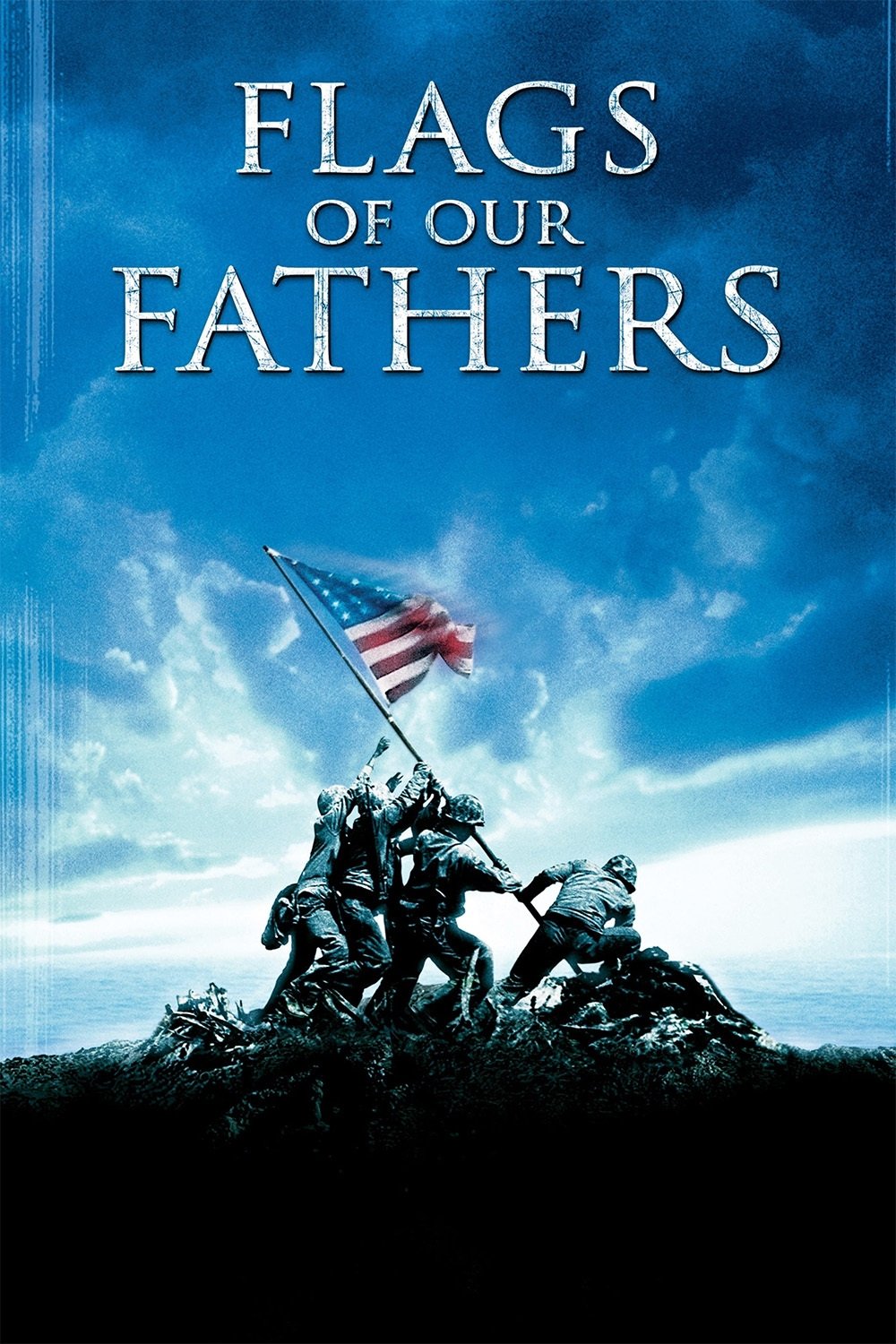
Every time I revisit Flags of Our Fathers, I’m struck by how deeply it burrows into the ambiguities of memory and myth, which, for me, make it an exemplary work within the tradition of the postclassical war film. This isn’t just a war movie in the conventional sense; I see it as a conscious product of the Revisionist War Cinema movement—a lineage that interrogates nationalist narratives, deconstructs heroism, and leverages modern cinematic techniques to question what history chooses to celebrate and forget. When I watch Clint Eastwood’s approach here, I experience a deliberate refusal to glorify war or patriotic spectacle. Instead, I witness a film that uses introspective narrative devices, cross-cutting timelines, and psychological realism—elements that have come to define post-Vietnam American war cinema but, in Eastwood’s hands, are coupled with an almost elegiac sensitivity. To me, Flags of Our Fathers belongs as much to the legacy of films influenced by modernism and New Hollywood’s skepticism as it does to any classicist tradition of the war genre.
Historical Origins of the Movement
Reflecting on how this movement emerged, I always connect it to the shifting tides of American cultural history, especially in the aftermath of Vietnam and Watergate. For me, the war film as a genre underwent a seismic reorientation after the late 1960s. Earlier war films—John Ford’s The Long Gray Line, Howard Hawks’ Sergeant York, or even the patriotic mythmaking of Sands of Iwo Jima—thrived on clear moral dichotomies and collective sacrifice. But as I see it, the traumas of Vietnam shattered the audience’s faith in those confident narratives. The so-called “Revisionist” wave, ignited by films such as The Deer Hunter (1978), Coming Home (1978), and later, Oliver Stone’s Platoon (1986), I think, was as much about dismantling myths as it was about capturing chaos and disillusionment. This movement harnessed nonlinear timelines, unreliable narrators, and an undercurrent of psychological unease. It emerged in answer to a national identity crisis—I’ve always sensed in these films the tension between the stories America wants to tell about itself and the realities its veterans and victims remember. By 2006, when Flags of Our Fathers unfurled its somber banners, the movement had matured: American filmmakers now wielded irony, ambiguity, and nonlinearity not as mere formal tricks but as ethical responses to the impossibility of uncomplicated heroism.
This Film’s Contribution to the Movement
What floors me about Flags of Our Fathers is the way it both inherits and advances the language of Revisionist War Cinema. Every layer of its narrative structure—the jump cuts between battlefront and home front, the shifting perspectives of its central characters, the blurred divide between propaganda and lived experience—strikes me as a declaration of mistrust in any single, authoritative version of history. I’m particularly affected by Eastwood’s willingness to hold the audience at a remove: we aren’t allowed to settle into comfortable admiration for the flag-raisers, nor are we handed villains to hate. The film’s formal decisions—bleached color palette, near-documentary handheld sequences punctuated by sudden, operatic violence—make every memory fragile and every act of valor provisional. I read this as Eastwood’s argument that the mechanisms of mythmaking (the famous flag photo, the war bonds tour) are not just accidental byproducts but intentional instruments of power. There’s a subtlety here that I haven’t always found in American war cinema; the characters’ psychological wounds are rendered as much through silent exchanges and haunted faces as through explicit confession. In my experience, this refusal to monumentalize is what keeps the film breathing alongside the most self-critical works in the genre.
Crucially, I see Flags of Our Fathers as an investigation into the costs—personal and societal—of turning individuals into national symbols. Where a John Wayne film might trumpet the nobility of sacrifice, Eastwood makes me feel the suffocating isolation that comes when a man’s private pain is exploited for public consumption. The narrative’s recursive structure, which loops from 1945 to the present and back again, echoes for me the ways trauma persists, returning unbidden. Stylistically, I appreciate how Eastwood’s pacing resists melodrama; even the grandest battles are undercut by sudden reminders of human vulnerability. Although the film reverberates with echoes of Spielberg’s realism in Saving Private Ryan, I think Eastwood’s gaze is colder and more analytical—he’s less intent on immersive spectacle than on exposing the manipulations beneath the surface. In my reading, the movie becomes a challenge: it asks me not simply to remember but to interrogate what, how, and why I remember.
Influence on Later Genres and Films
- Subversion of the Hero Myth—Legacy in War and Biopic Genres – My lasting impression of Flags of Our Fathers is its ruthless deconstruction of the hero archetype. In the years since its release, I’ve noticed the ripple effects of this approach in films like Kathryn Bigelow’s The Hurt Locker and David Gordon Green’s Stronger. These works pick up Eastwood’s thread by zeroing in on the psychological and moral instability beneath heroic iconography. The narrative scaffolding once used to elevate national heroes now crumbles, making way for intimate, character-driven critique. The effect, in my experience, is a war genre willing to treat heroism as a problematic, constructed idea—not a birthright.
- Multilinear Storytelling in War Films and Beyond – I can’t overstate how significant Eastwood’s cross-cutting timelines have become outside traditional war cinema. Watching filmmakers like Paul Greengrass and Christopher Nolan deploy non-linear structures in United 93 or Dunkirk, I see the same impulse to fracture time and complicate causality. It’s a storytelling evolution I associate with postmodernism, where the “truth” is kaleidoscopic and contested. The complexity of Flags of Our Fathers (and its companion piece, Letters from Iwo Jima) proved to many younger directors that emotional resonance is often found in dissonance and montage, not linearity.
- Humanizing the “Homefront”—A Broader Turn in Genre Films – One of the aspects I value most in Eastwood’s film is its attention to the emotional aftermath of war—the broken families, the hollow celebrations, the bureaucratic exploitation. This dual focus later materializes in movies like Ang Lee’s Billy Lynn’s Long Halftime Walk or even Debra Granik’s Leave No Trace. I see a clear throughline: revisionist works now routinely follow veterans as they attempt to reintegrate, emphasizing the dissonance between public expectation and private reality. Where many earlier war movies ended with victory or defeat on the battlefield, more recent films inspired by Eastwood insist on returning home—sometimes to interrogate, often to mourn.
The Movement’s Lasting Impact
If anything, the endurance of Revisionist War Cinema lies for me in its moral and aesthetic skepticism. Watching Flags of Our Fathers, I’m reminded that cinema is not, at its best, a tool simply for commemoration; it’s a medium positioned to prod the wounds of national memory and to expose the machinery of myth. When I think about why this movement continues to shape American filmmaking, I focus on the way it creates space for voices and stories previously marginalized by patriotic narrative. The movement allows me—allows us—to recognize that the past is neither pristine nor settled. Through formal innovation, narrative uncertainty, and a ruthless allergy to propaganda, films like Eastwood’s encourage a mature relationship with history. They recognize the power of cinema not just to reflect the past but to interrogate it, rendering every victory provisional and every myth open to challenge. For audiences jaded by easy narratives, I believe the Revisionist tradition remains a potent—and necessary—presence.
To connect style and technique with broader context, you may find these perspectives useful.
🎬 Check out today's best-selling movies on Amazon!
View Deals on Amazon