
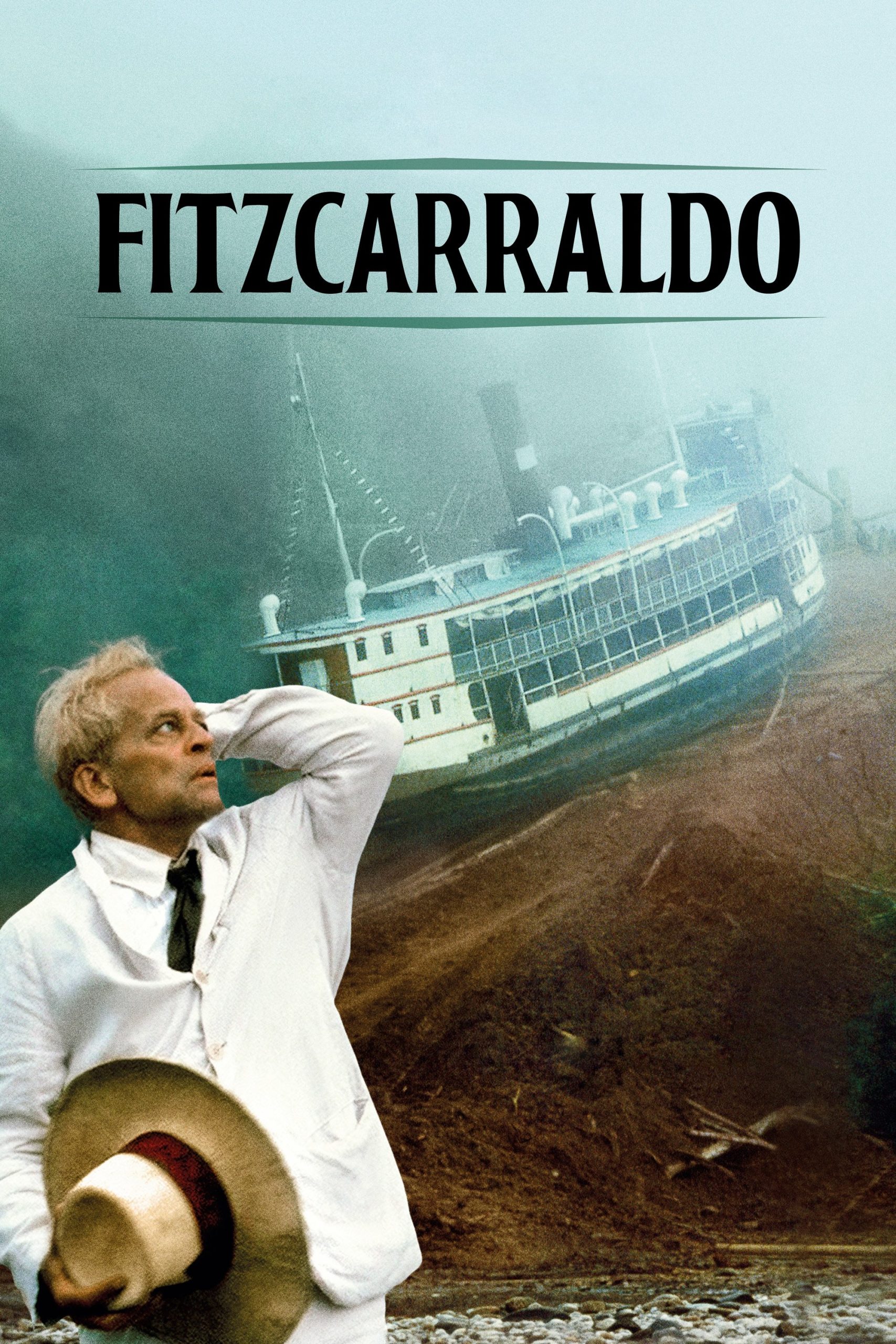
The Genre of This Film
When I first encountered Fitzcarraldo, I was immediately captivated by the sense of adventure that pulses through every frame—but not in the swashbuckling, escapist sense of the word. To me, Fitzcarraldo is, at its core, an adventure drama. I say this because the film is deeply rooted in personal obsession, the challenges of the unexplored, and an elemental confrontation between humankind and nature. It’s not just a physically perilous journey; it’s an emotional and existential quest. While the term “adventure” often brings to mind exotic locations and epic undertakings, what draws me to classify this film as such is how director Werner Herzog uses those elements to frame a nearly mythic struggle, guided by ambition, risk, and the pursuit of the impossible. The drama aspect is inseparable here—without the heightened stakes of internal desire and collapse, the adventure would lose its extraordinary tension. My experience of Fitzcarraldo is defined not simply by geographic movement, but by the way every passage, setback, and triumph is loaded with intensity and soul-searching. This combination impresses upon me that Fitzcarraldo belongs most rightfully to the adventure drama genre.
Key Characteristics of the Genre
-
Common themes
Whenever I immerse myself in adventure drama films, several distinct themes consistently emerge. First, there’s the relentless pursuit of a dream or goal—a quest that cannot be abandoned, no matter the obstacles. I notice an emphasis on the individual versus the unknown, where external actions mirror internal struggles. These films thrive on the tension between civilized ambitions and wild, untamed environments. The resilience of the human spirit is always front and center, as is the cost of obsession. Loss, sacrifice, and transformation become inevitable. In adventure dramas, the primary challenge is rarely the physical terrain; rather, it’s the psychological and spiritual terrain that defines the narrative’s stakes. For me, adventure drama grapples with the boundaries of ambition, the seduction of the unattainable, and the intricate dance between hope and futility. -
Typical visual style
When I watch adventure drama films, the visuals never feel static or subdued. I’m struck by a kinetic energy—a sense of perpetual movement or struggle, whether in sweeping jungle vistas, mountainous landscapes, or stormy seas. The cinematography often favors wide shots that dwarf human figures against overwhelming backdrops, reinforcing how small and fragile people appear against nature or fate. Color palettes are usually dictated by the natural world itself: lush greens, muddy browns, riverine blues, and the stark contrast between human artifice and organic wildness. Camera work tilts toward the immersive, sometimes verging on documentary rawness, giving me a tangible sense of the environment’s indifference and the characters’ isolation. In the adventure drama, technical imperfections often become assets—sweaty close-ups, handheld shakiness, and the play of harsh natural light all lend authenticity and immediacy to the journey depicted. -
Narrative structure
In my experience, the structure of adventure dramas aligns closely with the classic quest form: a protagonist with a burning motive sets out to achieve the seemingly impossible, encounters escalating obstacles, and is repeatedly tested both physically and morally. Storylines rarely follow a straight line; instead, they zigzag through moments of hope and despair, marked by shifts in fortune and unexpected complications. The films often begin with a period of set-up or longing, then plunge into the journey, escalating toward one or more climactic challenges that threaten to break the protagonist’s will. The ending may offer triumph or tragedy, but it always leaves me reflecting on the growth, wounds, or wisdom acquired along the way. -
Character archetypes
The genre reliably orbits around particular character types that I find endlessly fascinating. At the center is the dreamer or obsessive: someone who sees what others cannot, and who is willing to risk everything for a vision or idea. Supporting characters often include loyal companions—sometimes true believers, sometimes skeptical pragmatists—whose own fates become intertwined in the protagonist’s quest. The antagonist is rarely just a villainous figure; more often it is the landscape, fate, or the protagonist’s own limitations and flaws. Indigenous or local peoples are sometimes present, forced into uneasy alliances with the questing outsider. I frequently see characters whose motives are blurry, caught between cooperation and self-interest, amplifying the story’s tension. The web of relationships in adventure dramas deepens the conflict and adds layers of complexity to the journey.
How This Film Exemplifies the Genre
What stands out most to me about Fitzcarraldo’s fit within the adventure drama genre is how uncompromisingly the film immerses me in both the grandeur of the undertaking and the feverishness of personal aspiration. Fitzcarraldo isn’t simply a man on a river; he’s a man possessed by an impossible vision, driven to bring opera to the heart of the Amazonian wilderness. The narrative never strays into pure adventure or spectacle for its own sake. Instead, every trial is a crucible that exposes the costs and delirium of obsession. I find the central journey—hauling a steamship over an unforgiving mountain between rivers—to be a perfect encapsulation of what defines this genre. The geography is punishing, but so, too, is the protagonist’s fanatic will, clashing against setbacks that seem ordained by both nature and destiny.
I am continually struck by the film’s visual commitment to authenticity. The sweeping shots of dense jungle—rendering Fitzcarraldo and his cohorts as tiny figures against an overwhelming green infinity—situate humanity as both infinitesimal and wildly ambitious. Herzog’s signature willingness to shoot in dangerous, uncontrolled environments underscores the genre’s devotion to verisimilitude. There’s almost a fever-dream quality to the imagery: swirling mist, the cacophony of the rainforest, the staggering bulk of the ship itself. These visuals emphasize the physicality and unpredictability of the journey, which is, for me, the essence of adventure drama.
On a structural level, Fitzcarraldo follows the arc I crave in my favorite adventure dramas. It begins with a near-absurd longing—bringing European opera to the Amazon—then progressively raises the stakes. Each setback is a test of character. There is little romanticization; instead, the ordeal lays bare the quixotic nature of dreams. Watching Fitzcarraldo, I found myself as enthralled by the character’s vulnerability and instability as by his determination. The film draws me into a narrative orbit where personal failure is just as likely as triumph, with moments of transcendence existing alongside disaster.
What particularly moves me is the archetypal power of the characters. Fitzcarraldo himself embodies the genre’s signature dreamer, while the people who surround him—his steadfast lover, the skeptical river crew, the indigenous workers—are pulled, willingly or not, into the whirlpool of his ambition. This dynamic between the main character and those drawn into the adventure complicates the journey at every turn. The film never loses sight of the toll the adventure exacts, forcing me to reckon with questions of motivation, consequence, and what it actually means to achieve the unattainable. For these reasons, Fitzcarraldo doesn’t just exemplify adventure drama; it sets a gold standard for the genre by refusing to separate external journey from internal upheaval.
Other Essential Films in This Genre
- Aguirre, the Wrath of God (1972) – For me, Herzog’s earlier film is inseparable from Fitzcarraldo when thinking about the adventure drama genre. Aguirre explores the madness of conquest and ambition amid the South American wilderness. I’m drawn to how it blends physical hardship with existential crisis, using the Amazon itself as a force of opposition and metaphorical testing ground for the protagonist’s delusions.
- The African Queen (1951) – Whenever I think back to this classic, I remember how it injects adventure drama with a blend of eccentricity and vulnerability. Watching the mismatched duo travel by boat through wartime Africa, I’m reminded how adventure films can balance danger, personal growth, and understated romance. The relentless river journey and evolving relationship between the lead characters mirror the genre’s focus on overcoming external and internal barriers.
- The Wages of Fear (1953) – I find myself gripped anew each time I watch this riveting tale of men driving nitroglycerine-laden trucks across hazardous terrain. The film’s slow-burn tension and focus on survival illustrate how adventure drama thrives on real physical peril intertwined with psychological breakdown. The risk isn’t just explosive; it’s existential, reminding me that the true journey is often inward.
- The Lost City of Z (2016) – In this more recent entry, the obsession with discovery is once again at the heart of the experience. The film follows Percy Fawcett’s exploration of the Amazon and gradually dissolves the line between noble quest and destructive fixation. I appreciate how it updates the genre’s traditions—using immersive location work and moral ambiguity—while honoring the timeless allure of the unknown.
Why This Genre Continues to Endure
Whenever I reflect on why adventure dramas like Fitzcarraldo still resonate so deeply, I’m drawn to the way these films allow me to live vicariously through extraordinary endeavors. There’s something ineffably human about the desire to chase after the impossible, to push beyond everyday limitations and confront worlds that remain unmastered. In these stories, I find a canvas on which the aching beauty and danger of risk are painted in intimate detail. I gravitate to adventure dramas for their ability to embrace doubt, folly, hope, and perseverance all at once. The genre endures because it never allows me to forget how ambition—both noble and self-destructive—shapes human destiny.
This genre’s staying power also comes from its visual and narrative versatility. Each film can plunge me into environments that test the limits of the familiar, whether it’s through primal forest, desert expanse, or unforgiving ocean. Despite these exotic settings, the conflicts are relatable—the clash between aspiration and reality, the hunger to overcome adversity, the moment of reckoning with one’s own limitations. That’s why, no matter how often I revisit adventure dramas or encounter new variations, I always feel the possibility of self-discovery and catharsis. These films hold up a mirror to my deepest fears and desires, showing that the quest itself is, ultimately, what defines me. The genre endures because it is born from that restlessness, that hunger for meaning, which I—and, I suspect, most viewers—carry within us always.
If you’re interested in how viewers respond beyond technique, you may want to explore audience and critical reception.
🎬 Check out today's best-selling movies on Amazon!
View Deals on Amazon