
Film Movement Context
Whenever I revisit Forrest Gump, I’m enveloped by a feeling that it isn’t just a story about one extraordinary-yet-ordinary man, but a kind of cinematic tapestry that reflects American nostalgia through a contemporary lens. What strikes me is how the film, released in 1994, deeply embodies the conventions and ambitions of American Postmodern Cinema—a movement that, in my view, is obsessed with remixing history, pastiche, and the fluid relationship between reality and representation. While some might be tempted to label Forrest Gump merely as a mainstream drama or even a crowd-pleasing historical epic, I see it as a quintessential example of postmodern filmmaking, existing at the crossroads of historical reimagining, genre fusion, and metanarrative play. This matters immensely, I believe, because the film’s entire creative DNA is shaped by an urge to both pay homage to, and critically interrogate, the American Dream, using cinematic tools that only arrived with postmodern sensibilities.
Historical Origins of the Movement
Reflecting on why postmodernism even arose in cinema, I’m transported to the seismic social and cultural shifts of the late 20th century. My own academic journey has made me acutely aware of how postmodern cinema emerged out of a collective skepticism toward the grand narratives and certainties promised by modernism. Filmmakers, tired of straightforward realism or linear storytelling, started experimenting with fractured timelines, unreliable narrators, and an irreverent attitude toward genre boundaries. I see this as the logical reaction to both the exhaustion with 1970s auteur seriousness and the emerging digital/editing technologies of the 1980s and 90s, which debuted alongside a new cynicism about absolute “truth”—historical or otherwise. For me, postmodern cinema is obsessed with collage and quotation, often drawing attention to the process of representation itself. It’s a movement born of self-consciousness, winking irony, and the recognition that film could interrogate national mythology as easily as it could perpetuate it. The era needed a new language—one that didn’t just reflect a singular reality, but rather questioned the very idea of reality through movies.
This Film’s Contribution to the Movement
What grabs me about Forrest Gump is not merely its technical bravura or Tom Hanks’ performance, but how ruthlessly, sometimes even mischievously, it embodies postmodern traits. I find myself enthralled by how Robert Zemeckis, the director, essentially reconstructs American history as a set of inexhaustibly recycled images. Watching Forrest stumble—almost accidentally—into epoch-defining moments is like seeing the past refracted through a funhouse mirror. Here, history isn’t sacred: it’s playful, parodic, and available to be re-composed at will. The way Forrest is digitally inserted into famous news footage—shaking hands with presidents, affecting world events with a wave or a phrase—speaks to my sense that the film is less interested in accuracy and far more invested in how history is mediated, replayed, and owned through the camera’s lens. The act of “re-inventing” the past into an individualized, fantastical narrative feels, to me, like the very heart of postmodern cinema.
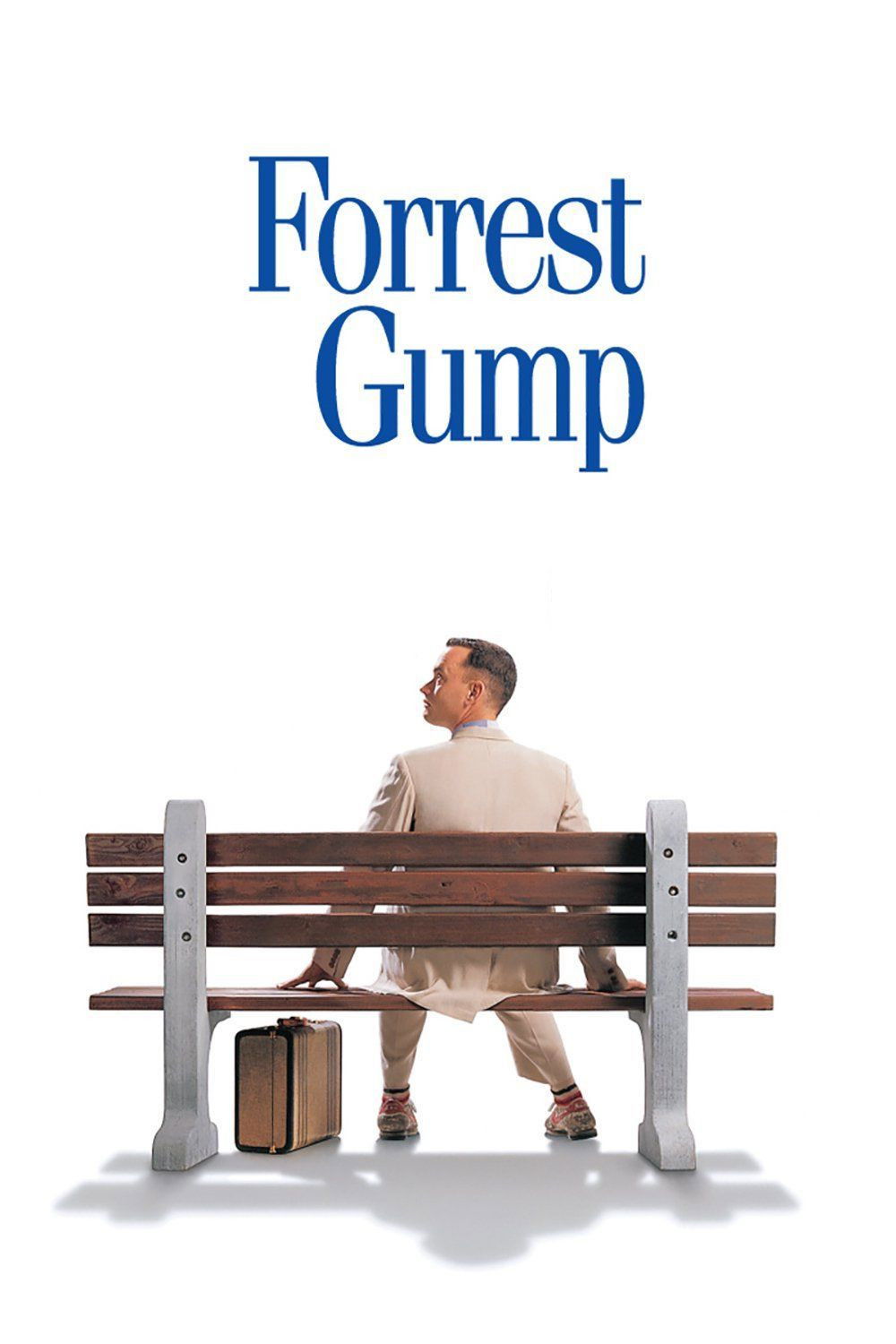
Beyond that, I’m consistently struck by the film’s relentless genre-hopping. One moment I’m watching a tender coming-of-age drama; the next, a war movie, then broad comedy, then romance, all stitched together with stylistic flourishes and musical cues. It’s as if Zemeckis refuses to let any category contain his film. That daring fluidity—jumping between sincerity and irony, laughter and tragedy—affirms for me the postmodern tendency to both exploit and undermine genre expectations. I also recognize a kind of self-referentiality at work, with the film’s narrative structure—Forrest recounting his life story on a park bench to a series of incredulous strangers—mirroring the way postmodern films “frame” their own stories as stories, never letting viewers forget that what they’re watching is always an act of storytelling, not just pure experience.
But perhaps what feels most radical to me is the movie’s simultaneous embrace and critique of American iconography. There’s an unmistakable sense of affection for the cultural markers it parades—Elvis, Vietnam, ping-pong diplomacy—but I read the selection and sequencing of those events as questioning rather than merely celebrating American verities. I don’t see Forrest as the embodiment of a unifying national myth so much as a lens that exposes how arbitrary and constructed such myths can be. I’m moved, then unsettled, by how easily the film slips from patriotism to ambiguity—a move that is, I think, one of postmodernism’s favorite tricks.
Influence on Later Genres and Films
- Influence 1 – The Mainstreaming of Pastiche Storytelling: I’ve noticed that after Forrest Gump’s commercial and critical success, mainstream films became much more comfortable with the idea of remixing history and blending disparate tones. The film’s use of digital effects to rewrite history inspired countless movies to experiment with blending “real” footage and fictional narratives. I remember watching Zelig as an earlier example, but Forrest Gump brought that technique into blockbuster territory. Films like Night at the Museum or Across the Universe clearly borrow from this melting-pot approach, using digital trickery and pastiche as integral narrative strategies instead of niche curiosities.
- Influence 2 – Reinventing the American Epic: For me, Forrest Gump redefined what could constitute the “American epic” on screen. Prior to its release, grand American stories were often somber, tightly structured, and reverent. Once I experienced the way this film bounced through decades—adopting a populist, sometimes irreverent, always playful approach—I saw its fingerprints all over later works such as Cinema Paradiso (in international cinema) and American Beauty. These films similarly use eccentric, unreliable protagonists and fragmented narratives to question, rather than simply affirm, what it means to belong to a country’s story.
- Influence 3 – Normalizing Genre Fluidity: Something I find increasingly common in subsequent American cinema is the refusal to let genres stand in isolation—the idea that it’s perfectly natural for a film to pivot from slapstick to trauma, romance to critique, sometimes in the space of a single scene. Forrest Gump made that instability seem exhilarating, not confusing. Movies like Pulp Fiction (also 1994), Big Fish, and even The Curious Case of Benjamin Button effectively ride this same rollercoaster, inviting audiences to embrace contradiction and multiplicity rather than neat emotional packages.
The Movement’s Lasting Impact
When I try to explain to students or cinephiles why postmodern cinema—from which Forrest Gump springs—is still crucial, I emphasize the way it taught us to distrust easy stories. What I cherish most is the movement’s push to see film not as a window onto the world, but as a funhouse mirror, reflecting and distorting reality according to context, power, and whim. My engagement with films like Forrest Gump leaves me aware of how slippery “history” really is: it’s always contested, always under revision, and always colored by the method of its telling. Postmodern cinema acknowledges that the line between sincerity and irony, celebration and critique, patriotism and playful skepticism, is porous—perhaps even nonexistent.
In this light, I treasure the way the movement invites critical spectatorship, urging me not to passively receive national myths or sentimental tales, but to question how those stories are constructed and what purposes they serve. The legacy, for me, is a freedom and inventiveness in storytelling—one that foregrounds play and pastiche, that privileges ambiguity, and that constantly challenges our sense of what the “truth” in cinema could possibly mean. I’m convinced that this approach remains vital, especially as contemporary filmmakers loop back, recycle, and remix an ever-expanding archive of digital images, with postmodern sensibility providing both the language for critique and the creative tools for new invention.
To connect style and technique with broader context, you may find these perspectives useful.
🎬 Check out today's best-selling movies on Amazon!
View Deals on Amazon