
Film Movement Context
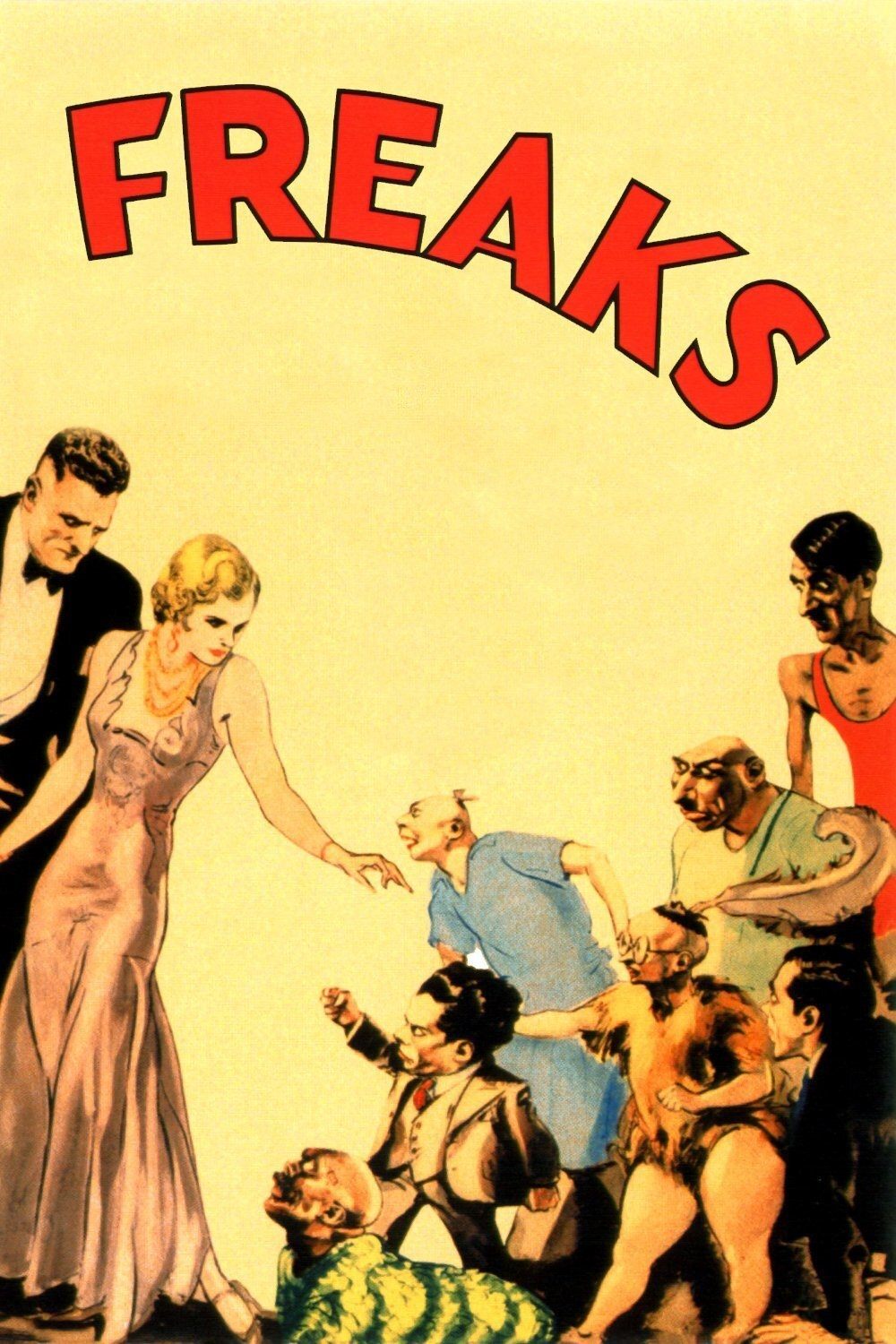
Few films have shaken my perceptions of genre and cinematic tradition quite like Tod Browning’s Freaks from 1932. To me, it is one of those rare works that not only refuses easy categorization but also distills the essence of a transitional moment in cinema history. When I watch Freaks, I feel acutely aware of the film’s placement on the border between the macabre spectacle of early cinema and the emergence of horror as a vessel for social parable. I associate Freaks most directly with the pre-Code Hollywood era, a brief but feverishly creative period when studios pushed the boundaries of what could be depicted onscreen before the advent of the Production Code’s strict censorship. Yet, my experience of the film also brings to mind the shadowy aesthetics and psychological intensity of German Expressionism, even as it reaches outward toward what I consider the roots of the American horror tradition. Somehow, Freaks exists as an unsettling hybrid: part pre-Code melodrama, part Grand Guignol, and an inflection point for the evolution of horror. That’s why, when I reflect on its movement context, I find it impossible to pin down to a single genre but rather see it as a vital bridge that matters not because it fits neatly in a box, but because it stubbornly resists one.
Historical Origins of the Movement
I often return to the restless energy of the late 1920s and early 1930s in Hollywood when grappling with Freaks. This was, after all, the fertile soil out of which the so-called pre-Code movement emerged. From where I stand, pre-Code Hollywood isn’t a movement driven by manifestos or critical treatises, but by the tumultuous interplay between evolving audience appetites, studio ambitions, and a regulatory vacuum. The abolition of Prohibition, the lingering effects of the Great Depression, and the aftershocks of World War I left American culture in flux; you can see this uncertainty reflected in the bold narrative choices and provocative imagery of pre-Code films. In my research and viewing, I’ve always been struck by how films from this era—especially those produced at MGM and Universal—embraced shocking material: violence, forbidden romance, gender subversion, and, as in Freaks, bodies that defied conventional standards of normalcy. Simultaneously, the influence of German filmmakers fleeing the UFA studio system brought the stylized dread and shadow-soaked interiors of Expressionism into Hollywood’s orbit. So, when I situate Freaks in its historical moment, I recognize pre-Code Hollywood both as a symptom and a driver: a unique confluence of loosened morals, an appetite for spectacle, and a willingness to poke at society’s deepest anxieties. All these currents flow, in my opinion, directly into Browning’s work.
This Film’s Contribution to the Movement
If I am honest, my first experience watching Freaks left me more unsettled than frightened. Unlike the Universal monster movies that leaned on elaborate makeup and theatricality, Browning’s film, in my eyes, wields authenticity as its sharpest tool. He composes his cast almost entirely of real sideshow performers, people whose bodies—and lives—stood in open confrontation with the era’s unspoken rules of normality. For me, this decision is far from a mere stunt, but rather an act of radical cinematic empathy that underlines the pre-Code movement’s thirst for the taboo and the authentic.
With every viewing, what strikes me most is how Freaks achieves its horror not solely through ghoulish aesthetics but through the audience’s own sense of difference and complicity. Instead of encouraging us to recoil from its “monstrous” characters, the film turns the tables: the so-called freaks are rendered with grace, humor, and interiority, while the “normal” characters—exemplified by Cleopatra and Hercules—emerge as the true villains. I see in this inversion a distinctly pre-Code willingness to challenge social norms and to interrogate what it means to belong. The infamous scene of the communal acceptance ritual (“One of us, one of us!”) has always struck me as a moment where genre transcends mere spectacle and edges toward social allegory, exposing how otherness is both constructed and policed.
Moreover, I find that Browning’s use of mise-en-scène and pacing owes a subtle but clear debt to German Expressionism. Tight, claustrophobic interiors and long, lingering takes imbue the film with a pervasive sense of foreboding. Yet the horror does not reside in the grotesquery of the cast, but in the moral decay of the so-called beautiful. This, to me, is how Freaks both encapsulates and disrupts its movement: it is easily as shocking (if not more so) than its contemporaries, but its shock is always directed inward, toward the viewer’s prejudices, rather than outward at some fantasy monster. In this way, Freaks advances the movement by collapsing the distance between the spectacle of difference and the banality of cruelty.
Influence on Later Genres and Films
- Redefining the Horror Protagonist and Audience Identification – I have always been fascinated by how Freaks quietly upended the archetype of the horror monster. Where most early horror films asked me to fear the “other,” Browning’s work demanded that I sympathize with those very figures. This inversion of identification, positioning the marginalized as heroes (or, at the very least, as comprehensible and fully human) laid the groundwork for later genre films—like Tod Browning’s own Dracula, but also far more radical works such as David Lynch’s The Elephant Man—to probe the unstable border between monster and outcast. Even Guillermo del Toro’s The Shape of Water echoes the spirit of Freaks in its compassion for that which is labeled “other.” Each time I see these films, I trace their empathetic horror lineage directly to Browning’s side-show revolution.
- Influence on Cult Cinema and Transgressive Storytelling – For much of my career, I’ve been drawn to cult cinema’s unruly energy—the willingness to jolt, provoke, and ultimately build a communal identity among the outsiders. I can hardly imagine this tradition without Freaks. Its afterlife as a midnight movie and its reclamation by underground filmmakers (think John Waters, Alejandro Jodorowsky, or even Troma Studios) signifies to me an indelible mark it left on the mechanisms of shock and the politics of representation. When I witness a film that finds power in the grotesque, or that successfully weaponizes the apparatus of exploitation against its own audience, I see the fingerprints of Freaks. The postmodern embrace of camp (as seen in Pink Flamingos or Rocky Horror Picture Show) owes not just an aesthetic debt, but a philosophical one: Freaks was there before the lines were ever clearly drawn.
- Escalation of Censorship and Genre Boundaries in Hollywood – I can’t help but see Freaks as a watershed moment in the relationship between horror, morality, and the law. Its infamy—inspiring bans, edits, and decades of critical scorn—directly fueled the implementation of the Production Code. The sense of unease I get reading about audience reactions at the time reveals to me just how much this film tested the “acceptable” limits of genre cinema. The backlash against Freaks not only hardened the lines of what could (and could not) be shown, but also planted the seeds for subversive horror to become a space of resistance within American cinema. I’ve repeatedly found that the very extremity of the censure against this film liberated later filmmakers to use horror as an encoded arena for dealing with social outcasts, taboos, and anxieties, both during the Code era and in its wake.
The Movement’s Lasting Impact
Each time I revisit the legacy of the pre-Code movement—a period that, for some, is a mere footnote in studio history—I’m reminded that its value lies not just in what it depicted, but in how it interrogated the rules themselves. Freaks, for me, stands as its sharpest cipher: a film unconcerned with tidy resolution, determined to collapse boundary after boundary (of genre, of audience expectation, of social order). The impact of its movement is most evident in the generational reverberations of this challenge: horror, as a form, never fully retreated into safe territory, even after the Production Code came into force. Instead, the best horror continued to ask: Who gets to be considered human? Who is permitted to stare, and who must serve as the spectacle?
I find the significance of the movement exemplified by Freaks far beyond its shocks or historical reputation—it lies in the freedom to defy categorization, to draw the audience’s gaze toward what they would rather ignore, and to destabilize the comfortable line between good taste and necessary confrontation. The films animated by these questions—from exploitation cinema to New Hollywood subversives and modern independent horror—continue to reach for the radical empathy and dangerous honesty that pre-Code Hollywood fought for. As long as films persist in poking at the cracks in the social order, reaching for the hard truths couched in genre, I believe the movement’s legacy (and Freaks’ importance within it) remains as urgent as ever.
To connect style and technique with broader context, you may find these perspectives useful.
🎬 Check out today's best-selling movies on Amazon!
View Deals on Amazon