
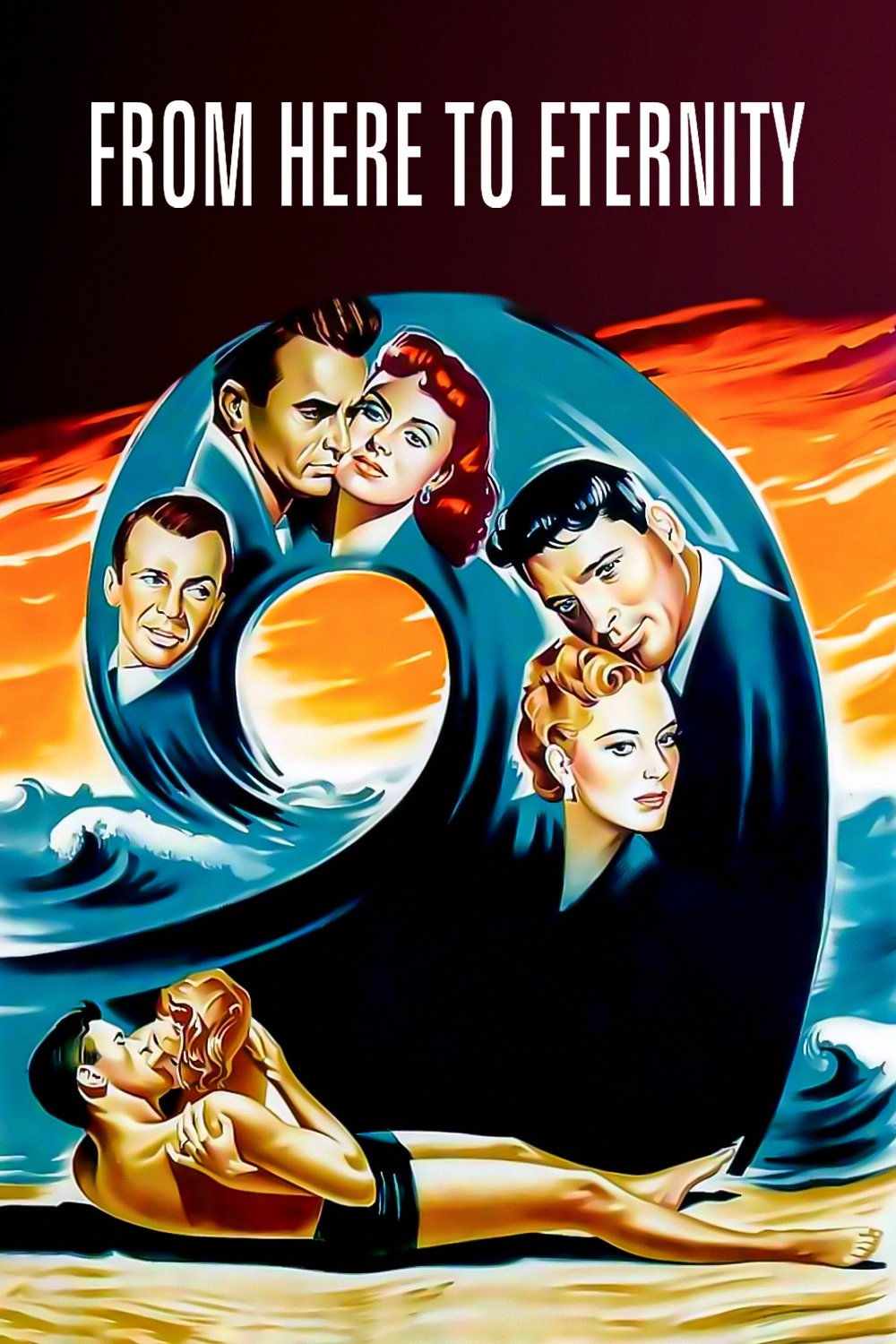
Film Movement Context
Every time I revisit “From Here to Eternity,” my mind wanders beyond its enduring romantic moments and sweeping nostalgia; I think about how deeply the film is entangled with Hollywood’s postwar Classic Realism, a movement that fascinated me from the moment I began tracing the evolution of American narrative cinema. I’d argue the film stands as an exemplar of the so-called “Golden Age of Hollywood’s” transition into more emotionally honest, character-driven storytelling, where realism collided with studio polish in a unique and unmistakable fashion. I don’t just see it as a melodrama or a glossed-over war movie—the film embodies a mid-century wave that tried to reconcile America’s collective anxieties and social issues, all cloaked in a deceptively conventional style. Often, I notice that while “From Here to Eternity” is rarely boxed into a single school like Italian Neorealism or the French New Wave, it is unmistakably rooted in a specific American movement: postwar Realism, a tradition shaped by both social urgency and the carefully maintained technique of studio filmmaking. In my reading, the movie’s atmospheric grit—glistening sweat, repressed feelings, raw military camaraderie—signals a very specific time in Hollywood’s evolution: an era negotiating the boundaries between fantasy and reality, questioning just how “true” a mainstream film could dare to be.
Historical Origins of the Movement
When I think about what gave rise to the postwar Hollywood Realism that shapes “From Here to Eternity,” I’m always reminded of the seismic shifts set in motion by the aftermath of World War II. Industry veterans returned from the frontlines with sobering stories, and the mid-1940s audience brought skepticism and wounded idealism into movie houses. Personally, I see this movement as an offspring of social unrest: Hollywood could no longer rely on the escapism that comforted Depression-era crowds. Instead, these postwar years—roughly spanning the late 1940s to the early 1960s—ushered in movies that scrutinized America’s institutions, psychoanalyzed the individual, and reveled in messy, unvarnished realism. The persistence of the Production Code meant filmmakers could not yet adopt the visual austerity of Italy’s Neorealists, but I’m convinced they borrowed something deeper: an interest in ordinary lives and the erosion of idealized authority, whether military, civic, or domestic.
For me, there’s something fascinating about how this movement—visible in films like “The Best Years of Our Lives,” “A Streetcar Named Desire,” and “On the Waterfront”—merged studio craftsmanship with newfound social realism. Studios, hungry to stay relevant as television encroached, were compelled to take risks, adapting more contemporary, downbeat novels and stage plays. I’m particularly drawn to the way directors like Fred Zinnemann (who helmed “From Here to Eternity”) played with space, clutter, and the human face, using light, weather, and noise to heighten realism without abandoning the allure of Hollywood’s stars. What matters to me about this movement’s origins is its tension: a meticulous balancing act between the old studio system and the new, naturalistic performance styles imported by waves of Method actors. In this convergence, I witness the evolution of an art form desperate to tell the truth about its own society, even as it’s bound by old forms of censorship and commercial expectation.
This Film’s Contribution to the Movement
I often return to “From Here to Eternity” as a touchstone for how postwar Hollywood Realism could operate within—and subtly undermine—the conventions of its time. For me, the film’s enduring power lies less in its headline-grabbing love story on the beach and more in its acute psychological sensitivity, its willingness to expose the cost of repression and the darkness beneath the glamour and order. When I watch Montgomery Clift’s Prewitt wrestle with his own moral code or observe Deborah Kerr’s Karen Holmes navigating desire and disappointment, I see Method-inspired performances that crackle with authenticity, far removed from the performative star turns of the 1930s and early ‘40s. Every close-up seems to shudder with unspoken conflict, and—I would argue—thematically, the film never lets the viewer forget that the military world it depicts is rife with both camaraderie and cruelty.
The stylistic choices intrigue me just as much. Zinnemann’s camera, at times intrusive and restless, lingers on physical routine: marching boots, squinting eyes in the sun, sweat rolling down foreheads. I’m always struck by the way he choreographs chaos and quiet inside the barracks; the attention to process (the “routine” of army life, the choreography of boxing, the loaded silences of forbidden romance) gives the film its pulse. Though sanitized by contemporary standards, the film doesn’t pull its punches on systemic injustice—remember the abusive authority figures, hazing rituals, and the blurring of right and wrong. I read these as bold, almost subversive, gestures for 1953, signals that the film’s realism isn’t just a matter of style but speaks to ideology and social critique.
What feels radical to me about “From Here to Eternity” is how it manages to reinterpret Hollywood’s favorite genres (the war film, the melodrama, the romance) through a lens that’s more psychologically jagged and socially alert than what theaters had offered a decade earlier. It’s a film desperately trying to break new ground, using familiar forms to question the very values that defined the so-called “Greatest Generation.” For that reason, I see its contribution not as a single spark, but as a deeply influential tremor running through the entire postwar studio system.
Influence on Later Genres and Films
- Influence 1 – Recalibrating the War Film: I firmly believe “From Here to Eternity” marked a major turn in the way American cinema confronted the military. Watching it, I sense a precursor to films like “The Deer Hunter” and “Platoon,” works that strive to dissect the psychological trauma and ethical complication of war rather than simply valorizing heroism. This movie’s attention to emotional fallout and institutional pressure paved the way for subsequent generations of filmmakers to probe the cost of violence and conformity inside rigid hierarchies, rather than glossing over those tensions for the sake of patriotic narrative.
- Influence 2 – Method Acting and Intimacy: Every time I watch Clift, Sinatra, and Kerr, I see the seeds of what would soon flourish in ‘New Hollywood’—the personal, emotionally raw styles championed by actors like Brando, Pacino, and De Niro. The film’s commitment to interiority, the fragility of pride and personal conviction, inspired later dramas to focus more intently on character psychology, fueling the intimate, vulnerable performances of “On the Waterfront” and later, “Dog Day Afternoon,” and “Five Easy Pieces.” For me, “From Here to Eternity” is a keystone in this slow turning away from theatrical declamation toward something smaller, sharper, and, paradoxically, more universal.
- Influence 3 – The Melodrama as Social Critique: What fascinates me about the film’s legacy is its reimagining of melodrama as a socially acute form. The forbidden romance and internal struggle at the film’s heart serve as metaphors for larger injustices—a move that I see picked up in “Rebel Without a Cause” and the cinema of Douglas Sirk. Later filmmakers would use the melodramatic template to probe the failures of institutions (families, the military, the law), often through the visual language of the everyday, rather than relying on grand gestures or overt didacticism. I’m convinced that, without “From Here to Eternity’s” nuanced blend of emotional excess and thematic restraint, much of American independent cinema’s appetite for social critique might never have evolved in the same direction.
The Movement’s Lasting Impact
As I reflect on the enduring relevance of postwar Hollywood Realism, I see its legacy as a kind of cinematic honesty—sometimes painful, sometimes cathartic, always necessary. My fascination with the movement grows deeper as I realize how it offered American culture a way to process trauma, to question once-unassailable values, and to propose ambiguity as a dramatic force. Films like “From Here to Eternity” matter because they remind me that cinema, even at the height of its studio-bound artifice, can be elastic enough to grapple with the intricacies of lived experience. The movement’s lasting impact, in my view, is its insistence that personal drama and historical context are inseparable—and that stripping away illusion, even incrementally, is the first step toward cultural self-examination.
Every time I encounter movies grappling with social malaise, moral ambiguity, or the complexity of human longing—whether in the kitchen-sink dramas of the UK, the sociopolitical thrillers of the ‘70s, or the introspective Indies of today—I trace their lineage, at least in part, back to the daring of filmmakers who dared to let reality seep in. For all the nostalgia that now attaches to Golden Age Hollywood, “From Here to Eternity” persists for me as a reminder that realism need not mean drabness, and that mainstream cinema remains a vital conduit for collective reckoning. This movement, with its soulful attention to the textures of daily life and the wounds beneath the surface, is why I believe the best films still strive toward emotional and social truth, no matter how stylized their presentation.
To connect style and technique with broader context, you may find these perspectives useful.
🎬 Check out today's best-selling movies on Amazon!
View Deals on Amazon