
Film Movement Context
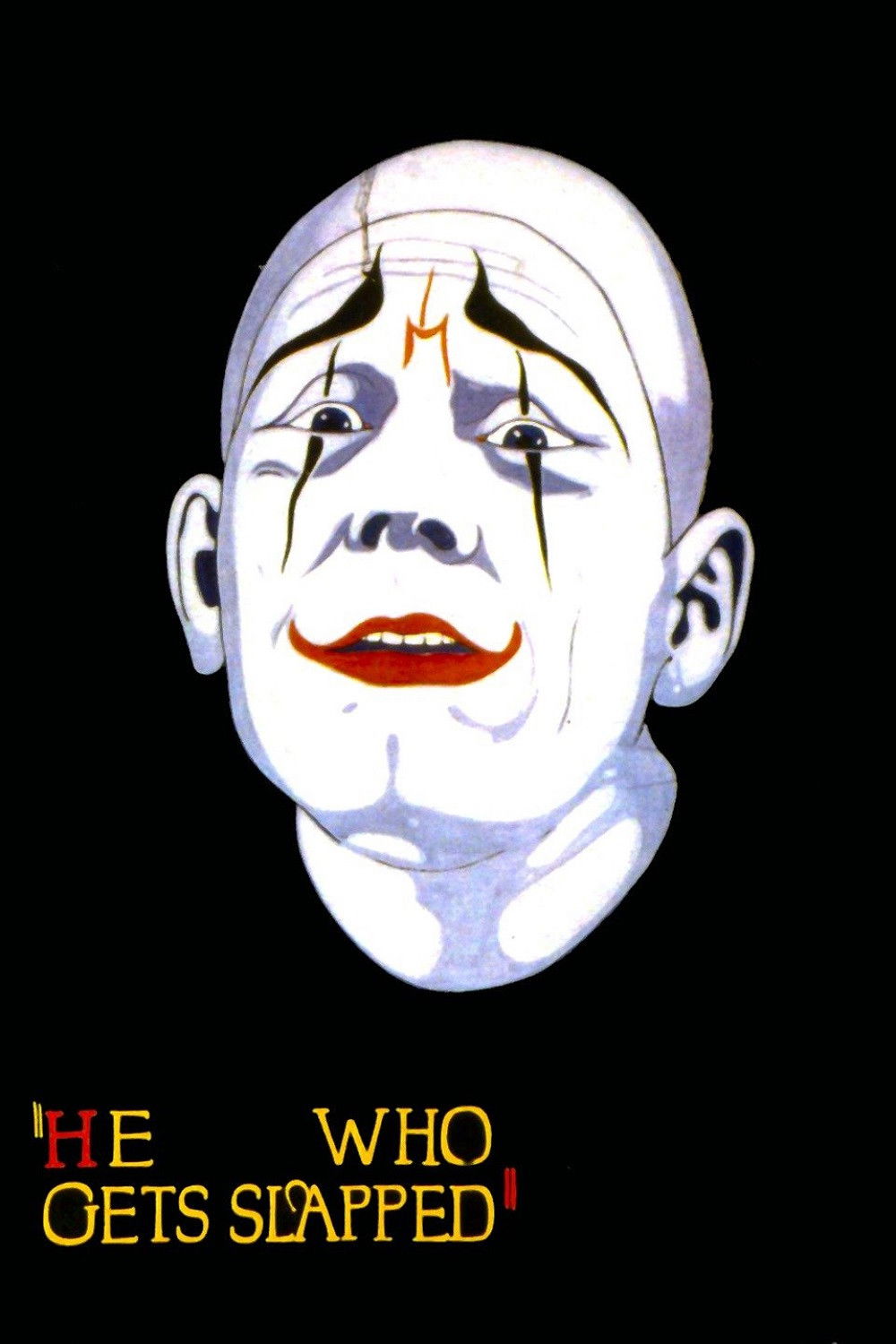
There’s a peculiar ache I always feel when rewatching He Who Gets Slapped, a weight that transcends plot and plants itself in visual language and emotional resonance. For me, this 1924 film does not belong to just one cinematic current but straddles the atmospheric borderland between European Expressionism and the American studio melodrama—a unique hybrid where stylized psychological states and theatricality entwine. Every time I revisit Paul Leni’s shadowy compositions and Lon Chaney’s haunted stare, I am keenly aware of how the film inhabits a space deeply influenced by German Expressionist cinema, yet filtered through the rising ambitions of Hollywood’s silent era. To reduce it merely to a melodrama of humiliation would be to overlook the unmistakable fingerprints of the Expressionist movement—the angled sets, the heightened contrast, the unrelenting focus on inner torment. Yet, it is not as alien or symbolic as its German counterparts; instead, it repositions Expressionist technique within the Hollywood framework, using it to amplify feelings of betrayal, isolation, and grotesque societal ritual. I see it not just as a film, but as a crossroads—where global film movements converged and reshaped the emotional possibilities of genre storytelling on American soil.
Historical Origins of the Movement
I’ve always found the emergence of German Expressionism to be almost romantic—a rebellion against relentless realism, a craving to externalize the untamable chaos inside the mind. In the years that trailed the devastation of World War I, a kinship formed among German filmmakers with a desire to shatter the polished surfaces of bourgeois cinema and let nightmares bleed into light. Works like The Cabinet of Dr. Caligari and Nosferatu spoke in sharp geometry, hallucinatory shadows, and distorted perspectives—visual metaphors for emotional upheaval and societal paranoia. As I pore through their frames, I sense artists wrestling with trauma and seeking meaning in abstraction rather than documentation. But what fascinates me even more is how Expressionism didn’t remain confined to a single nation or moment; its techniques and moods were smuggled across borders by émigré directors like Paul Leni himself.
Landing in Hollywood, Expressionism underwent its own transformation. What was once an avant-garde movement of social critique and existential dread morphed into a powerful toolkit for melodrama, horror, and spectacle. By the time He Who Gets Slapped arrived, the echoes of stylized visual storytelling had seeped into the American film consciousness, not as dominating philosophy but as a lexicon of psychological depth and symbolic power. For me, that intersection—where European avant-garde met American mass entertainment—helped birth new genres and rejuvenated Hollywood’s aesthetic potential. I don’t just see Expressionism as a national artifact but as a migratory language, one that found fresh expression in studios eager to mesmerize audiences with something both uncanny and deeply felt.
This Film’s Contribution to the Movement
When I watch He Who Gets Slapped, I’m struck by its ability to simultaneously reflect and reinvent the core tenets of Expressionist cinema. The film speaks in the idiom of distortion: I see it everywhere, from the use of theatrical lighting that carves Lon Chaney’s face into a sorrowful mask, to the near-claustrophobic construction of the circus ring, at once a literal and metaphorical stage for humiliation and longing. What truly unnerves me, though, is how the film uses these artistic choices not for surface effect, but to express psychological suffering. Chaney’s character isn’t merely a man defeated by fate; the slaps he receives echo outwards, reverberating through sickly set designs and exaggerated crowd reactions, until they become a language of shame and alienation shared by anyone who’s ever been made a public spectacle.
Whereas classic German Expressionism can sometimes feel deliberately surreal and distanced, He Who Gets Slapped tethers these artistic flourishes to raw emotional realism. The circus—ordinarily a space for whimsy and spectacle—becomes, in my eyes, a grotesque stage upon which the protagonist’s despair and yearning are endlessly re-enacted for the cruel delight of a gawking audience. Here, stylization and narrative intertwine with remarkable cunning. The spiraling camera work during the clown’s performances, the repetitive motif of “the slap,” the imposing presence of crowds that morph and swirl—it all works to plunge me deep into a psyche destroyed by public shaming. I see this as more than just technical prowess; it’s an act of creative empathy, drawing me, the viewer, into the character’s relentless cycle of humiliation.
The film invigorates the Expressionist tradition by transplanting its symbolic vocabulary into a story that’s both immediately accessible and deeply unsettling. Paul Leni, himself a product of Berlin’s experimental theater and film scenes, imports not just visual style but also a sense of fatalism and irony that feels distinctively modern. When I consider the era’s typical Hollywood output, there’s a marked difference in how darkness and alienation are foregrounded here—not simply as obstacles to be overcome, but as inescapable aspects of the human condition. Through this, I believe He Who Gets Slapped helped set a precedent for American cinema to embrace ambiguity, psychological complexity, and a willingness to probe the uglier corners of individual experience.
It’s important to me that the film’s approach to style is always in service of theme. I remember the first time I saw the climactic inversion—when the audience that once took such malicious pleasure in the clown’s pain is suddenly threatened by the violence they fostered—and how it illustrated the corrosive effect of cruelty on perpetrator and victim alike. This kind of narrative boldness, aligned inseparably with visual innovation, is what I find most enduring about the film’s position in cinema history. It’s a creative act of synthesis, a transmutation of movement from one culture’s nervous breakdown into another’s entertainment—and in so doing, raising profound, uncomfortable questions about why we are so drawn to the suffering of others.
Influence on Later Genres and Films
-
Psychological Horror and Melodrama – Reimagining the Space of the Circus:
I never watch subsequent films set in circuses—like Freaks or even elements of Fellini’s La Strada—without detecting the chilling aftertaste of He Who Gets Slapped. For me, it established a blueprint in which the circus became a metaphoric madhouse, a stage that both reveals and amplifies interior pain. Later filmmakers co-opted this approach, using public performance as a stand-in for social alienation and trauma. Horror, especially American horror of the 1930s and 40s, relied on this interplay—transforming spaces meant for fun into claustrophobic arenas of exploitation and spectacle. I see He Who Gets Slapped as a key seed, its Expressionist-inflected vision transforming the genre’s treatment of performance, boundary, and audience complicity. -
Hollywood’s Visual Lexicon – The Shadow as Psychological Weapon:
Much of what I love about American noir and mid-century melodrama can be traced, in my mind, to the visual grammar honed in films like this. The recurrent use of shadow, off-kilter composition, and facial close-ups to suggest trembling interiority did not simply migrate from Germany to Hollywood by happenstance; rather, it was films such as He Who Gets Slapped that translated these methods for American tastes. Whenever I see tortured detectives pacing rain-slicked alleys or emotionally fraught heroines peering from behind venetian blinds, I’m reminded of how this early period synthesized style and substance, giving filmmakers license to weaponize cinematography in the service of the soul. -
Art Cinema and the Auteur’s Psychological Landscape:
As modern and international directors—from Ingmar Bergman to Pedro Almodóvar—ushered in new waves of cinema-movement after movement, I always see a continuing dialogue with Expressionism’s core impulse: the desire to manifest interior torment onscreen, unrestrained by naturalism. He Who Gets Slapped stands, for me, as one of the first American-made films that dared to subjugate realism to the needs of the mind and heart. Later auteurs took these lessons to heart, embracing stylization, abstraction, and even the grotesque as avenues for personal vision and social critique. The film thus acts as a touchstone, proving that the confines of popular cinema can and should be breached in pursuit of more profound explorations of being.
The Movement’s Lasting Impact
What I find so compelling about Expressionism’s journey—particularly as embodied in He Who Gets Slapped—is its insistence that personal trauma is not merely internal, but something that contorts the world itself. Every time I rewatch, I’m reminded that cinema is not simply a window on reality, but a dreamscape that can mold feeling into substance, emotion into architecture. The migration of Expressionist style into genres as varied as horror, noir, melodrama, and art cinema has amplified, in my viewing experience, the expressive power of film as a medium. Even as new movements have emerged—French New Wave, Italian Neorealism, New Hollywood—I always trace their impulse to probe, stylize, and question reality back to this willingness to externalize the interior.
For me, the legacy isn’t just technical or historical—it’s existential. Watching He Who Gets Slapped, I feel the continued relevance of Expressionist cinema’s message: that beneath the public surface of laughter and spectacle lies a more complex, often agonizing, private truth. This movement matters because it gave voice to the silent torments that ordinary realism could not convey. Its images and techniques still ripple through the films I love, reminding me that stylistic boldness and emotional truth are not opposites, but symbiotic forces. The world of the film is distorted, yes—but it is molded by pain, love, and longing, just as my own is. That, above all, is why the Expressionist legacy endures in my cinema-watching life.
To connect style and technique with broader context, you may find these perspectives useful.
🎬 Check out today's best-selling movies on Amazon!
View Deals on Amazon