
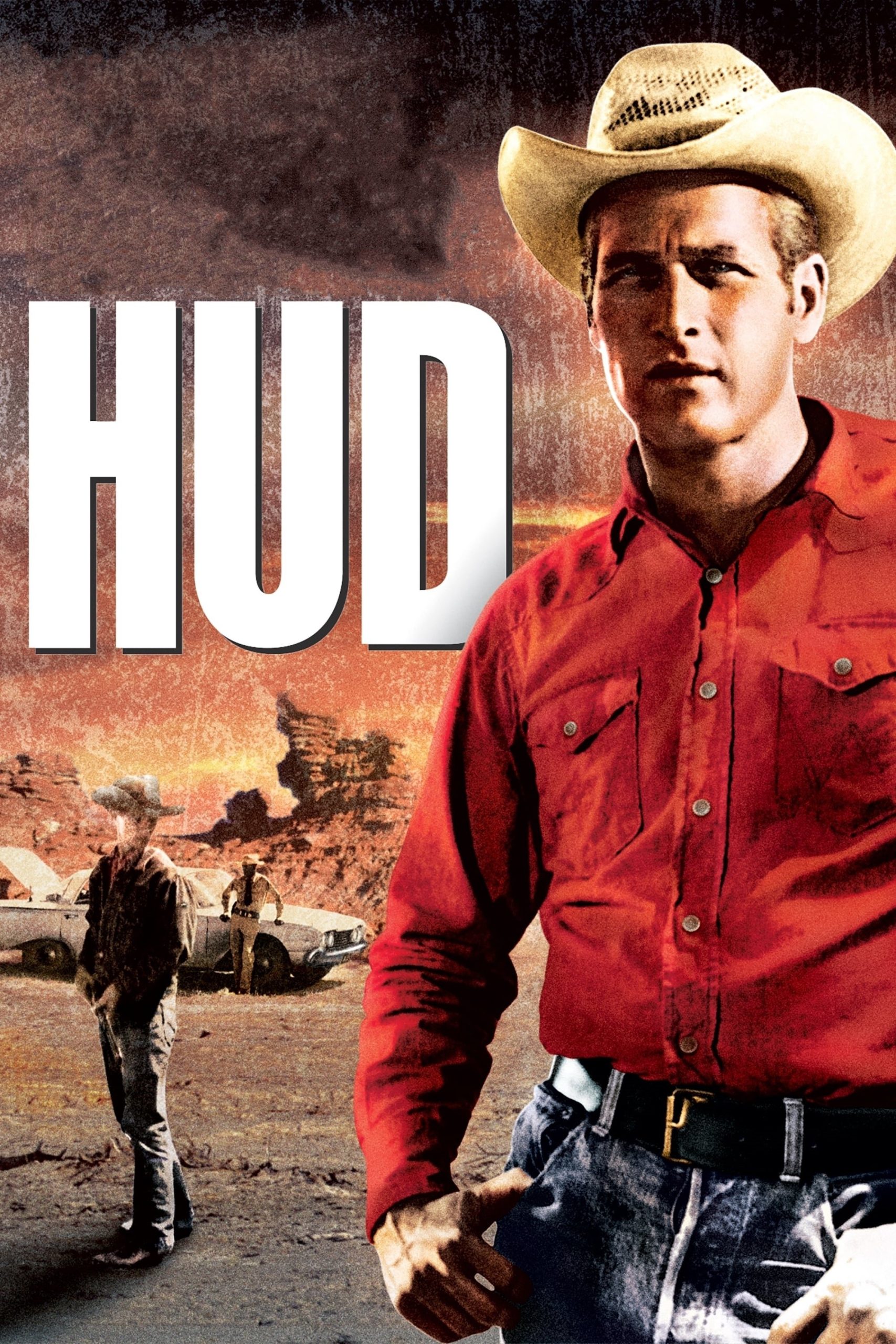
Film Movement Context
Every time I revisit “Hud,” I’m reminded just how powerfully a film can sit at the crossroad of shifting sensibilities. For me, “Hud” isn’t just a morality play set against a dusty Texas backdrop; it’s one of the most significant American expressions of the New Hollywood precursor movement—what I like to call the American New Realism. While it draws from the classical Hollywood Western, I’ve always felt that its spirit aligns more with the revisionist Western and, more specifically, the growing American tendency in the early 1960s to question tradition, authority, and myth. Watching “Hud,” I sense a bridge between the humanistic, character-driven naturalism of Italian Neorealism and the brash self-interrogation that would explode during the later 1960s “New Hollywood” wave. Its visual sparseness, bleak thematic choices, and psychological ambiguity signal a rupture—a deliberate departure from the mythic West toward naturalism and moral ambivalence. In my view, that makes “Hud” a landmark in the evolution from the classic Western to the tortured, existential dramas that would soon dominate American cinema.
Historical Origins of the Movement
I often find myself tracing the origins of American New Realism to the collective, sometimes painful, self-examination that began in Hollywood after World War II. Classic Westerns and melodramas had for decades delivered clear moral codes, unambiguous heroes, and square-jawed certainties. But after the traumas—both global and domestic—of the 1940s and 50s, Hollywood storylines began to fray, shadowed by anxiety and skepticism. The Italian Neorealists inspired many in the American industry, and as I see it, that influence began to trickle in through a new aesthetic concern for everyday life, non-glamorous settings, and an unwavering gaze at the undercurrents of social malaise. The late 1950s saw the first vestiges of naturalistic drama in films like “Marty” and “A Face in the Crowd,” but “Hud” emerged as a uniquely Western reconfiguration: it wielded the fabled open range not as a stage for heroics, but as a barren theatre of generational conflict and existential barrenness. The transition from myth to realism was spurred, I believe, by a cultural exhaustion with false heroes and sanitized narratives. This insurgence of realism—especially in “Hud”—became a necessary corrective, a way to grapple with a modern America unmoored from old certainties.
This Film’s Contribution to the Movement
I’ve always been struck by how “Hud” doesn’t just reproduce Western iconography—it tears it down from within, using realism and moral ambiguity as its chisels. Martin Ritt’s approach feels almost clinical; there’s nothing romantic about Hud Bannon’s Texas. The camera lingers on parched earth, ravaged cattle, and battered faces, so that every shot invites me to consider the price of personal ambition and ethical rot. The traditional Western hero is nowhere to be found here. Instead, Paul Newman’s Hud is petulant, selfish, and irredeemable—a product of the American myth gone sour. More than any single plot point, I’m drawn to the film’s insistence on open questions and discomfort. Loneliness, generational alienation, and the death of old values are woven into both the dialogue and the stark black-and-white cinematography. In my reading, the realism in “Hud” is neither neutral nor comforting: it exposes the pain of progress and the bankruptcy of rugged individualism. This directly anticipates the anti-heroes and crises of faith that would define 1970s American cinema, but in “Hud,” it’s all caught within the dry Texas wind, as though the landscape itself is another battered soul. For me, the film’s great achievement is stripping away myth to reveal the lonely consequences of American exceptionalism. It’s realism by way of disillusionment.
On a stylistic level, “Hud” deepens this movement through its use of space, silence, and the awkward, unsentimental cadences of daily rural life. Scenes stretch out, dialogue is sparse, and each character’s choices are rendered in quiet, devastating detail. James Wong Howe’s cinematography, with its vast, empty expanses and harsh, unrelieved light, brings to mind the stark environments of De Sica or Rossellini, but transplanted to a uniquely American setting. I can’t help but interpret this as a kind of visual metaphor for existential emptiness: the great American expanse, once a symbol of opportunity, is now a barren psychological event horizon. “Hud” is unflinching, and that’s precisely what secures its place within this vital movement. It neither pities nor condemns—it simply observes, and in doing so, it calls into question the very nature of heroism, family, and the cost of survival. The film’s refusal to offer catharsis, instead lingering in unresolved pain, seems (to me, at least) the perfect emblem of the movement’s willingness to reject easy answers in pursuit of truth.
Influence on Later Genres and Films
- Revisionist Westerns / Anti-Hero Dramas – As I watch American cinema’s evolution into darker, more ambiguous territory in the late 1960s and 70s, I see “Hud” as a crucial touchstone. For me, its unsparing portrait of a morally compromised protagonist anticipated the torrents of anti-heroes we’d soon meet in “McCabe & Mrs. Miller,” “Unforgiven,” and “There Will Be Blood.” Every time a new film strips its cowboy of nobility, I sense echoes of Hud Bannon’s estrangement and ethical opacity.
- Family Melodrama with Realist Edge – Viewing films like “Kramer vs. Kramer” or “Ordinary People” through the lens of “Hud,” I find a lineage of realist family dramas that foreground generational conflict and emotional ambiguity, shunning melodramatic excess for sparse, tactile authenticity. “Hud” gave later filmmakers permission to explore dysfunction without recourse to redemption or clear blame—something I think profoundly altered what American family cinema could be.
- Visual Naturalism in Americana – The film’s arid landscapes and raw, documentary-style visuals have remained, in my opinion, an inspiration for American filmmakers determined to strip away gloss. Works as diverse as “The Last Picture Show” and “No Country for Old Men” seem to owe a debt to “Hud”—not just in their setting, but in the way sunlight, silence, and emptiness become thematic forces. There’s a direct lineage from “Hud’s” windswept desolation to the haunting, sun-baked vistas that populate modern American cinema’s soul-searching journeys.
The Movement’s Lasting Impact
Reflecting on why this movement remains so urgent, I find myself returning to the idea of honesty—cinematic honesty, that is. The American New Realism and the shift toward revisionist, naturalistic drama have left an indelible mark on both what stories are told and how they’re experienced. Unlike the comforting myths of yesteryear, this approach demands that I confront messy realities and ambiguities. In a sense, “Hud” and its kin have rendered cinema a far more intimate and challenging mirror of society’s contradictions. I’m consistently drawn to the way these films make space for pain, failure, and unresolved questions, because that’s where I find both artistic and ethical bravery. It’s a movement that continues to resonate, especially in times when easy answers or shiny surfaces dominate mainstream media.
What matters most to me, looking back at “Hud,” is how it unlocked new possibilities for filmmakers willing to risk disenchantment and complexity. By doing so, it not only reshaped the trajectory of American genres but also expanded the audience’s capacity for empathy and critical reflection. The legacy of this movement still pulses in films eager to look society in the eye, brush away sentimentality, and wade into the deep, sometimes painful truth of the human condition. Each time I encounter a morally torn protagonist or a perfectly observed, dust-choked landscape, I’m reminded of how “Hud” and its movement taught American cinema to be braver, wiser, and truer to the vast contradictions of its own myths.
To connect style and technique with broader context, you may find these perspectives useful.
🎬 Check out today's best-selling movies on Amazon!
View Deals on Amazon