
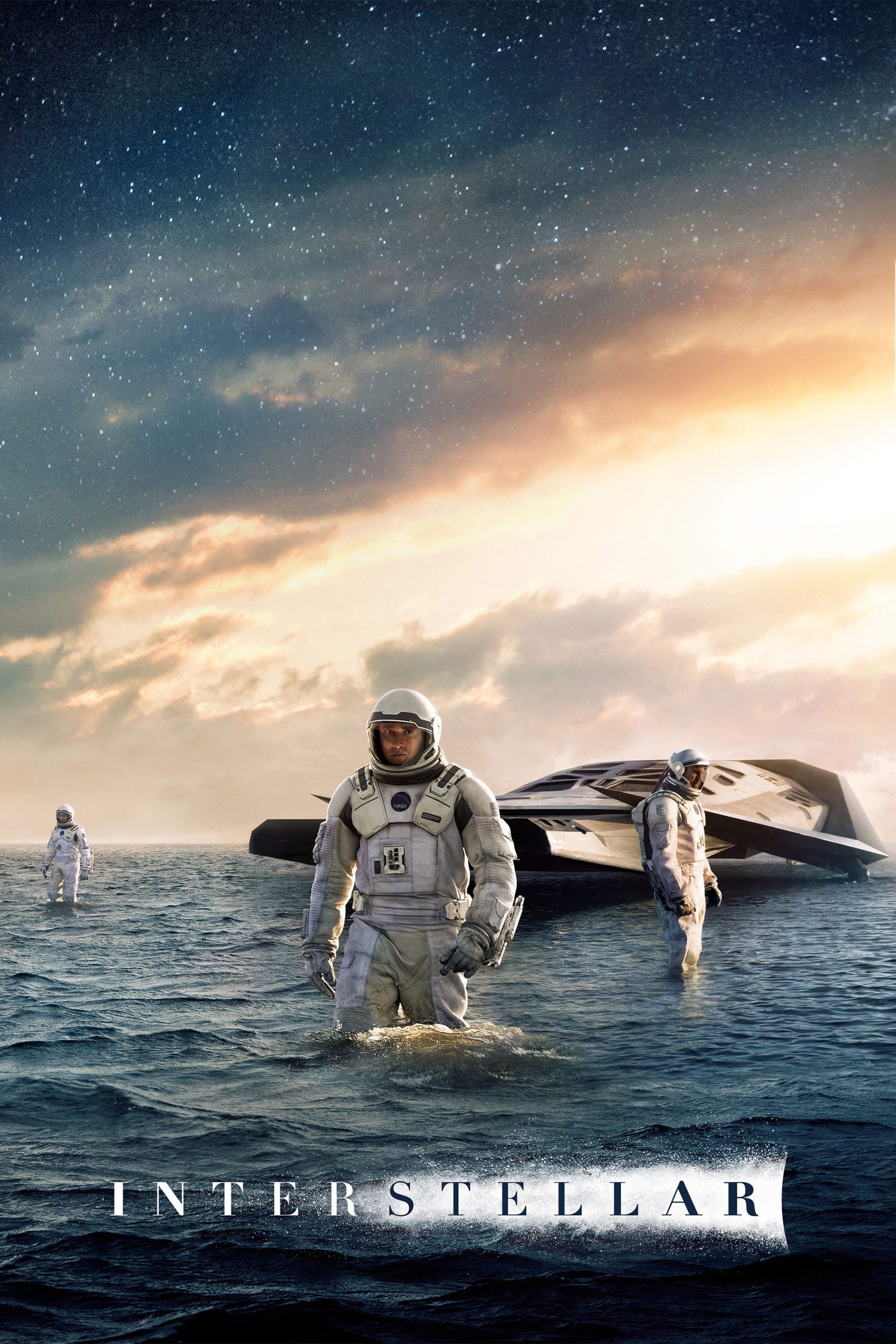
The Genre of This Film
My experience of “Interstellar” has always been defined by its status as science fiction. When I first encountered the film, I immediately recognized its allegiance to the traditions of speculative storytelling set against a backdrop of advanced technology and scientific wonder. Christopher Nolan doesn’t just use science fiction tropes; he immerses his audience in them, constructing a cinematic universe where wormholes, black holes, and time dilation are not mere plot devices but integral to the journey. For me, “Interstellar” stands at the threshold of hard science fiction, firmly rooted in thoughtful, often theoretical physics, while also pushing the boundaries of emotional and cosmic exploration. This film doesn’t dip its toes into space simply for spectacle—I see its entire narrative, aesthetic, and emotional architecture built on the foundational principles of the science fiction genre. Everything, from its narrative ambition to the design of its worlds, reflects the genre’s relentless drive to imagine realities alternate to our own, yet tethered to scientific possibility. It’s not a fantasy of other worlds; it’s a speculation on what the future might hold given advancements in knowledge and technology.
Key Characteristics of the Genre
- Common themes
Science fiction, as I have always understood and cherished it, revolves around the consequences of technological progress, the search for knowledge, and the ethical dilemmas arising from scientific discovery. These films often probe questions about humanity’s place in the universe and the limits (or limitless nature) of human ingenuity. Themes like survival, the fragility of ecosystems, the tension between logic and emotion, and relationships tested by unknown frontiers—each of these pulses at the heart of the genre as I have taught and experienced it. There is also a recurring curiosity about artificial intelligence, the evolution of humanity, and an almost philosophical fascination with time, space, and mortality. - Typical visual style
Whenever I picture the visual signature of science fiction, I see clean, futuristic lines, technology that feels tangible yet forward-looking, and striking juxtapositions of the familiar with the alien. My eye is drawn to the cold, metallic interiors of spaceships, the geometric vastness of engineered landscapes, and sequences where cosmic phenomena dwarf every human concern. Lighting frequently plays with contrast—harsh illumination inside a spacecraft against the inky emptiness of deep space. Practical and digital effects collaborate in most contemporary entries, melding photorealism with speculative imagination. Color palettes can swing between clinical sterility and the subtle warmth of human presence in otherwise inhospitable environments. I’ve always found that even when venturing into cosmic unknowns, science fiction holds a tension between authenticity and the uncanny. - Narrative structure
My observations point to a genre that prizes intellectual and temporal complexity—often employing nonlinear storytelling or structures that challenge our understanding of time and causality. Many science fiction films, like “Interstellar,” plant their roots in an inciting scientific conundrum or technological dilemma. The narrative then branches outward, offering explorations of both human drama and speculative concepts. Flashbacks, parallel timelines, and layered narrative frameworks emerge frequently, especially in more cerebral works. I notice a distinctive pattern: the journey motif. Protagonists travel—through space, across time, or even within simulated realities—seeking knowledge or rescue, propelling the story by discovery and revelation rather than simple conflict. - Character archetypes
I have grown accustomed to certain archetypes reappearing in science fiction’s most enduring narratives: the visionary scientist, the reluctant explorer, the calculating AI, the morally ambiguous authority figure, and the everyman thrust into extraordinary circumstances. What makes these characters compelling to me is not their novelty, but how each film reinterprets them in light of new technological or existential crises. The genre loves to pit human emotion against the cold logic of science. Relationships—parent and child, human and machine, individuals and society—are often at the fore. Sacrifice for the greater good, loneliness in the quest for discovery, and resilience against incomprehensible odds build the fundamental human core amid grand cosmic speculation.
How This Film Exemplifies the Genre
Witnessing “Interstellar” unfold for the first time, I was drawn immediately into its palpable sense of awe—the signature feeling I associate with great science fiction. The film’s meticulous attention to the physics of space travel and black holes reflects the genre’s call for rigorous conceptual grounding. I was particularly struck by how Nolan’s vision doesn’t simply use wormholes or theories of relativity as throwaway concepts. He embeds them directly into the world’s rules and the very problems the characters must solve. This uncompromising scientific approach reminds me of the genre’s roots in credibly projected futures, designed not to escape reality but to extend its reach.
What resonated with me on a deeper level, though, was how “Interstellar” balanced its spectacle with the vulnerability of its characters. I watched as cosmic phenomena became deeply personal obstacles, with risky space maneuvers and time dilation forging heartbreak and longing. The classic science fiction journey is here—Cooper and his crew take humanity’s last hopes into the unknown, yet every galactic leap is underpinned by fears and ties to home. The film intensifies genre conventions by stretching the limits of human emotion across immeasurable distances, tying the most abstract theories—like love transcending gravity—back to the experience of being human. That willingness to speculate boldly, yet pull meaning back to fundamental relationships, is quintessential science fiction as I feel it: a genre built on both intellectual challenge and emotional resonance.
The visual landscape Nolan constructs sits with me as another unmistakable genre marker. The spacecraft Endurance—a rotating wheel echoing the design heritage of films like “2001: A Space Odyssey”—evokes that timeless vision of humanity’s technological ambition. Planetscapes, such as the ocean world or the frozen wastelands, exemplify my favorite science fiction motif: the defamiliarization of what we know. Even the black hole, Gargantua, is presented not as a stylized effect, but as a scientific marvel rooted in contemporary astrophysics. That fusion of spectacle with intellectual plausibility is precisely what I crave in the genre’s visual storytelling.
Most of all, I appreciate how “Interstellar” commands its narrative complexity. I never approach a science fiction film expecting the journey to unfold linearly or without intellectual detours. Here, time slips, paradoxes, and multi-generational consequences are central—not mere twists for shock value but tools for narrative exploration. I see Cooper, Brand, Murph, and the other characters operating as classic genre types, yet filtered through the anxieties of their era—the desperation to save the planet, to reconcile duty with love, to stake everything on a slim chance to survive. This weaving together of scientific marvel and deeply personal struggle demonstrates the genre at its most potent and enduring in my eyes.
Other Essential Films in This Genre
- 2001: A Space Odyssey (1968) – I find this film impossible to ignore when discussing science fiction’s purest expressions. Kubrick’s visual minimalism and Hal 9000’s cold logic have set the gold standard for cinematic exploration of humanity’s relationship to technology and the cosmos. Each time I watch it, I’m reminded of the genre’s ability to stun with scale and ambiguity.
- Contact (1997) – Whenever I seek a story that blends scientific inquiry with personal longing, I return to Robert Zemeckis’s adaptation of Carl Sagan’s novel. “Contact” dives headlong into the tension between faith and reason, exploring extraterrestrial contact through rigorous science and deeply felt emotional stakes. I see clear parallels with “Interstellar” in the interplay between cosmic mysteries and human connection.
- Solaris (1972) – Tarkovsky’s contemplative pace invites me to linger over the psychological and existential ramifications of encountering the unknown. “Solaris” is less concerned with technology itself than with the internal experiences science fiction makes possible—the genre here becomes a vehicle for poetry and introspection, something I find consistently rewarding as an analyst.
- The Martian (2015) – Ridley Scott’s adaptation of Andy Weir draws much of its energy from realism and the practical challenges of space survival. I admire its commitment to working through each scientific problem—oxygen, food, communication—in meticulous detail. To me, this film embodies another core appeal of science fiction: the celebration of human problem-solving and perseverance against cosmic odds.
Why This Genre Continues to Endure
From my earliest days discovering the genre, I have felt that science fiction speaks to a deep and perennial anxiety—and optimism—about what lies ahead for humanity. When I talk to students and fellow enthusiasts, I always hear the same curiosity: how will our technology define us, and can we ever outrace our limitations? Films like “Interstellar” don’t simply supply escapist thrills. They invite me to wrestle with the same questions scientists, philosophers, and dreamers have asked for generations: What is our responsibility to the future? Can our love, resolve, or intellect anchor us in the unknown?
Science fiction endures, in my judgment, because it keeps evolving alongside our advancements and fears. When I watch a new entry in the genre, I find that even the most fantastical technology or speculative narrative is really about us—our capacity to adapt, to build, to imagine. The genre absorbs each era’s pressing concerns, from ecological collapse to artificial intelligence, and transforms them into stories where we might see our best or worst possible selves. This adaptability is thrilling; it ensures that the genre is never static but always responsive, always provocative.
Perhaps most importantly, I am repeatedly drawn back to science fiction because it assures me that stories grappling with the unknown are essential. They remind me that anxiety about the future is inseparable from hope, and that every effort to understand the universe is at heart an attempt to better understand our own humanity. Whether the story takes place in a distant galaxy or a near-future Earth riven by crisis, I find the same promise: so long as we are compelled to question, to explore, and to connect, science fiction will continue to hold a mirror up to our highest aspirations and deepest fears. In that endless dialogue between what is and what might be, I find the genre’s lasting power.
If you’re interested in how viewers respond beyond technique, you may want to explore audience and critical reception.
🎬 Check out today's best-selling movies on Amazon!
View Deals on Amazon