
Film Movement Context
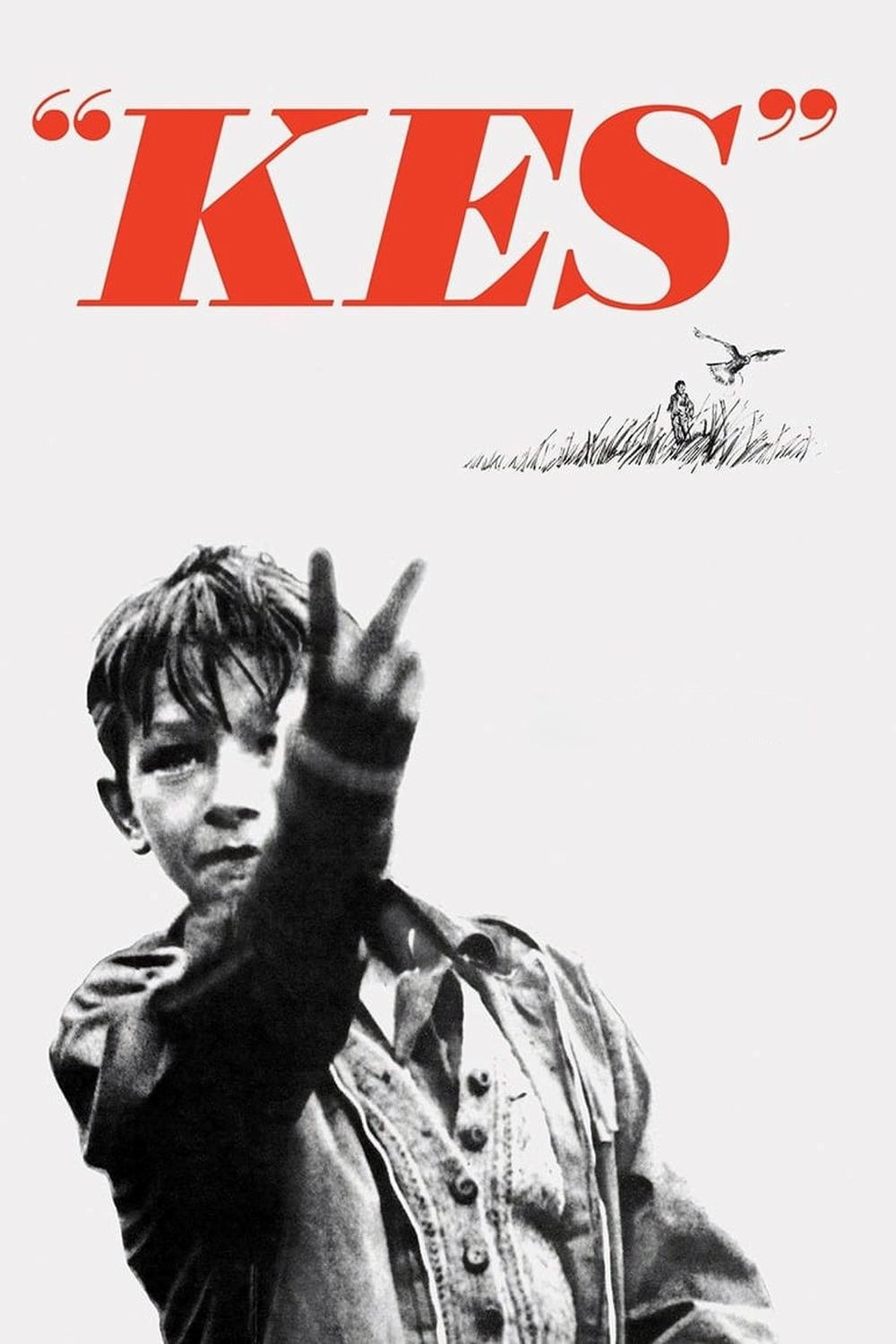
Every time I revisit Kes, I feel as though I’m entering the unvarnished world of working-class Northern England in the late 1960s—not through spectacle or melodrama, but through an unfiltered lens that refuses to look away from hardship or dignity. For me, Kes stands as one of the most affecting examples of the British social realism movement. I see it nested within this tradition due not only to its direct address of socio-economic realities but also because of its relentless commitment to naturalism, unadorned performances, and authentic locations. This is not just a movie about a boy and a hawk—it’s an immersion into the daily processes that shape a youth like Billy Casper, shaped in dialogue with both the Italian neorealist tradition and the postwar British “kitchen sink” dramas. Whenever I watch Kes, I’m reminded how British social realism, at its best, eschews ornamentation to focus on the lived, often unrecorded experiences of society’s marginalized members. In my view, this film draws its power from the collective social fabric of its environment, representing much more than an individual narrative, but rather a running meditation on class, aspiration, and entrapment.
Historical Origins of the Movement
When I trace the threads of British social realism, I always find myself drawn to the ways this movement broke from its cinematic predecessors. If I think back to the 1950s and 60s, British cinema was mostly characterized by mannered dramas or comedies divorced from working-class life. Yet, simmering beneath the surface, Britain was undergoing massive social upheavals—declining industry, suffocating class structures, and the disillusionment of postwar youth pressing against the walls of tradition. Directors like Ken Loach (who would helm Kes), Lindsay Anderson, and Tony Richardson all seemed, in my eyes, driven by a fervent desire to document the realities mainstream cinema ignored—the strife of council estate life, the fatigue of the industrial working day, the psychological toll of ingrained class barriers.
What really crystallized for me is that British social realism emerged not just as an aesthetic but as a kind of cinematic activism. I see this approach as deeply indebted to both the British “kitchen sink” dramas of the late 1950s (“kitchen sink” being shorthand for films willing to show the world’s unglamorous, everyday details) and, just as crucially, Italian neorealism’s commitment to authentic locations and non-professional actors. When I watch films like Saturday Night and Sunday Morning or A Taste of Honey, what stands out is a willingness to inhabit—and often indict—the grind of British life rather than romanticize it. To me, these directors recognized realism’s political potential: by pointing the camera at overlooked subjects, they demand viewers reckon with the material conditions underpinning modern society.
In the late 1960s, when Kes was made, I can sense how British cinema was desperately seeking alternative voices—a cinema that belonged not to the London elite, but to the regions, to the people for whom “greatness” seemed forever out of reach. Social realism became the movement by which British filmmakers forced audiences to confront the consequences of social neglect—layering fiction with the texture of documentary, and using the medium’s visual power to highlight injustice, agency, and the quiet forms of resistance that emerge in oppressive circumstances.
This Film’s Contribution to the Movement
What always strikes me whenever I experience Kes is how it elevates the tenets of social realism far beyond mere setting or dialect; it transforms them into a kind of cinematic poetry. I see Ken Loach’s style here as the clearest articulation of social realism’s potential: he lets the story breathe, unhurried, so the audience cannot escape the bleakness and fleeting wonders of Billy’s world. The decision to cast David Bradley, a non-actor, surfaces for me a sense of vulnerability and authenticity; nothing here feels coached, sanitized, or manipulated to fulfill middle-class preconceptions of working-class life. The camera lingers, often without music or artifice, extracting meaning from the stifling classrooms, cramped kitchens, and fielded outskirts of Barnsley. I can’t help but notice how Loach eschews conventional narrative arcs—a move that aligns perfectly, in my mind, with social realism’s devotion to the rhythms of real life, where small victories rarely undo systemic defeat.
There’s a potent example in the minutiae of Billy’s encounters: the brutality of school, the ambivalence of his family, the microaggressions from authority figures, and the solitary dignity he finds in falconry. These scenes, to me, never stoop to tragedy-mongering or easy uplift. Instead, Loach wields social realism as a means of observation rather than overt activism; he puts the audience in the position of witness. I’m drawn to how the film refuses melodrama, focusing instead on behaviors, routines, and gestures—the subtle ways in which institutional and familial violence accumulate. Loach’s depiction of Billy’s bond with the kestrel is, in my eyes, as much social critique as character study. The hawk becomes emblematic: a brief escape from a world designed to clip wings before they ever learn to soar.
What I find truly exceptional is how Kes exemplifies social realism not just through content but style: the natural light, the muddy textures, the unvarnished dialogue, and especially the improvisational feel of certain scenes elevate the film’s impact. From my viewpoint, Loach’s preference for shooting out of sequence and sometimes surprising actors to provoke genuine reactions imbues the film with a lived-in immediacy. Kes isn’t only recording Northern England in 1969—it’s inviting me to grapple with the ongoing, unresolved struggle for recognition, opportunity, and dignity among the dispossessed.
Influence on Later Genres and Films
- Enduring Template for Contemporary British Social Realism – I often see the fingerprints of Kes in more recent works by directors such as Shane Meadows (This Is England) and Andrea Arnold (Fish Tank). Both draw from Loach’s careful mix of non-professional casting, regional specificity, and an unyielding focus on the psychological toll of working-class life. The matter-of-fact portrayal of hardship—never merely a backdrop, but an active force shaping character—remains an indelible hallmark for successors, reinforcing my belief in Kes as a kind of foundational text for British social realism in the decades that followed.
- Impact on Child-Centered Coming-of-Age Films – What I find especially influential in Kes is its ability to channel the adult world’s brutality through a child’s eyes, without patronizing or sensationalizing his experience. This approach, in my estimation, paved the way for later films centering on disaffected youth: I see echoes in Lynne Ramsay’s Ratcatcher, the Dardenne brothers’ Belgian dramas (The Kid With a Bike), or even in Sean Baker’s The Florida Project. All these films, in my reading, owe a debt to the structure and tone pioneered by Kes—the way it invites me to see oppression, resilience, and fleeting beauty filtered through the subjectivity of young, marginalized protagonists.
- Influence on Hybrid Documentary-Fiction Forms – I’ve always been intrigued by the hybrid grammar of Kes: it’s fictional, yet it feels uncannily documentary in its handling of place, performance, and visual composition. In later years, this blending informed filmmakers experimenting with docu-drama, cinéma vérité, and other liminal forms. I think of Clio Barnard’s The Arbor or even the gritty realism found in social documentaries like British Steel, where the techniques popularized by Kes—naturalistic dialogue, unfiltered environments, improvisational actor engagement—find new homes. For me, this lineage underscores how the film continues to inspire new generations of directors eager to dissolve the fiction/non-fiction divide in service of greater emotional truth.
The Movement’s Lasting Impact
Every time I engage with films descended from British social realism, I’m struck by how the movement’s insistence on authenticity remains so crucial. In a cinematic landscape frequently captivated by spectacle or escapism, social realism reminds me that cinema’s most enduring power often grows from looking unflinchingly at the real—at the routines, indignities, and rare moments of hope within ordinary lives. I return to Kes again and again, not because it offers false comfort, but because its refusal to sentimentalize hardship feels deeply respectful to its subjects. I find that social realism’s persistence shapes everything from contemporary drama and documentary to the vanguard of international art cinema, rooting new stories in the soil of genuine lived experience. The movement matters to me because it resists disposability and trends, insisting on the value and complexity of each life it depicts. Its legacy, as I see it, is not just a stylistic approach but an ethical commitment—a promise to render the invisible visible, challenging each of us to look more closely, and ultimately, more compassionately at the world we inhabit.
To connect style and technique with broader context, you may find these perspectives useful.
🎬 Check out today's best-selling movies on Amazon!
View Deals on Amazon