
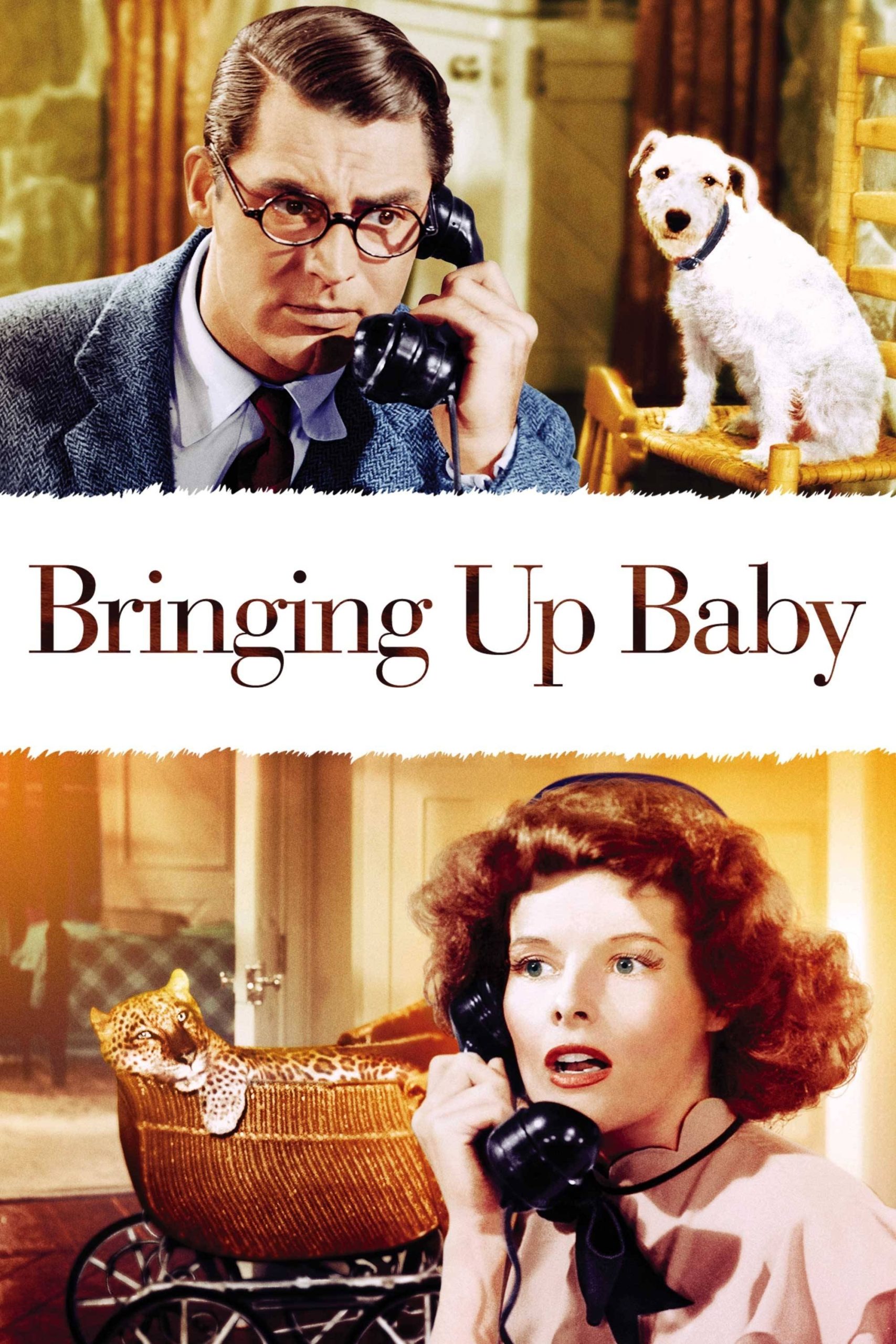
The Genre of This Film
From the very first moment I was swept along by the irrepressible antics and sparkling dialogue of “Bringing Up Baby,” I recognized I was in the presence of a classic screwball comedy. No other genre so nimbly combines chaos, wit, and romantic entanglement wrapped around absurd predicaments. For me, screwball comedy is defined by its frantic pacing and sharp banter—a singular comedic energy that resists stillness, and almost refuses to allow its characters a quiet moment. “Bringing Up Baby” holds true to this identity with such unfaltering commitment that I find it impossible to categorize the film as anything else. The situations spiral with breathtaking speed, misunderstandings multiply, and the central romance fizzes not with sappy sentiment but with relentless comedic complication. The film’s absurdity, eccentric characters, and insistence on turning the basic premise—a paleontologist, a free-spirited heiress, and a wandering leopard—into a masterpiece of comic mayhem, embodies what I consider to be the quintessence of screwball comedy.
Key Characteristics of the Genre
-
Common themes
When I think of classic screwball comedies, recurring motifs quickly come to mind. Gender role reversals consistently turn social conventions upside down. Romance is rarely straightforward; it’s laced with misunderstandings, deliberate misdirection, or even open hostility that gradually melts. I’m drawn to the way these films mock the upper class, highlighting eccentricities of the wealthy or skewering the idle rich. Mistaken identity threads its way through many of these stories, alongside the relentless pursuit of love without melodrama. Money and inheritance often spark the central chaos, fueling endless misadventures and domestic skirmishes. Ultimately, screwball comedies revel in the challenge to authority and decorum, prioritizing heart, wit, and resilience over propriety. -
Typical visual style
The screwball world requires a kinetic camerawork and vivid compositions that keep pace with escalating insanity. I always notice fast cuts, quick pans, and compositions that often crowd the frame, reinforcing the chaos. The visual approach is not overtly stylized with shadows or dramatic lighting—instead, I see a brighter, flatter look that allows the actors’ expressions and physicality to shine. Sets bustle with props and moving parts: swinging doors, upended furniture, and, in the case of “Bringing Up Baby,” roaming leopards and misplaced dinosaurs bones. I find the blocking to be theatrical, mirroring stage farce, as characters careen in and out of rooms, each entrance or exit escalating the mayhem. It’s a visual language that supports comedic rhythm, giving performers room for their rapid-fire dialogue and slapstick. -
Narrative structure
In my experience, screwball comedies adhere to a structure that heightens tension through relentless complication. The inciting incident is usually accidental—a chance meeting, a missing item, a misunderstood gesture. This small spark rapidly triggers larger comic disasters: misunderstandings pile one atop the other, propelling the characters toward outcomes they neither intended nor expected. I recognize these films by their ability to sustain multiple crises simultaneously, seldom pausing to resolve one before launching another. Yet beneath the anarchy, there’s always a romantic core; by the end, love emerges not through grand declarations, but through mutual acceptance amid the madness. Climax is less a single dramatic blow and more a comic crescendo—a point when all strands tangle before unraveling in a final gesture of reconciliation. -
Character archetypes
I am always struck by the vivid personalities that populate screwball comedies. The female leads shine with brains, nerve, and a hint of unpredictability—I think of them as whirlwind agents of disorder, charmingly disruptive yet ultimately irresistible. Opposite them stands a male protagonist who is upright, often stuffy or oblivious, clinging to reason and routine even as his world spins out. Supporting players round out the chaos: befuddled authority figures, meddlesome relatives, and comic sidekicks, each contributing to the tangle of confusion. These archetypes create not only tension and laughter but also a critique of rigid social roles, as the films invite us to root for mischief and unconventional love.
How This Film Exemplifies the Genre
Whenever I revisit “Bringing Up Baby,” I’m reminded of why this film, to me, is the definitive screwball comedy. It doesn’t merely flirt with the conventions of the genre; it saturates every scene with comic exuberance, keeping me off-balance yet delighted from start to finish. The core dynamic—Cary Grant’s rigid, accident-prone paleontologist David Huxley colliding with Katharine Hepburn’s wild, irrepressible Susan Vance—is, in my eyes, the Platonic ideal of antagonistic chemistry. Susan’s chaos upends David’s methodical life, her unpredictability driving the narrative ever deeper into bedlam. I cannot help but marvel at how the movie crafts its comic energy through a ceaseless stream of mishaps: a missing dinosaur bone, a pet leopard mistaken for a wild beast, characters donning disguises, authorities flummoxed at every turn.
What stands out most—is how the film gleefully tosses out social decorum. I am always delighted by the gender role inversions; Susan is the pursuer, brash and unashamed, while David is perpetually flustered, often the damsel in distress. Watching Hepburn dominate the frame—sprinting across golf courses, orchestrating deception, blundering into ever wilder schemes—I see a direct challenge to the era’s prescribed gender behavior, and the comedy is richer for it. The mistaken identities and rapid-fire misunderstandings are so intrinsic to the action that I lose track of logic and simply surrender to the spectacle. The film never stops to apologize for its excess, instead reveling in the cascading confusion. Visuals support these antics, with prop-driven scenes—the wandering leopard in a Connecticut manor, the madcap chase through rural landscapes—crafted with a light touch that brings giddy energy rather than slapstick brutality.
What I appreciate perhaps most of all is the way “Bringing Up Baby” maintains its emotional undertow amidst the pandemonium. The romance blossoms out of adversity, each disaster drawing David and Susan closer even as it seems to tear them apart. Unlike sentimental romantic comedies, I find myself rooting for these characters not in spite of their flaws and foolishness, but because the comedic journey makes their union honest and well-earned. Every misunderstanding, every comic beat, reflects what I see as the highest calling of screwball comedy: to assert, joyously, that love often grows not from quiet compatibility but from shared chaos and temporal madness. In “Bringing Up Baby,” this belief is not just subtext; it’s the engine that propels every hilarious turn.
Other Essential Films in This Genre
- It Happened One Night – When I watch Frank Capra’s landmark film from 1934, I’m reminded of how the screwball template began: mismatched travelers (Clark Gable and Claudette Colbert) on a cross-country road trip, bound by necessity and mutual irritation. The movie’s brisk repartee, class conflict, and inventive farce embody many of the same qualities I admire in “Bringing Up Baby,” though its structural simplicity offers a study in how the genre can balance romance, comedy, and social commentary.
- His Girl Friday – In Howard Hawks’s 1940 film, the speed and sophistication of the dialogue alone takes my breath away. Rosalind Russell and Cary Grant snap lines like tennis pros, turning a newspaper office into a crucible of wit and competitive affection. The battle of the sexes is front and center, and I love how the frenetic pacing and the combative affection between the leads reinforce the genre’s emphasis on romantic discord as comedic fuel.
- The Awful Truth – Watching Leo McCarey’s 1937 comedy, I always relish the interplay of suspicion and miscommunication that propels its divorced couple (Irene Dunne and Cary Grant) toward reconciliation. This film pushes the genre’s penchant for marital squabbling to the forefront, relying on escalation, coincidence, and timing to produce both hilarity and genuine emotional payoff—a hallmark that “Bringing Up Baby” amplifies in its own way.
- My Man Godfrey – For me, Gregory La Cava’s 1936 comedy infuses screwball energy into an exploration of class, centering on a “forgotten man” butler (William Powell) swept up in a socialite’s world. The outlandish family, the confusion of motives, and the turnaround in fortunes combine effervescent comedy with satirical edge, echoing the genre’s appetite for both absurdity and critique.
Why This Genre Continues to Endure
There’s a reason I find myself returning time and again to screwball comedies, even after seeing them countless times. In today’s cinematic landscape—which sometimes feels saturated with formulaic romance or humorless irony—there’s a vitality in these classics that feels almost radical. For me, screwball comedies never simply settle for a love story or a punchline. What I cherish most is the agile blending of intellect, chaos, and earnest feeling. The world they create rewards misfits and conversational virtuosos; it insists that order is only ever temporary and that joy emerges from embracing the unpredictable. The energy is infectious, the dialogue is a masterclass in comic timing, and the reversals of expectation feel endlessly fresh.
I believe audiences continue to connect with the genre because it mirrors the banter, obstacles, and accidental victories of real relationships—exaggerated, of course, but rooted in authentic confusion and surprise. The reversals of power, the unpredictable heroines, the hapless heroes—all reflect anxieties and aspirations that transcend generations. There’s something deeply comforting about a story in which madness gives way to understanding, in which love persists despite, or because of, its obstacles. These films offer a blueprint not for romance or propriety, but for resilience and comedic survival. When I watch “Bringing Up Baby,” I don’t just laugh at the pratfalls or marvel at the repartee; I feel invited into a world where disaster can be transformed into connection, and where laughter, ultimately, tempers all troubles.
If you’re interested in how viewers respond beyond technique, you may want to explore audience and critical reception.
🎬 Check out today's best-selling movies on Amazon!
View Deals on Amazon