
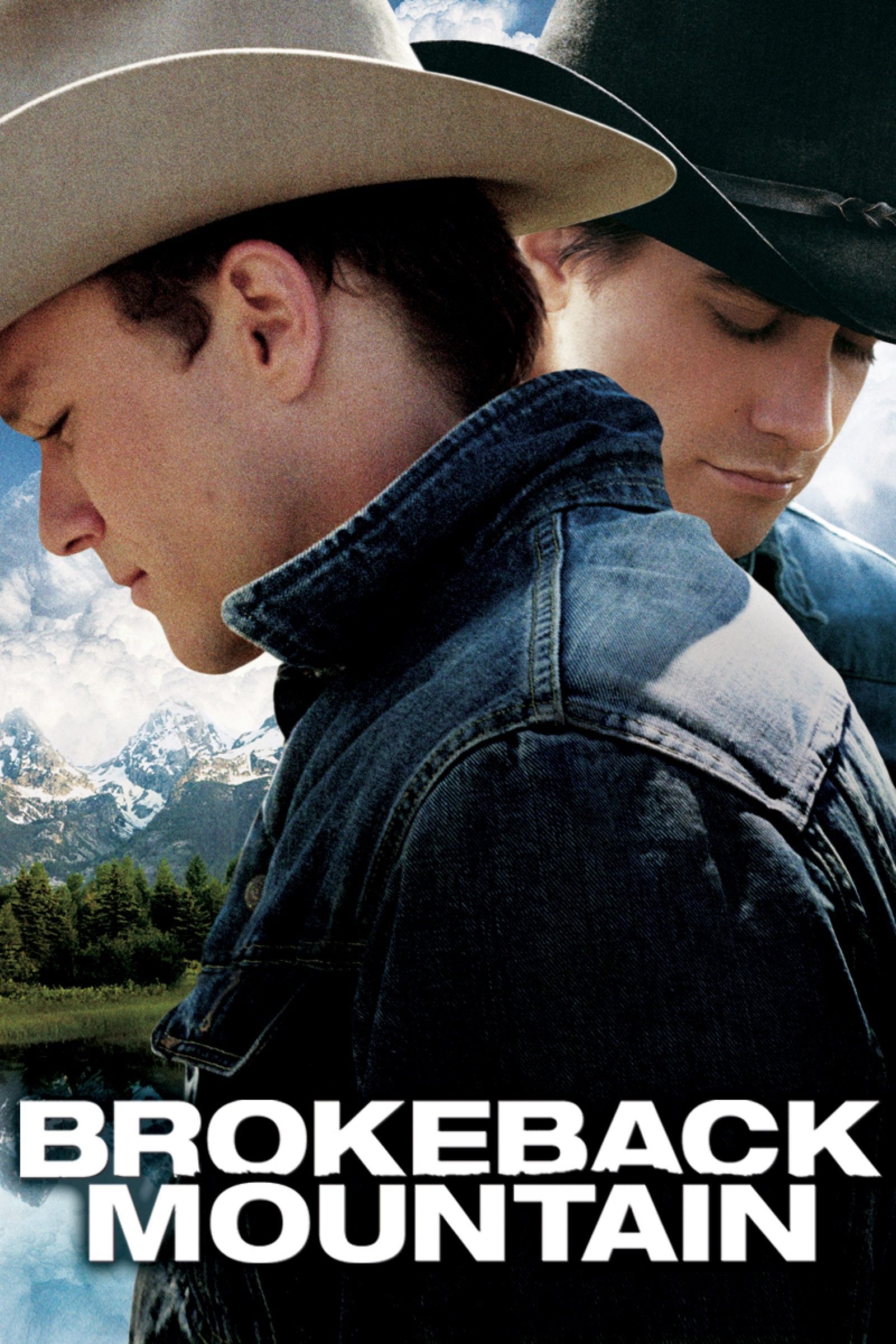
Film Movement Context
When I first experienced “Brokeback Mountain,” I instantly recognized how deeply it belongs to the tradition of New Queer Cinema, a movement that always fascinated me with its boldness and emotional complexity. Yet, what strikes me most is the way “Brokeback Mountain” doesn’t stay confined to any single tradition; instead, it straddles the lines between revisionist genre work and personal-political storytelling. It reinvents not just the Western genre but also the entire cultural conversation about masculinity, longing, and identity. For me, the heart of its association lies squarely within New Queer Cinema, as it takes that movement’s spirit—radical honesty, unflinching empathy, and a willingness to disrupt heteronormative frameworks—and pushes it onto a scale I hadn’t seen before. While watching it, I realized that the film’s aesthetic choices, slow-burning intimacy, and refusal to conform to Hollywood’s traditional story arcs made it a distinct—and, to my mind, pivotal—product of the New Queer Cinema wave that swept through the 1990s and early 2000s. The film’s use of landscape and silence, its refusal to sensationalize or caricature queer experience, and its insistence on deeply flawed humanity all position it squarely within this energized and subversive cinematic tradition. Yet, unlike many earlier entries in the movement, “Brokeback Mountain” achieved mainstream penetration. That, to me, is what makes its movement context so compelling and complex.
Historical Origins of the Movement
Tracing back to the early 1990s, the origins of New Queer Cinema always felt to me like a creative eruption—a sudden, vivid response to decades of cultural repression, silence, and the devastation wrought by the AIDS crisis. What stands out in my mind is how these filmmakers, creators like Todd Haynes, Cheryl Dunye, and Gregg Araki, refused to offer sanitized or tragic depictions of queer lives. Instead, they used cinema as a battleground, a provocation, but also a mirror for their own communities. I’ve always admired how this movement didn’t just demand to be seen; it demanded to be felt on its own terms, with all the messiness and contradiction that came with queer experience in a hostile society.
To me, the urgency that birthed New Queer Cinema was a response to both systemic neglect and misrepresentation. When I consider the factors that converged—heightened public discussions about homosexuality, the artistic activism around AIDS, and a new generation of independent filmmakers hungry to tear down taboos—I see how the ground was fertile for films that were unapologetically political and creatively experimental. The lack of mainstream space for authentic queer voices made many of these works fiercely inward, deeply coded, or outright rebellious. There was no patience for respectability; the world was literally on fire, and these films reflected that combustible energy. Personally, it’s the raw immediacy and personal stakes of the movement’s beginning that still electrify me when I rewatch early films like “The Living End” or “Go Fish.” The sense that filmmakers weren’t just seeking representation—they were fighting for survival and self-definition—is, to me, the movement’s defining legacy.
This Film’s Contribution to the Movement
I will never forget the visceral, almost physical ache I felt watching “Brokeback Mountain” for the first time. For me, it represented not just another addition to queer cinema, but a seismic leap: the movement was suddenly visible on a platform and scale it had never previously achieved. What stunned me was how Ang Lee, through his meticulous direction, didn’t dilute the emotional truth of the film to appease commercial expectations; instead, he layered on subtlety, ambiguity, and resonance in ways that echoed the best of New Queer Cinema, but with new resources and extraordinary technical polish. I remember noticing how the film’s refusal to offer easy catharsis or moral closure echoed the earlier movement’s skepticism of mainstream narratives, yet it did so in a style that invited, rather than alienated, a mass audience.
What resonates deeply with me is how “Brokeback Mountain” reconfigures the Western mythos through a queer lens, accomplishing something I consider quietly radical. The aching isolation of Ennis and Jack, dwarfed by the grandeur of Wyoming’s mountains, flips the Western’s iconography inside out; the landscape becomes both the site of longing and of estrangement. For all its beauty, it is an indifferent, even cruel, witness to love that cannot speak its name. Instead of seeing the West as a place for masculine triumph, I see it here as a vast, almost cosmic reminder of vulnerability and constraint. In refusing the conventions of the “coming out” story or the “tragic gay romance” archetype, the film asserts an emotional honesty I associate with New Queer Cinema—unceremonious, ambiguous, and profoundly interior.
For me, the most extraordinary contribution “Brokeback Mountain” makes is this: it gave mainstream viewers access to complicated, unapologetic queer desire and grief without soft-pedaling its pain or relativizing its significance. The film’s careful handling of silence—those long, breathless pauses and the weight they carry—reminded me of the movement’s pioneering works, where what was unsaid was more powerful than what was spoken. When I think about what the New Queer Cinema had been striving for, it was this depth, this fullness, this refusal to counterfeit experience for the sake of comfort. “Brokeback Mountain” does not just represent the movement—it elevates it to a degree I find both historically important and personally moving.
Influence on Later Genres and Films
- Complexity in Mainstream LGBTQ+ Narratives – What I have seen in the years since “Brokeback Mountain” is that its emotional and stylistic approach opened the door for a wide range of mainstream films to treat LGBTQ+ characters with dignity, nuance, and narrative centrality. The film’s gravitas gave permission for later films such as “Call Me by Your Name” or “Moonlight” to embrace slow pacing, ambiguity, and emotional subtlety. These newer works rarely feel the need to sensationalize or tokenize queer love—instead, they draw on the interior complexities that “Brokeback” made visible in American film.
- Genre Subversion and Fusion – From my perspective, “Brokeback Mountain” inspired directors to experiment with blending genres—not just within queer cinema, but more broadly. I saw echoes of its approach in titles like “Carol,” which revitalizes the period melodrama, and even in unconventional horror or thriller entries featuring queer protagonists who are not defined by stereotypes. The impulse to take a familiar structure (the Western, the romance, the coming-of-age tale) and then invert its expectations through marginalized experience traces back, for me, to the shockwaves “Brokeback Mountain” sent through the industry.
- Mainstream Reception of Queer Tragedy Without Exploitation – I believe “Brokeback Mountain” changed public and critical expectations for how queer tragedy could be portrayed. Instead of reducing its protagonists to mere cautionary tales, the film insists on showing their autonomy, their contradictions, and their elemental struggles. In this gentle insistence—and aching refusal to resolve pain easily—I see the roots of more recent, self-reflexive films and series that handle loss and repression with authentic complexity. The fact that TV shows like “Looking” or films such as “Portrait of a Lady on Fire” can dwell on longing, absence, and unresolved emotion without being dismissed as niche or exploitative owes much to the tonal precedent set by “Brokeback Mountain.”
The Movement’s Lasting Impact
When I reflect on the aftermath of New Queer Cinema, especially as articulated and expanded by “Brokeback Mountain,” I realize how much this movement continues to matter to me as both a viewer and a film historian. At its essence, New Queer Cinema is about reclamation—the narrative, emotional, and artistic reclamation of experiences ignored or contorted by earlier film history. What remains most resonant to me, years after the first wave, is the movement’s dissolving of the old binaries: high culture versus pulp, tragedy versus happiness, visibility versus privacy. There’s a generosity and honesty that shines through, even as social attitudes and cinematic practices have continued to shift.
For me personally, the legacy is enduring precisely because it proved the point that radical, honest queer storytelling wasn’t just for the margins—it could, and did, transform the center. “Brokeback Mountain,” as both culmination and catalyst, still shapes the environment in which filmmakers and audiences approach questions of identity, intimacy, and tradition. I see its shadow in every film that upends genre or reimagines love’s possibilities, whether the work is explicitly queer or not. The continued appetite for stories that defy easy labeling or moralizing—that insist on ambivalence, yearning, and the poetry of difficult lives—speaks to me as the truest testament to what New Queer Cinema and its inheritors have accomplished.
The movement’s value has never resided solely in representation but in transformation: it transformed not only who gets to be seen, but how the act of seeing itself happens. Each time I return to “Brokeback Mountain,” I am reminded of how art expands our empathy, reshapes our definitions of courage, and invites us into another’s wounds and desires as if they were our own. This is why I continue to see New Queer Cinema’s imprint everywhere, and why its story—like that of Jack and Ennis—is neither finished nor confined to one era. The journey, the longing, the refusal to yield to silence: these remain, and they still matter deeply in film culture and in my own engagement with cinema.
To connect style and technique with broader context, you may find these perspectives useful.
🎬 Check out today's best-selling movies on Amazon!
View Deals on Amazon