
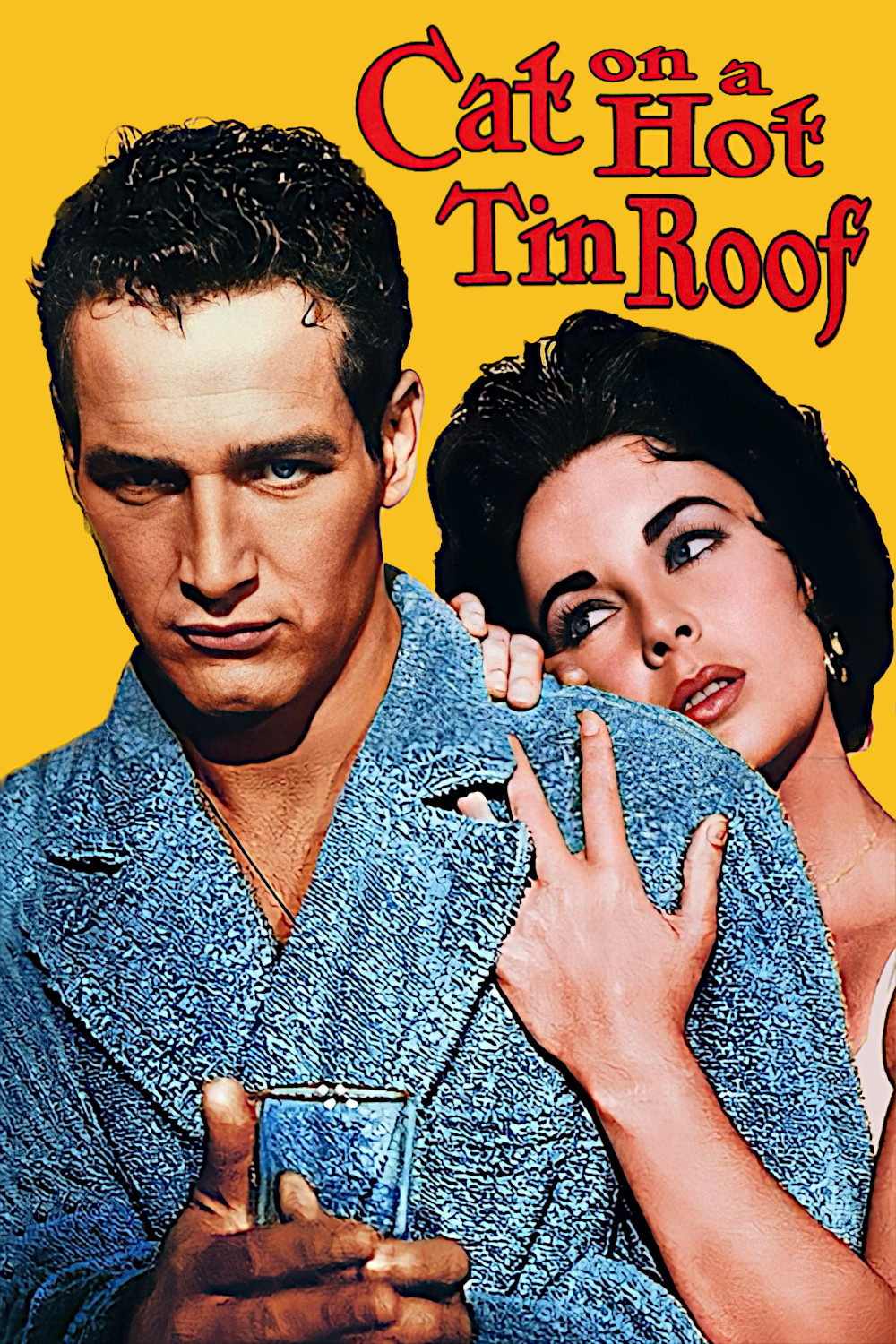
The Genre of This Film
Every time I sit down with “Cat on a Hot Tin Roof,” I am struck by how utterly inseparable it feels from the traditions of American drama—what I’d specifically call the drama genre, or more narrowly, the family melodrama. Watching this film often feels like attending an emotionally charged stage play that’s been carefully adapted to take advantage of cinema’s immediacy. I’d place “Cat on a Hot Tin Roof” squarely in the drama category because it’s driven not by action, suspense, or fantasy, but by stark, intense interpersonal conflict, raw emotion, and revelations that ripple through the heart of a family in crisis. The movie interrogates dysfunction, deception, and desire in a way that pulls no punches. For me, the genre stamp is made even clearer by the fact that every key scene pivots on the spoken word and raw emotion—the actors often look as if they’re wrestling with secrets bigger than themselves. The geographic and familial setting, with the stifling pressure of Mississippi humidity and family expectations, becomes a crucible where truths bubble to the surface, which I see as textbook drama territory. I’d even say the film’s roots in Tennessee Williams’s original play tie it so deeply into the tradition of intense, character-led drama that I find it virtually impossible to classify it anywhere else.
Key Characteristics of the Genre
-
Common themes
From my experience, drama—especially family melodrama—fixates on raw, universally human struggles that seem to echo well beyond any single household. I repeatedly observe explorations of alienation, loneliness, repressed desire, grief, addiction, and the power dynamics that quietly rule families. The genre typically homes in on secrets: the things unsaid, or the truths characters resist at any cost. An unspoken tension hums through every encounter, as if everyone is teetering on the brink of honesty. Conflict is internal as much as external: watching these films, I feel a distinct sense of pressure—characters must wrestle with their own shame, regrets, or yearnings, not just with each other. The genre’s focus on psychological turmoil appeals to me because, despite the heightened emotion, the situations have the texture of real, complicated lives. The dramatic genre, especially when it veers into melodrama, reveals how the domestic sphere becomes a battleground for self-worth, validation, and suppressed truths, and that persistent questioning—of loyalty, love, and identity—runs through nearly every example I admire. -
Typical visual style
Every time I revisit a classic drama like this, I find myself awed not by flashy effects or breakneck action, but by the intensity of the film’s visual composition. Take “Cat on a Hot Tin Roof” as a prime example: interiors are often cramped or dimly lit, adding weight to every confrontation. Movies of this stripe rely on tight, claustrophobic framing that traps the characters together, emphasizing their inability to escape each other or themselves. I find slow camera movements and long takes essential here, letting the audience steep in emotion and giving actors room to savor pauses and outbursts. The color palette often sticks to earthy, muted tones—never drawing attention away from the inner turmoil on display. Sometimes, I notice clever use of shadow or mirrors to heighten a sense of duplicity or unresolved tension. The focus remains squarely on performance—not just what’s said, but what’s suggested between the lines. Even exterior settings, which might provide relief in another genre, can feel oppressive, heightening the sense of emotional suffocation. -
Narrative structure
The narrative design of drama frequently unfolds like a series of confessionals or confrontations—what I’ve come to recognize as revelations layered upon revelations. Rather than a tidy, goal-driven plot, the story is propelled by emotional revelation: characters resist change, secrets simmer, and then everything comes to a head. There’s a rhythm of confrontation and retreat, escalation and uneasy peace, and often a climactic unraveling at the dinner table, in a bedroom, or during some significant domestic ritual. Unlike mystery or thriller genres, there’s rarely a puzzle to be solved: instead, the narrative concerns itself with character arcs—transformations (or refusals to transform) secured through long, emotionally raw dialogues. In dramas I appreciate most, nothing is truly resolved until characters are laid psychologically bare, their defenses peeled away. The resultant catharsis—when it arrives—lands as a gut punch rather than a neat resolution. -
Character archetypes
In these stories, I repeatedly meet a familiar cast of tormented, deeply layered individuals. There is often the emotionally wounded protagonist—someone who withdraws, lashes out, or numbs their pain (like Brick in this case). I encounter the unwavering spouse or family member (such as Maggie, whose frustration and passion fuel the story), plus the overbearing patriarch or matriarch—the forceful personality who bends the family to their will (Big Daddy is a classic case for me). These films are rarely without a meddling or resentful sibling (Gooper comes to mind), an emotionally suppressed partner, and family members torn between obligation and resentment. The genre thrives on relationships between these types, usually magnifying old wounds, jealousies, or unresolved desires. I’ve noticed that these archetypes are often painted with moral ambiguity; no character is wholly virtuous or villainous, and that gray area is what keeps me so invested. The performers are allowed—sometimes compelled—to swing from loving to cruel, soulful to bitter, all in the span of a single conversation.
How This Film Exemplifies the Genre
As I reflect on “Cat on a Hot Tin Roof,” what resonates most with me is how fully it embodies and amplifies the essential elements of classic drama, specifically within the realm of domestic or family melodrama. The film doesn’t lean on action, spectacle, or witty banter. Instead, I find that it surrenders itself to the push and pull of raw honesty and denial, letting the power of language and complex emotion do the heavy lifting. The emotional architecture is extensive: the slow, relentless build of tension between Brick and Maggie, the looming shadow of Big Daddy’s mortality, and the way every room feels supercharged with years of suppressed resentment and longing. For me, it is this claustrophobic, nearly theatrical structure—set almost entirely within a single house on a stifling Mississippi night—that reveals just how much the genre values emotional proximity over physical movement.
Each time I watch, the characters’ motivations and wounds strike me as excruciatingly believable. Brick’s withdrawal is not just a plot device, but an expression of genuine emotional pain and deep-seated disappointment. Maggie’s desperation to break through to him reveals not only her cunning but also her underlying vulnerability—another layer the drama genre cultivates so effectively. Big Daddy, in my eyes, is the quintessential dramatic patriarch: bombastic, narcissistic, and yet, under the bravado, frightened by his own mortality and by uncertainties he cannot control. The confrontations—their unpredictability, the way old arguments resurface and new wounds open—mirror the unsparing honesty central to the genre.
What always strikes me hardest is the sustained use of dialogue as both weapon and shield. Characters carve each other open with words. The screenplay adapts the intensity of the stage play without losing the intimacy of performance. Silences, glances, and physical proximity are used as effectively as spoken lines; I find that even the blocking—the arrangement of actors in a scene—emphasizes how close, yet irreparably separated, these people really are. Cinematically, Richard Brooks’s direction avoids distracting style, instead favoring prolonged, near-theatrical takes that allow the viewer (and me) to swim in the cauldron of unspoken emotion. I’m always left with the sense that what is happening on screen is happening everywhere: families torn by expectation and disappointment, yearning for affirmation or forgiveness. In these ways, I see “Cat on a Hot Tin Roof” less as an adaptation and more as a masterclass in everything that makes the genre so essential and so discomforting for me.
Other Essential Films in This Genre
- A Streetcar Named Desire (1951) – Whenever I think about films that have shaped and defined the drama and family melodrama genre, this adaptation of another Tennessee Williams play immediately springs to mind. Its atmosphere is equally pressurized, its character dynamics even more tempestuous. I see Blanche’s tragic arc and the film’s setting in a humid New Orleans apartment as reflections of the same emotional intensity that resonates in “Cat on a Hot Tin Roof.” The focus on desire, delusion, and family destruction carries over, and I find it indispensable for understanding how drama can lay psychological wounds bare.
- Long Day’s Journey Into Night (1962) – This film adaptation of Eugene O’Neill’s stage classic is, for me, the gold standard when it comes to cinematic portrayals of family suffering. The Tyrone family’s night-long confrontation, their addiction, disappointment, and grief all unfold in a confined setting, much like the Pollitts. I find the unvarnished performances and slow-burn revelations create some of the most searing moments in the drama tradition—offering a mirror for the turmoil depicted in “Cat on a Hot Tin Roof.”
- Ordinary People (1980) – Though set decades later, this film by Robert Redford reignites the spirit of the domestic drama with a distinctly modern sensibility. I always appreciate how it navigates family dysfunction after tragedy. The resignation, silence, and emotional volatility among its characters feel like they could have stepped right out of Williams’s world, showing how the genre’s core traits remain uncannily consistent even as stylistic trappings change.
- August: Osage County (2013) – Watching this more recent entry, I’m convinced the family melodrama genre isn’t going anywhere. The Weston family’s toxic reunions, bitter revelations, and unforgettable confrontations ring true to everything I relish in “Cat on a Hot Tin Roof.” The modern, cynical edge may set it apart in tone, but the DNA is the same: layered characters, buried resentments, and explosive dialogue carved into a stifling domestic space. I find myself watching in both horror and fascination, much as I do with the classics.
Why This Genre Continues to Endure
Speaking personally, I think drama, and specifically family melodrama, endures because it’s rooted not in spectacle but in experience. Even when the details are lavish or the conflicts exaggerated, the feelings are unmistakable. I return to these films and plays again and again because they offer catharsis—they scrape away at the surface of normalcy to expose the churning need and regret buried beneath. Stories like “Cat on a Hot Tin Roof” remind me how families shape, support, damage, and try to heal each other. That emotional frankness—sometimes brutal, sometimes tender—transcends eras and backgrounds. I never feel like I’m watching relics; I feel as if I’m watching secrets and cruelties I’ve witnessed, or at least imagined, in the world around me.
There’s also something about the intensity of performance that drama encourages. I gravitate toward these stories because I yearn to see actors push themselves into uncomfortable, deeply honest places. The setups may be simple—a living room, a bedroom, a dinner table—but every exchange vibrates with stakes I recognize from real life. I believe that’s why the genre persists: viewers, myself included, crave that kind of naked emotional truth, the kind that makes us squirm, reflect, and ultimately empathize. Each new generation seems to return to these stories, in film or on stage, because the causes and consequences of love, betrayal, and forgiveness never really disappear. Family melodrama, at its best, offers me both a mirror and a map: recognition of what’s broken, and a lingering question about whether it can ever truly be mended. That, more than clever plotting or visual trickery, is what makes the genre immortal in my mind—and why I’ll keep revisiting these stories for as long as filmmakers keep crafting them.
If you’re interested in how viewers respond beyond technique, you may want to explore audience and critical reception.
🎬 Check out today's best-selling movies on Amazon!
View Deals on Amazon