
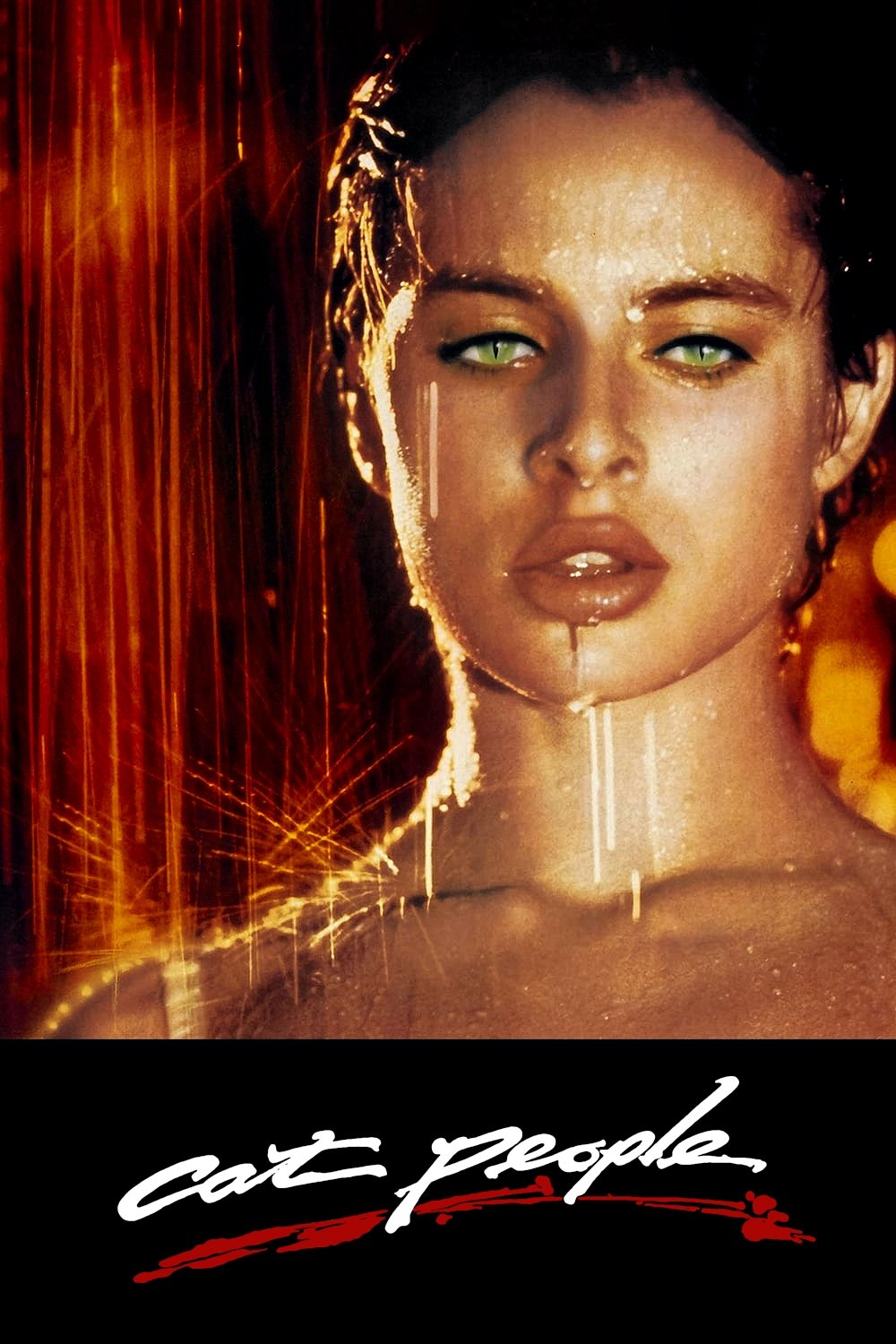
Film Movement Context
Every time I revisit “Cat People” (1942), I’m reminded of how magnetic a film can be when it leans into the suggestive rather than the explicit. For me, this film is inseparable from the atmospheric world of American film noir—a movement that, to my mind, is less about criminal underworlds and more about the pull of psychological darkness. However, “Cat People” also embodies the ethos of what I would call psychological horror, as shaped by Val Lewton’s RKO unit, which—although not always recognized as a full-blown movement—feels like a vital branch of 1940s cinema. When I consider where “Cat People” fits, it’s the convergence of film noir’s moody visual scheme and the deliberate psychological ambiguity that marked a shift in American horror, away from Universal’s monsters and towards an interior, unsettling terrain. It’s this interstitial space—film noir aesthetics merged with Lewton’s brand of suggestion-based horror—that makes the film tradition it belongs to so rich in subtext and so formative for how suspense and psychological fear evolved on screen.
Historical Origins of the Movement
Looking back, I see how movements like film noir were not born out of artistic manifestos but from a collision of social anxieties, emerging art forms, and economic need. Noir flourished amidst the global disillusionment of World War II, a period when shadowy moral worlds came to dominate Hollywood. The technical influences of German Expressionism—those buckets of shadow, skewed angles, and claustrophobic compositions—were funneled into American films by émigré directors and cinematographers. Lewton’s RKO horror productions, of which “Cat People” is arguably the most influential, were designed precisely because of limitations: budget constraints meant spectacle was out, so suggestion and psychology had to deliver the punch.
I find that this marriage of style and necessity created something I would describe as cinematic anxiety—stories thrumming with what is unseen and unspoken. Horror, in this tradition, wasn’t just cheap thrills. It was a response to a society coming to terms with Freud’s unconscious and a world rendered unstable by war. If Universal’s earlier monster movies thrived on makeup and visible threats, Lewton’s cycle—“Cat People,” “I Walked with a Zombie,” “The Seventh Victim”—took shape in the dark corners of the psyche, exploiting our fear of what might be lurking just out of frame. Here, the movement’s historical roots are as much psychological as they are visual; I feel them every time a character’s face drifts into shadow, refusing to tell me what’s real.
This Film’s Contribution to the Movement
What always grips me about “Cat People” is how it elevates ambiguity to a kind of brutal poetry. When I watch it, I don’t just see a story about a woman afraid she’ll turn into a panther; I see anxiety weaponized through chiaroscuro lighting and the architecture of silence. Jacques Tourneur’s direction, to me, plays like a jazz riff on noir’s visual cues—each shadow is thick with implication, and the terror is never supernatural for its own sake. Instead, it’s personal, psychological, almost mythic. The most iconic scenes—the pool sequence, the walk home at night—are all about what I’m allowed to imagine, not what I’m shown.
This is where “Cat People” becomes, in my view, a template for psychological horror. It’s not the fear of fangs at your throat; it’s the dread of not knowing if those fangs even exist. That sense of tenuous reality ties directly back to noir, but the stakes are heightened by Lewton’s insistence on subjectivity. I often reflect on how much the film demands of me: I have to fill in its ellipses, decide for myself if the supernatural is “real,” or if it’s a manifestation of sexual repression and isolation. The simple set pieces—just footsteps echoing through a corridor—are charged with the terror of anticipation, and I’m left grasping for certainty that never comes.
It’s this restraint that places “Cat People” at the center of the movement: it advances the tradition by showing how suggestion, privation, and ambiguity can be cinematic virtues, not shortcomings. Tourneur and Lewton trusted their audience, and as a result, I find myself implicated in the horror. The film’s shadows become the shadows in my own mind, populated by the anxieties I bring as a viewer. That’s a sophistication I rarely encounter, and it’s why I see “Cat People” as essential not only to the Lewton-RKO cycle but to the evolution of American screen terror as a whole.
Influence on Later Genres and Films
- Influence 1 – The Art of Suggestion in Horror: I’ve noticed that so many later horror directors, from Alfred Hitchcock to John Carpenter, have taken a direct cue from “Cat People”’s policy of restraint. Hitchcock’s “Psycho” owes much to Lewton’s indirectness—I’m convinced the infamous shower sequence derives its power because the violence, like in “Cat People,” is felt more than seen. Horror’s tendency to hide threats in plain shadows, to focus on what isn’t shown rather than explicit gore, feels like a legacy stamped by Lewton and Tourneur’s approach.
- Influence 2 – Psychological Complexity in Genre Cinema: Watching thrillers and horror films that emerged in the 1960s and beyond, I often find echoes of “Cat People”’s willingness to blur the line between reality and delusion. Roman Polanski’s “Repulsion” or Robert Altman’s “Images” both draw on a tradition, rooted here, of utilizing subjective camerawork and open-ended narratives. Because “Cat People” refused to fix the supernatural as merely external threat, later cinemas found permission to probe internal states and mental breakdowns, to use genre as a lens for psychological unrest.
- Influence 3 – The Hybridization of Film Noir and Horror: As I see it, movies that collapse the boundaries between noir’s visual vocabulary and horror’s existential terrors—like “Don’t Look Now,” “The Innocents,” or even “The Ring”—all walk a path first blazed by “Cat People.” That DNA runs through the stylized, shadow-rich nightmares of neo-noir and modern psychological horror. For me, the tension between expressive darkness and psychological intrigue, once the preserve of noir detectives and femmes fatales, became central to horror cinema in a way that wouldn’t have happened without “Cat People.”
The Movement’s Lasting Impact
Reflecting on the ongoing significance of this movement, I’m struck by how thoroughly its devices have been internalized by directors and viewers alike. I still see traces of the movement’s ethos every time a filmmaker leaves rooms dimly lit, or when a script trusts me to conjure dread from the ordinary. What began as a response to wartime resource shortages and the migration of European artistry to Hollywood quickly metastasized into a philosophy of restraint—a belief that, often, the most terrifying monsters of all live in the shadows of human consciousness. I recognize this in films ranging from the ambiguous terrors of David Lynch to the paranoid minimalism of contemporary art-horror.
The Lewton-Tourneur tradition, as crystallized by “Cat People,” continues to matter for me because it fundamentally shifted the relationship between filmmaker and audience—the burden of imagining, of filling in narrative and psychological gaps, became ours. There’s a subtle but profound empowerment in this tradition; I’m no longer just a passive observer but an active participant in constructing meaning and mood. The movement taught me, and I would argue the medium more broadly, that cinematic horror isn’t just about what we witness, but about what we suspect and fear in the darkness. That legacy, for me, ensures its relevance—its power to unsettle and intrigue—right up to the present day.
To connect style and technique with broader context, you may find these perspectives useful.
🎬 Check out today's best-selling movies on Amazon!
View Deals on Amazon