
Film Movement Context
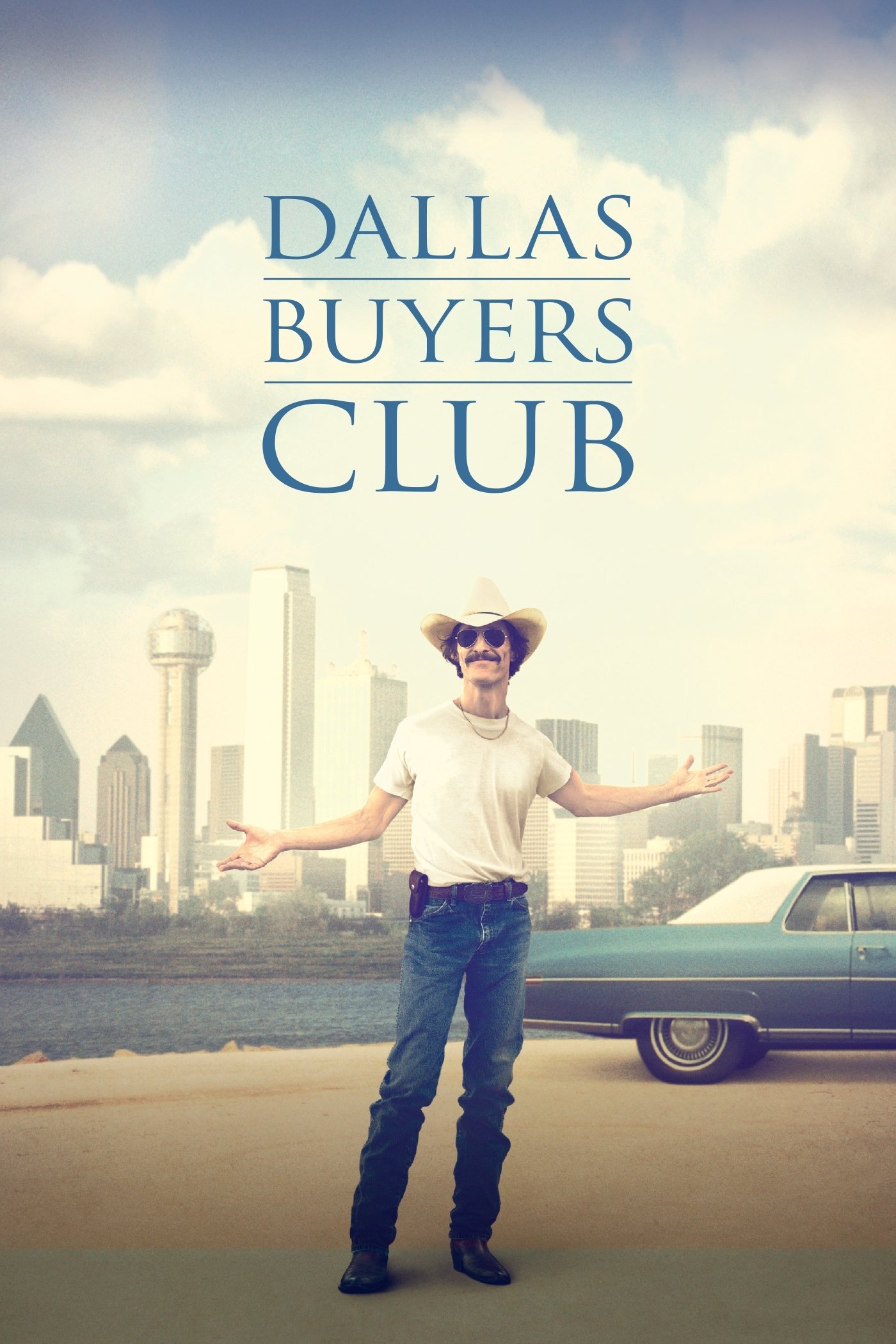
What immediately strikes me about “Dallas Buyers Club” is its soul-baring realism—the kind I associate most powerfully with the American Independent Cinema movement, especially that strain which flourished post-1990s. Watching the film, I felt enveloped by a visual lexicon of handheld intimacy, unvarnished performances, and a willingness to wade into socially charged territories much like those championed by the “New Queer Cinema” and “Neo-Realism” traditions. To my mind, the film most clearly belongs to this revitalized era of American Independent Cinema, steeped in the lineage of honest, unflinching exploration of marginal lives—rendered with low-budget ingenuity and a kind of warts-and-all authenticity that stands in sharp relief against the gloss of commercial Hollywood. What matters is not just the subject matter—AIDS, sexuality, politics, and personal transformation—but also the way in which these are uncovered through the movement’s commitment to empathy and ethical storytelling. I find “Dallas Buyers Club” deeply emblematic of this tradition, embodying both a stylistic and thematic rejection of mainstream conventions in favor of grounded, lived-in storytelling.
Historical Origins of the Movement
Tracing back, my understanding of American Independent Cinema’s evolution is knotted with the economic and cultural upheaval of the late twentieth century. In the aftermath of the studio era and the collapse of the classical system, I saw a surge of outsider filmmakers in the late 1960s and 1970s—think Cassavetes, whose gritty urban stories were shot in apartments rather than backlots. By the early 1990s, movements like “Sundance” indie proved irresistible to artists dissatisfied with the sanitized output of the major studios. These directors and writers, as I see it, wanted to strip away the artifice, lending voice to the marginalized and the taboo.
The birth of “New Queer Cinema” in the early 1990s—films by Todd Haynes, Gregg Araki, and Cheryl Dunye—was, to me, an act of necessity and rebellion. As AIDS raged and mainstream movies hedged from queer or illness narratives, these independent auteurs carved out space for stories that pierced the status quo. The budgets were skeletal; the urgency, palpable. Movies like “Poison,” “Swoon,” and “Paris Is Burning” didn’t just fill a gap—they dared to present lives otherwise erased or misrepresented. And the stakes were personal: for many, storytelling was a form of activism.
When I look at the technical style—documentary-like camerawork, the rawness of performance, natural lighting—it feels like a deliberate echo of Italian Neorealism. Yet, where De Sica and Rossellini spoke to war’s aftermath, American independent filmmakers targeted the alienations of their own era: homophobia, epidemic devastation, bureaucratic cruelty. The blending of Neo-Realism and queer cinematic traditions, for me, sets the template that “Dallas Buyers Club” would invigorate: a cinema of lived truth, ethical risk, and radical empathy.
This Film’s Contribution to the Movement
When I first watched “Dallas Buyers Club,” what lingered was not simply the tragic sweep of Ron Woodroof’s journey, but rather the profound vulnerability woven into the film’s every frame. The handheld camera and grainy palette didn’t just recall indie hallmarks—they felt like declarations of honesty, encouraging me to see the narrative as lived experience rather than constructed drama. This, I believe, is the film’s greatest fidelity to its cinematic lineage. Jean-Marc Vallée’s direction refuses sentimentality, letting pain, injustice, and fragile hope emerge organically. There is no attempt to sanitize the contorted humanity of Woodroof or his companions; instead, I’m confronted by their imperfections, their prejudices, and their doggedness in the face of institutional neglect.
For me, the film’s decision to center a conflicted, bigoted protagonist forced into queer and activist communities is a radical narrative gambit—one that would never thrive under the commercial demands of major studios. The early independent movement’s willingness to foreground “difficult” characters—those who resist easy sympathy—finds new resonance here. The relationship between Woodroof and Rayon, to my mind, encapsulates the interplay of marginalization and alliance that sits at the heart of New Queer Cinema, yet it does so with a fresh sensitivity and updated context. Rather than lionize or vilify, the film invites me to witness, to wrestle with the jagged realities of stigma, class, and identity.
From a stylistic perspective, I’m fascinated by how the film achieves naturalism—not just through visual means, but in the performances themselves. McConaughey’s gaunt physical transformation underscores a commitment to realism, but even more, his performance exudes a precariousness that feels risky in the best tradition of indie acting. I see echoes of Cassavetes and the Dardenne brothers in the way moments unravel: nothing is forced, exposition rarely delivered straight, the mess of daily existence preserved amid the tides of personal and historical crisis.
What stands out within the broader genre evolution is how “Dallas Buyers Club” merges the docudramatic realism of 1970s indies with the thematic boldness of New Queer Cinema, yet it also projects these tendencies into the mainstream. I interpret this as a significant contribution: the film not only reasserts the continuing necessity of independent voices but also demonstrates their power to unsettle and shape “prestige” cinema, broadening the possibilities for what mainstream audiences might accept as worthy and necessary storytelling.
Influence on Later Genres and Films
- I witnessed “Dallas Buyers Club” embolden later biographical and social-issue films to push beyond mere advocacy or uplift; instead, they began to pursue complexity and discomfort with renewed vigor. Films like “Room” and “Spotlight” seem, in my eyes, to inherit the same unflinching aesthetic and ethical rigor—telling true stories through uneasy protagonists and refusing tidy catharsis.
- Another legacy I trace lies in its impact on character-driven, illness-centered narratives—a genre often battered by melodrama or exploitation. After this film, I noticed a rise in works treating health crises with unflinching honesty rather than sentimentality, as seen in “Still Alice” or “The Big Sick.” Here, survival is complicated, compromise is necessary, and the effects of societal neglect are foregrounded.
- Lastly, in the sphere of queer representation, “Dallas Buyers Club” catalyzed urgent debates around authenticity in casting and storytelling. Watching its aftermath, I realized that films and television began more openly scrutinizing who gets to play what roles, who writes these stories, and where genuine perspectives come from. While some responses were critical of the film’s casting, they nonetheless spurred a critical reckoning within the industry—prompting greater inclusion of transgender and queer voices in projects such as “Euphoria” and “Pose.”
The Movement’s Lasting Impact
Reflecting on the trajectory of American Independent Cinema, I’m struck by how enduring its values have proven to be. For me, the movement is not only significant for catalyzing new voices and visions, but also for resisting the market pressures that would otherwise sand the rough edges off urgent stories. The impact is felt in the normalization of difficult, necessary subject matter—in the sober depiction of marginalized lives and the continual questioning of who tells which stories, and why.
When a film like “Dallas Buyers Club” achieves both critical acclaim and broad recognition, I see the movement’s ethos thriving: proof that truth-telling, compassion, and formal innovation are not merely aesthetic choices but ethical imperatives. The legacy matters because it reminds audiences—and creators like myself—that cinema is at its most potent when it risks everything for honesty. The power of this movement, through films such as this, lies in its capacity to seed empathy where there was once indifference, and knowledge where there was once ignorance. For me, Independent Cinema endures because it insists: these stories are not just deserving of our gaze—they demand it.
To connect style and technique with broader context, you may find these perspectives useful.
🎬 Check out today's best-selling movies on Amazon!
View Deals on Amazon