
Film Movement Context
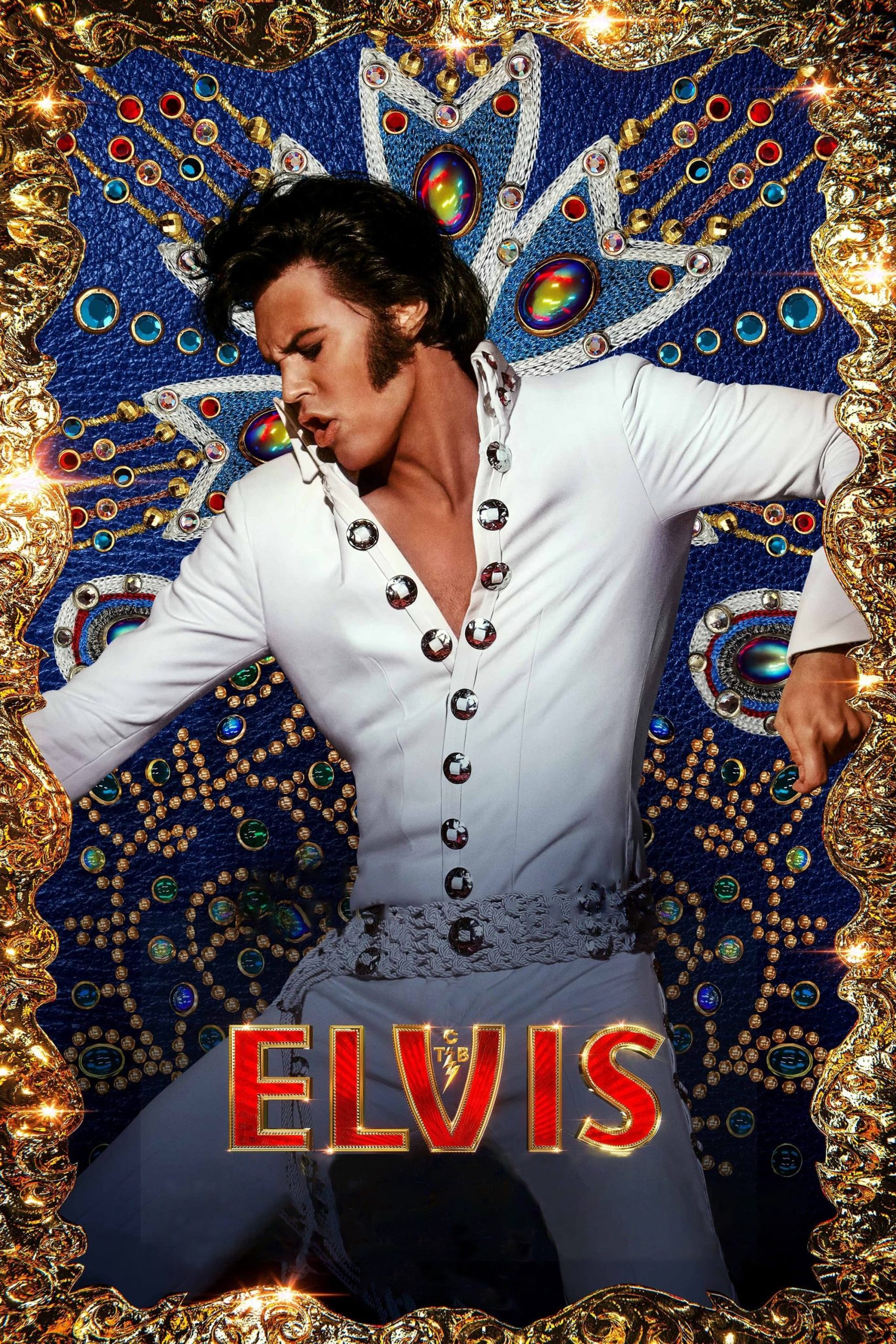
The first time I watched Baz Luhrmann’s “Elvis,” I was immediately struck by how vigorously it explodes the boundaries of the conventional Hollywood biopic. To me, the film does not just “belong” to a single film movement in the way film noir or Italian neorealism defines its raw material. Instead, “Elvis” plunges straight into the vortex of what I’d call the Postmodern Pop Cinema movement—a fluid, ever-evolving tradition that stretches from the self-conscious stylings of 1990s indie experimentation to the hyperreal spectacle that defines contemporary musical biographies. My read is that Luhrmann’s approach places “Elvis” at the intersection of three dominant cinematic traditions: postmodern pastiche, maximalist musical storytelling, and the neo-baroque. The film’s collision of eras, blending contemporary sound with vintage iconography, and its dizzying visual montage immediately signal an allegiance to postmodern filmmaking—a movement that is defined as much by its style as its substance. Yet, the resonance goes deeper for me; “Elvis” unabashedly draws on the excesses of the neo-baroque tradition, privileging sensory overload, fragmentation, and emotional spectacle. I see “Elvis” as a film that doesn’t just recount a life but refracts it, echoing the cultural remix and revisionist energies at the heart of postmodern pop cinema.
Historical Origins of the Movement
For me, the roots of the postmodern pop cinema movement are intertwined with the cultural shifts of the late 20th century. As I study these films and their contexts, it becomes clear that they did not emerge in a vacuum. In the aftermath of modernism’s striving for authenticity and meaning, the postmodern turn swept through cinema—first as a whisper in the playful intertextuality of the French New Wave, then as a roar in the wild pastiche of the 1980s and ’90s. Directors like Quentin Tarantino, Sofia Coppola, and—highly relevant here—Baz Luhrmann, began to treat film history itself as a toolkit, cherry-picking visual and sonic elements not out of nostalgia, but out of a desire to create something entirely new. This was the era where jukebox musicals collided with digital editing, and films became less about presenting unvarnished reality and more about orchestrating bold reinterpretations of it. What made this movement so electrifying for me is its willingness to blur high and low art, to pull from kitsch, pop, opera, pulp, and high drama. Meanwhile, the “neo-baroque” strand—characterized by aesthetic excess, saturated colors, and flamboyant mise-en-scène—arose as filmmakers like Terry Gilliam and Luhrmann himself responded to the new freedoms of digital filmmaking. These roots, to me, account for why “Elvis” feels so alive; it stands at the crossroads of history, remixing everything it touches.
This Film’s Contribution to the Movement
Every time I reflect on “Elvis,” I’m struck by how it doesn’t just illustrate the postmodern pop ethos—it positively revels in it. Luhrmann turns each moment into a visual and sonic collage, refusing to let the audience rest in any single time period or perspective. For me, this is the defining hallmark of a postmodern pop musical; it’s less about faithfully reproducing Elvis Presley’s life than about reflecting on how his iconography has mutated, been mythologized, and, at times, commodified by the culture that both worshipped and destroyed him. What I found exhilarating—and occasionally overwhelming—is the palpable sense of sensory assault; editing is frenetic, music cues dart from hip-hop samples to period-specific blues, and the camera rarely sits still. There was always a sense, for me, that the film is as much about reanimating Presley’s spectral media presence as it is about excavating his lived experience. The film’s refusal to adhere to a linear narrative structure—its bursts of graphic montage, its merging of newsreel footage with staged drama, its relentless forward movement—actively embody postmodern strategies.
But “Elvis” isn’t just aesthetically postmodern. The film is also a wry meditation, in my view, on authorship and the politics of representation. Luhrmann doesn’t let us forget that all biopics are acts of re-invention; the “truth” of Elvis is not a settled matter, but a battleground fought over by managers, fans, and an ever-hungry media. By placing Colonel Tom Parker (Tom Hanks) at the heart of the narrative, “Elvis” calls attention to the apparatus of myth-making itself—a postmodern move if ever there was one. I see this as a natural culmination of what postmodern pop cinema has been pushing toward: the relentless questioning of who gets to narrate history, and how celebrity itself is manufactured. In this sense, “Elvis” doesn’t just participate in the tradition—it interrogates and extends it, pointing to the very impossibility of a “pure” biographical film in a world saturated with images, remixes, and nostalgia.
Influence on Later Genres and Films
- Influence 1 – Radicalizing the Musical Biopic: I cannot help but note how “Elvis” has thrown down a gauntlet for subsequent musical biopics. Where earlier films like “Ray” or “Walk the Line” tended toward reverent chronology and naturalistic recreation, “Elvis” embraces an aesthetic of excess and fragmentation. I believe this has paved the way for a new generation of musical biographies—ones that aren’t shy about foregrounding their artificiality, experimenting with voiceover manipulation, rapid editing, and unexpected genre collisions. In this way, “Elvis” is not just a story, but a demonstration of how fragmented, subjective, and multimedia our experience of fame really is. I think such films embolden future directors to break from the safe confines of the “rise and fall” template, and instead create kaleidoscopic portraits that emphasize sensation over mere fact.
- Influence 2 – Mainstreaming Neo-Baroque Excess: One of the most exciting developments for me is seeing how “Elvis” has contributed to the ongoing mainstreaming of neo-baroque style in Hollywood. I find it significant that the film chooses not to restrain its design instincts—elaborate costumes, swirling camera moves, and a deliriously saturated palette all remind me of earlier experiments by Luhrmann, but with even greater confidence. This kind of maximalism, once reserved for the margins or for prestige art projects, now regularly appears in blockbusters and auteur-driven fare alike. I’ve noticed echoes of this in films as seemingly diverse as “Babylon” and “Bohemian Rhapsody,” where the look and feel are as narratively important as the script. There’s a shift—perhaps even a realignment—in mainstream expectations for visual storytelling, one that invites spectacle and emotional intensity on par with, say, an operatic stage production.
- Influence 3 – Deconstructing Iconic Narratives: From my vantage, “Elvis” offers a template for future biopics to interrogate and deconstruct their subjects. Rather than treating icons as fixed and immutable, the film foregrounds the instability and contested nature of historical legend. I’m seeing this play out in the ways recent films about pop culture figures are more candid, sly, and self-aware about their own mythologizing tendencies. “Elvis” doesn’t pretend that biopics can ever be removed from the machinery of fame; instead, it revels in its own mediated absurdities, its self-effacing winks and sly asides. As more filmmakers seize on this reflexivity, I expect the genre to continue evolving in the direction of critical self-awareness, genre blending, and even outright parody, carrying postmodern pop cinema’s lessons well into the foreseeable future.
The Movement’s Lasting Impact
Having spent years immersed in film history, I genuinely believe the enduring significance of the postmodern pop and neo-baroque movements can’t be overstated. What continues to fascinate me is how these films, exemplified by “Elvis,” refuse a simple binary between artifice and authenticity. Rather than seeking a lost truth, they embrace the fact that all cultural memory—especially of celebrities—is a product of endless mediation. This movement matters to me because it recognizes that we live in a world of images, surface-level memes, and cultural recycling, and instead of retreating from that complexity, it crafts meaning out of the very act of remixing and re-envisioning. Watching “Elvis,” I am reminded that cinema can be a playground for both memory and fantasy, that it thrives at the intersection of nostalgia and reinvention. I remain convinced that postmodern pop cinema’s greatest legacy is its ability to open up space for audiences to question, interrogate, and—crucially—delight in the spectacle of myth-making itself. For me, this is more than just style over substance; it’s about finding substance precisely in style, in the act of looking at and through the moving image, always aware that history is not only told—it is performed, endlessly, for a world hungry for stories.
To connect style and technique with broader context, you may find these perspectives useful.
🎬 Check out today's best-selling movies on Amazon!
View Deals on Amazon