
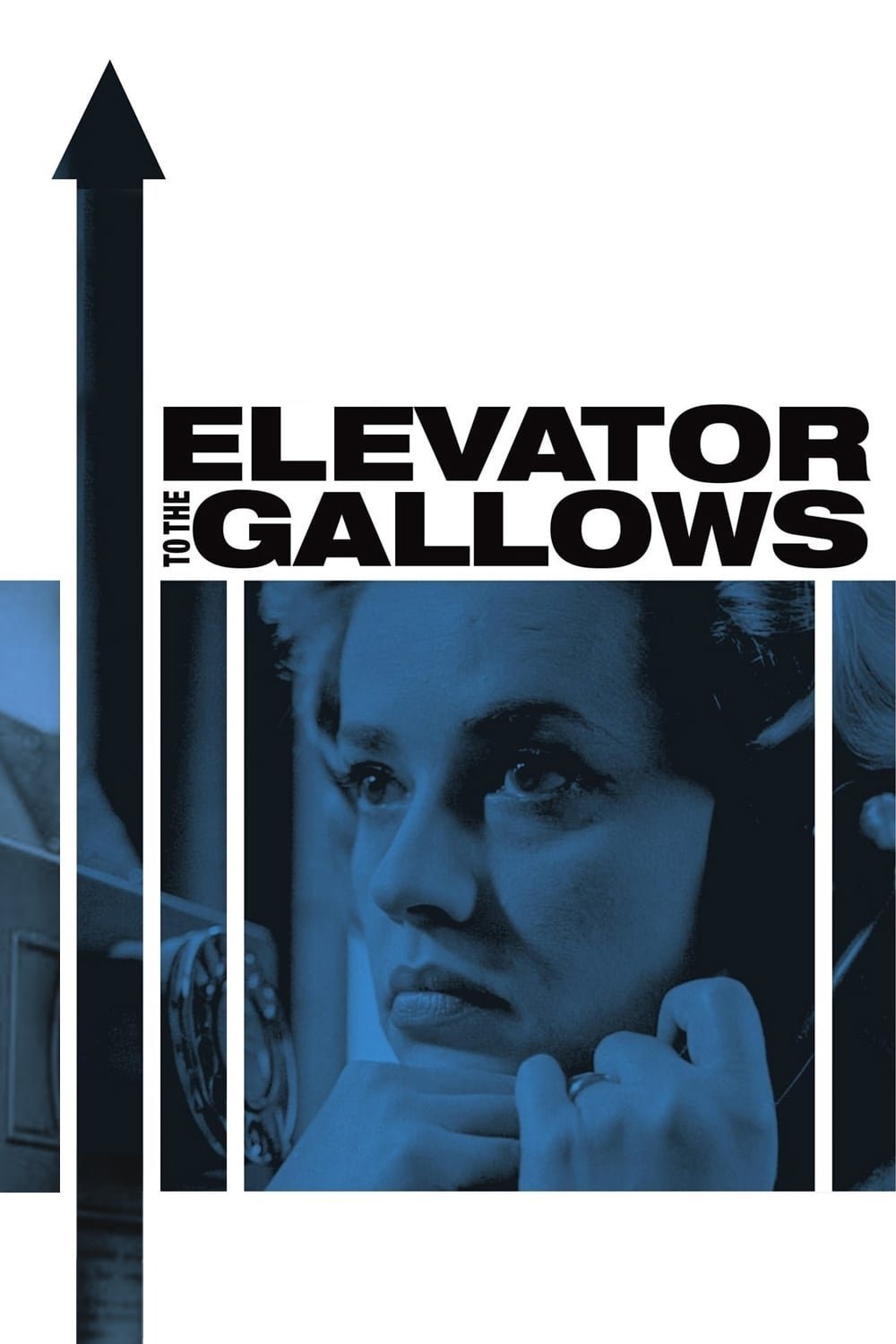
The Genre of This Film
Something unsettling always lingers with me every time I revisit Louis Malle’s “Elevator to the Gallows.” The feeling isn’t just from the story’s tightrope suspense, but from the unmistakably brooding, nocturnal world it conjures. To me, this film is an exquisite, archetypal piece of film noir. I’m drawn to call it so because every hallmark—the moral ambiguity, the fatalistic tension, the interplay of shadow and light—locks me in its grasp as soon as the plot is set in motion. “Elevator to the Gallows,” at its core, belongs to the noir tradition. Unlike ordinary thrillers or crime dramas, I see in it a dark poetry where criminal acts are inseparable from existential dread, and every character seems to wander through a labyrinth of their own making. The film may take place in late-1950s Paris, but what truly defines its identity for me is how completely it commits to the conventions of film noir while subtly reinventing them through French sensibilities and modernist style. There’s no way for me to watch this film without feeling plunged into a world where doom is inevitable, choices are haunted, and shadows, both literal and moral, crowd every frame.
Key Characteristics of the Genre
-
Common themes
When I think of film noir, the first thing that comes to mind is an unshakeable sense of fatalism. Noir seems, to my eyes, obsessed with fate—characters often believe they’re free agents, yet become trapped by their own desires or by the indifferent world around them. I’ve always found that themes like moral ambiguity, betrayal, existential dread, and the corrosive effects of guilt surface over and over again in celebrated noir titles. It fascinates me how these stories so rarely offer redemption; instead, they spiral toward inexorable doom, as if the world is rigged against its inhabitants. The allure and peril of forbidden love, the futility of escape, and a constant sense of mistrust—all these thematic undercurrents form the lifeblood of the genre for me. -
Typical visual style
From the first shadowy corridor to the final flicker of neon, film noir seduces me visually. I experience its style as a fusion of German Expressionism and Hollywood studio restraint—heavy chiaroscuro lighting, inky blacks threatening to swallow the action whole, and an almost predatory use of the urban night. Even the rain seems to fall in thicker, lonelier drops in a noir world. Urban settings dominate, with the camera frequently prowling after characters through deserted streets, fog-bound alleys, or cramped rooms. For me, mirrors, reflections, distorted angles, and the deep play of light and shadow are not just visual flourishes but direct extensions of the characters’ troubled psyches. -
Narrative structure
Whenever I settle into a noir film, I prepare myself for stories that rarely unfold in a linear, straightforward way. Flashbacks, unreliable narrators, sudden reversals, and moral reversals are practically mandatory. I often notice that chance and coincidence wield tremendous power in these plots—an ill-timed phone call or missed connection can push the story into deeper chaos. I’m especially drawn to the way noir narratives focus on a tightly wound sequence of events: a plan is hatched, inevitable mistakes happen, and a slow slide toward personal ruin follows. There’s often an agonizing sense that time is running out, a ticking clock that no one can defy. -
Character archetypes
The genre’s complex cast gives me endless material for analysis. I frequently encounter the doomed, flawed protagonist—usually an everyman or anti-hero desperate to escape a trap he may have set for himself. His moral confusion is palpable. Alongside him often moves the femme fatale, whose allure is matched only by her danger, weaving together attraction and destruction in a way I find endlessly fascinating. There are also secondary characters—the hardboiled detectives, cynical accomplices, grasping opportunists, and sometimes naively innocent bystanders—each shading the story with doubt or complicity. Everyone, it seems, is playing a game more dangerous than they realize, and trust is always a scarce commodity.
How This Film Exemplifies the Genre
I find “Elevator to the Gallows” impossible to separate from the noir tradition because of how it naturally embodies these genre-defining traits, yet pulses with an atmospheric novelty that is all its own. I see the doomed romance at its heart as a quintessential noir driver—an affair complicated by a murder plot, with both lovers ensnared in their own criminal conspiracy. The narrative, rather than unfolding in simple cause-and-effect, splinters out in unpredictable ways, driven by chance encounters and fatal mistakes that feel at once arbitrary and fated. This sense of impending doom permeates every scene. I can’t help but notice the profound isolation the characters endure, especially Jeanne Moreau’s Florence Carala, whose restless wandering through the Parisian night strikes me as an iconic image of noir alienation. She drifts, searching, swallowed by the city’s silence and shadows, the story’s stakes tightening with her uncertainty.
What cements my classification is the film’s visual language. Henri Decaë’s camerawork infuses the city with wary elegance, accentuating contrasts between light and dark that seem to mirror the characters’ internal divides. The stormy night envelops everything, making Paris feel both seductive and inaccessible. I’m particularly captivated by how the lighting traps characters indoors—Julien’s experience in the elevator, with its stark illumination and stifling shadows, underscores the genre’s concern with confinement and doom. The absence of a musical score in some passages, replaced with Miles Davis’s haunting jazz, infuses the film with melancholy and suspense unique to noir. The music, languid and improvisatory, makes every wrong turn and ironic twist push deeper into existential territory, which for me is what makes classic noir unforgettable.
Characterization in this film follows classic noir archetypes, but with modernist detachment. Julien Tavernier plays the role of the flawed anti-hero, whose rationalization of murder leads only to claustrophobia and helplessness—a hallmark of noir’s inescapable downward spiral, as I see it. Florence, meanwhile, embodies the femme fatale but in a curiously passive, almost ghostly register; she is haunted, grieving, and endlessly searching, recasting the traditional seductress into a more ambiguous, tragic figure. For me, the supporting characters—the impulsive young lovers who become entangled by accident—add a layer of randomness and social critique reminiscent of the genre’s core belief in fate and the senselessness of evil. All of these threads come together to create, in my experience, a film that feels at once a classic noir and a fresh awakening of the genre’s possibilities.
Other Essential Films in This Genre
- Double Indemnity (1944) – I turn again and again to Billy Wilder’s “Double Indemnity” when I want to revisit film noir at its purest. This film defines the genre for me both in its visual palette and its tightly constructed plot: a murder-for-insurance scheme that is doomed from the outset. I’m struck by the poisonous chemistry between Fred MacMurray’s insurance salesman and Barbara Stanwyck’s calculating femme fatale, both of whom rush headlong into disaster. Its dialogue cracks with cynicism, and its shadowy, claustrophobic compositions are, in my mind, the gold standard for what noir can look like.
- Out of the Past (1947) – Whenever I think about noir’s poetic fatalism, Jacques Tourneur’s “Out of the Past” stands out. I find the film’s flashback-driven narrative and Robert Mitchum’s world-weary detective to be the epitome of noir sensibility. Jane Greer’s character blurs the line between victim and manipulator, and the story’s sense of tragic inevitability never loosens its grip. For me, the constant interplay of memory, deception, and regret threads through every frame, reinforcing the genre’s obsession with the price of past mistakes.
- Le Samouraï (1967) – Jean-Pierre Melville’s “Le Samouraï” is a later French addition to the noir canon, and when I’m in search of a contemplative, minimalist take on the genre, this film never disappoints. Alain Delon’s hitman is a study in loneliness and existential detachment—his life becomes a meditation on silence and ritual as much as crime and punishment. The icy tone, disciplined camera movement, and spare dialogue strip noir to its existential core, showing me how the genre evolves but retains its central themes of moral ambiguity and isolation.
- The Big Sleep (1946) – For noir’s labyrinthine plotting and sexual tension, I gravitate toward Howard Hawks’s “The Big Sleep.” Humphrey Bogart channels the weary brilliance of Raymond Chandler’s detective Philip Marlowe, who navigates a world of lies, blackmail, and hidden motives with grim wit. What continues to fascinate me about this film is how its complex, almost indecipherable storyline mirrors the confusion and mistrust pulsing at the heart of noir. I see every character as a suspect and every revelation as its own layer of doom.
Why This Genre Continues to Endure
In my personal experience, the magnetism of film noir has never faded, despite decades of cinematic evolution and changing audience tastes. The genre’s lasting appeal, I believe, is rooted in its honest engagement with anxiety, desire, and the darkness that often lurks beneath polite society. When I watch a noir film, I feel both implicated and enthralled; the stories open up emotional spaces where the world’s uncertainties are not glossed over, but faced directly and with style. With every shadowy alley and ambiguous ending, noir gives me room to explore moral complexities that mainstream cinema sometimes avoids, and invites me to wrestle with the idea that life’s twists aren’t always fair or easily escaped.
There’s also a profound aesthetic pleasure I get from the genre’s visual inventiveness—the play of streetlamps against rain-slicked pavement, the sharp silhouettes on city walls, the intimate close-ups that reveal just as much as they conceal. The music, the voiceovers, and the intricate choreography of plot and character all create a mood I don’t find anywhere else. I notice that modern filmmakers and audiences alike return to noir for its both timeless and timely perspectives on corruption, love, betrayal, and self-destruction. Even as these stories reflect the postwar doubts of earlier decades, I find they still feel urgent in a world where certainty is elusive and everyone carries hidden secrets. This, to me, is what keeps film noir alive: its uncanny ability to make me confront, with every turn, both the worst and most fascinating corners of the human condition.
If you’re interested in how viewers respond beyond technique, you may want to explore audience and critical reception.
🎬 Check out today's best-selling movies on Amazon!
View Deals on Amazon