
Film Movement Context
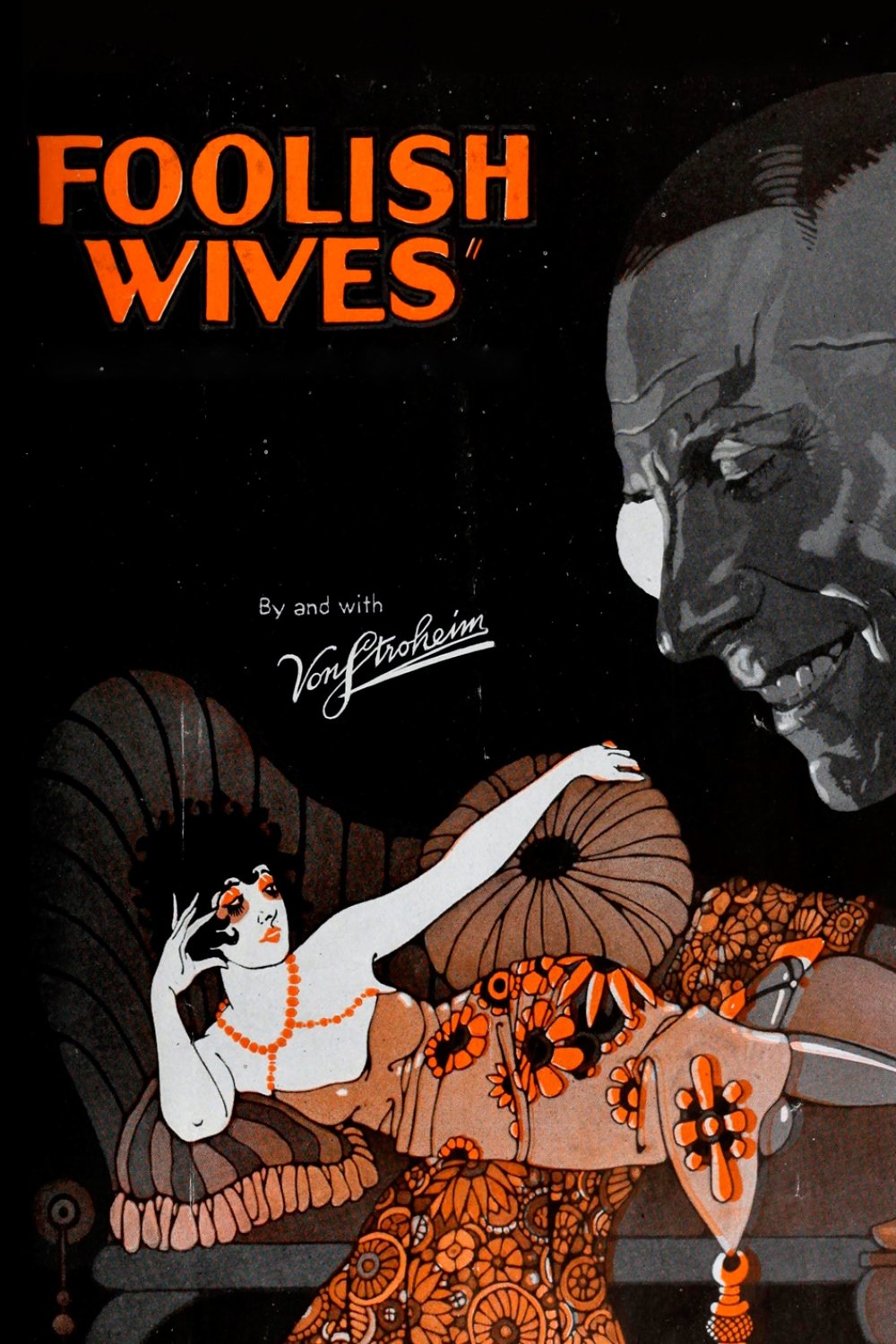
Whenever I return to “Foolish Wives,” I feel as though I’m stepping directly into the dark, atmospheric corridors of early European-influenced American cinema. To me, this film sits at a unique crossroads between the flourishing American silent melodrama and the broader tradition of Expressionism—drawn especially from the shadows cast by contemporaneous movements in Germany. Although it was produced in Hollywood, Erich von Stroheim’s directorial style in “Foolish Wives” feels more indebted to the European tradition of psychological realism and decadent moralism than the crowd-pleasing narratives I often associate with mainstream American cinema of the 1920s. While “Foolish Wives” isn’t a pure product of German Expressionism, I see it as an early American attempt to appropriate and adapt those stylistic and thematic shadows. Consequently, I position the film within a proto-Expressionist, decadent melodrama movement—a transitional period in American film where psychological disquiet, elaborate mise-en-scène, and a fascination with moral ambiguity began creeping in from Europe, challenging the boundaries of popular narrative formulas.
Historical Origins of the Movement
One compelling aspect of Stroheim’s cinematic heritage is how much it owes to the environment from which he sprang. “Foolish Wives” arrived at a time when American filmmakers were actively seeking legitimacy, artistic credibility, and an escape from the ridicule of penny-arcade entertainments. I see “Foolish Wives” as a vivid symptom of the tremendous influence German filmmakers—who’d been working their shadowy magic with films like “The Cabinet of Dr. Caligari” and “Nosferatu”—were exerting abroad. The First World War, and the cultural exchanges that followed, sparked both competition and admiration, especially in the realm of cinematic aesthetics. American directors, eager to prove their work could hold its own against European “art” film, began experimenting with darker visual palettes, more intricate character psychologies, and a frankness about social hypocrisy. I find it endlessly fascinating how the traumas and cynicism of the war years—combined with the opulent surfaces of postwar consumerism—helped hatch movies rich with psychological dissonance and social critique.
What draws me most to this transitional American movement is its restlessness—its refusal to be satisfied with the simplistic hero-villain dichotomies recognizable in Griffith or DeMille silent narratives. Instead, films like “Foolish Wives” strove for something grittier and less forgiving: the decadence of postwar European capitals, the spiritual malaise of the 1920s, and the heightened sense of artifice permeating the upper classes. Stroheim, in particular, specialized in what I think of as “psychological decadence”: elegant surfaces masking rot beneath. This desire to expose social pretense by use of claustrophobic interiors, oppressive angles, and intricate, corrupt characters echoes the innovations of German Expressionism, but places them in the service of a distinctly American social satire and melodrama. In tracing the movement’s evolution, I’m struck by the ways in which American directors borrowed, altered, and even resisted the European models they admired, filtering them through Hollywood budgets, censorship concerns, and mass-audience expectations.
This Film’s Contribution to the Movement
For me, “Foolish Wives” is a tour de force of moral ambiguity and visual spectacle—a gripping showcase of how early Hollywood could appropriate European artistry without fully surrendering to its gloom. Every time I watch this film, I sense an anxious yearning in its obsessive attention to details of décor and character. Stroheim’s performance—both in front of and behind the camera—thrills me with its willingness to stare straight into human weakness. This is not a film content to present simple lessons about virtue rewarded and vice punished; instead, it meditates on the pleasures of charm, manipulation, and cunning. I see here a nascent version of what film noir would become: characters trapped by their own appetites, doomed by circumstance, inhabiting a meticulously realized world where beauty and deceit are all but inseparable.
What really captures my imagination in “Foolish Wives” is the way Stroheim uses setting as psychology. The labyrinthine Monte Carlo sets—themselves a marvel of American studio ingenuity—mirror the tangled motives and desires of the protagonist and his hapless prey. I am always struck by the film’s refusal to grant viewers the satisfaction of simple answers. Every room seems to harbor secrets; every minor character possesses a backstory hinted at but never resolved. I regard these choices as quintessentially Expressionist in their effect: rather than externalizing evil through monster makeup or exaggerated sets, Stroheim places psychological horror inside ordinary situations, turning the mundane into the menacing. Watching the film unfold, I feel the characters’ ennui, their yearning for excitement, and their terror of exposure, all rendered with a stylized precision that predicts the noir landscapes of the 1940s. The camera lingers on the geometry of gates, the shimmer of opulent costumes, and the cold allure of upper-class rituals, all of it serving, to my mind, as a diagnosis of society’s moral emptiness.
No less importantly, “Foolish Wives” tests the boundaries of silent cinema’s narrative complexity. Stroheim’s multi-threaded plotting, overlapping narrative arcs, and extended attention to secondary characters feel shocking in a period more accustomed to clear-cut, heroic stories. For me, this film is a direct challenge to Hollywood’s commercial instincts: it refuses uplift, refuses closure, and compels me to dwell in emotional ambivalence. That, to me, is a direct bequest from the proto-Expressionist tradition—and a prelude to the even darker, more fractured film genres that lay ahead.
Influence on Later Genres and Films
- Proto-Film Noir Atmosphere – I often see “Foolish Wives” as a harbinger of noir before the term existed. The film’s moody lighting, psychological claustrophobia, and moral ambiguity are echoed decades later in the shadow-strewn cityscapes and hard-boiled stories of films like “Double Indemnity” and “The Big Heat.” Stroheim’s treatment of interiors—dimly lit, filled with looming patterns—seems, in my eyes, directly to anticipate the atmospheric language of classic noir. The focus on manipulation, seduction, and complex power dynamics between men and women re-emerges in noir’s exploration of the femme fatale and the doomed anti-hero. When I watch “Foolish Wives,” I’m reminded constantly of how noir would perfect this uneasy blend of allure and anxiety.
- Art-House Melodrama – Stroheim’s film rarely receives credit for launching more experimental approaches to melodrama, yet I find traces of its influence running through later “serious” American drama. Films like “Sunset Boulevard,” itself a meta-commentary on Hollywood decadence, borrow Stroheim’s taste for opulent surfaces and psychological rot. The willingness to balance spectacle with unsentimental critique—particular to “Foolish Wives”—was a gift to later auteurs eager to elevate melodrama to a medium for exploring social corruption and existential longing. I see a clear through-line connecting Stroheim’s set-bound claustrophobia to Joseph L. Mankiewicz’s “All About Eve” and even to the lush, emotionally ambiguous worlds of Douglas Sirk.
- Psychological Realism in American Cinema – Stroheim’s approach to character strikes me as a crucial pivot point in the push toward psychological realism. While earlier silent films often relied on broad, theatrical gestures, in “Foolish Wives” I observe a fascination with subtle motivation, repressed desire, and interpersonal tension. This seeds later work by directors like Billy Wilder and Elia Kazan—think “A Streetcar Named Desire” or “The Lost Weekend”—where human behavior becomes more conflicted and less predictable, and the boundaries between victim and villain blur almost to nonexistence. Watching Stroheim, I always get the sense that interiority—the inner lives of characters—is of equal importance to exterior plot. That, for me, was a radical break with earlier cinema and remains foundational for modern film drama.
The Movement’s Lasting Impact
Reflecting on the legacy of early American proto-Expressionist cinema, I am struck by how vital and present its spirit remains across the landscape of twentieth and twenty-first-century film. “Foolish Wives,” for all its period trappings and exotic posturing, taught me that film can be a dazzling mirror held up to social absurdity, moral contradiction, and personal yearning. The movement matters, I believe, because it gave filmmakers permission to embrace complexity—stylistically and thematically. Its mixture of European psychological unease and American narrative ambition produced hybrids that expanded the emotional and visual vocabulary of movies. Long before “noir” became the shorthand for shadowy aesthetics and damaged protagonists, Stroheim and his peers were setting the terms for that conversation, insisting cinema could visualize not just action, but anxiety, longing, and duplicity.
Whenever I recommend “Foolish Wives” to students or film lovers, it’s because I see it as a threshold work—one that is not content to merely reflect the promise of its time but actively questions the worldview of its audience. Its impact lingers, prompting me to ask what our pleasures and entertainments reveal about who we are, and what they obscure. The proto-Expressionist, decadent, and psychological modes it helped pioneer allow for a richer, more sophisticated engagement with character and society, one that feels as fresh and troubling today as it did a hundred years ago. It matters not because it is comfortable, but because it is unflinching, and I find myself returning to its uneasy revelations time and again.
To connect style and technique with broader context, you may find these perspectives useful.
🎬 Check out today's best-selling movies on Amazon!
View Deals on Amazon