
Film Movement Context
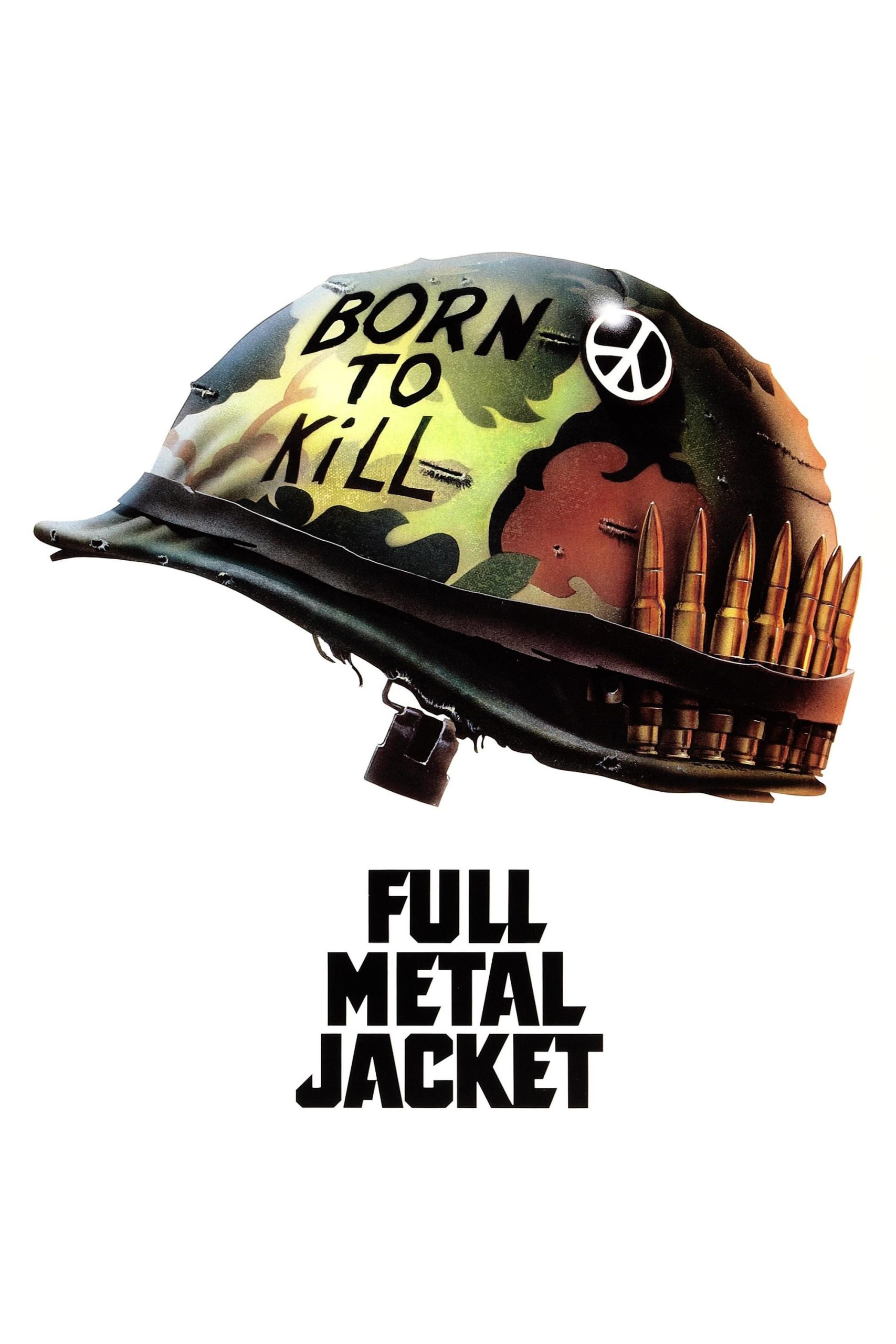
Every time I revisit Full Metal Jacket, I find myself wrestling with its place not just within war cinema, but within the patchwork of American movie history. For me, Stanley Kubrick’s vision is most vividly situated within the umbrella of the New Hollywood movement, overlapping with the tradition of the anti-war film. Yet it is also soaked in the visual dialect of American New Wave cinema—a cinematic current distinguished by its cynicism, stylistic experimentation, and desire to confront comfortable mythologies. When I watch Full Metal Jacket, I see the restless fingerprints of New Hollywood: distrust for institutions, a refusal of clear-cut heroism, and a jagged, often alienating approach to narrative. But Kubrick—never one to fit easily in boxes—launches the viewer into the psychological and ethical collapse that defined not only the Vietnam War, but the genre’s slow evolution from propaganda towards existential critique.
For me, the film pushes boundaries further by weaving itself into what I’d call a “deconstructive realism”—a branch of late-20th-century cinematic language that isn’t content to simply show the horrors of war, but instead interrogates the very machinery by which horror is manufactured. Instead of solely chronicling carnage, Full Metal Jacket becomes a living autopsy of militarized masculinity and institutional power, delivered with a quintessential late-modern skepticism that I associate squarely with the final wave of New Hollywood auteurs. The tone, the rhythm, and the violence all blend together to create something as much about the failure of representation as about violence itself.
Historical Origins of the Movement
The New Hollywood movement, under which I place Full Metal Jacket, erupted from a moment of profound cultural disillusionment. From my viewpoint, the late 1960s and 70s exposed a rift in American identity—one torn open by the Vietnam War, the Civil Rights Movement, and a snowballing mistrust of authority after Watergate. Before that, mainstream American studio films typically celebrated heroism or shined with utopian clarity. But all that faith disintegrated decades before Kubrick tackled Full Metal Jacket; I see this reflected in films like The Deer Hunter and Apocalypse Now, movies that already shifted the focus from victory to trauma.
Having watched the evolution of this movement, I notice its roots in directors emboldened by the collapse of the old studio system—filmmakers like Martin Scorsese, Francis Ford Coppola, and Robert Altman, who challenged conventional storytelling out of necessity and out of cynicism. The American New Wave, as I personally classify it, drew heavily from European art cinema—especially the French New Wave’s jump cuts and Italian neorealism’s use of non-professional actors. These films embraced ambiguity and moral greyness, and—crucially for me—questioned the very language of cinema and the myth of national innocence.
War films of the 1980s, particularly those about Vietnam, continued in this vein but with added bile. I see Full Metal Jacket arriving at the tail end of a cycle, but with one crucial difference: it is not just a war film, it is a film about being conditioned into alienation. Instead of simply reflecting trauma, Kubrick examines how it takes root. The historical conditions—years of public protest, televised brutality, and returning veterans unable to reintegrate—gave rise to a cinema that could not trust its own images, and so, began to pick those images apart, frame by relentless frame.
This Film’s Contribution to the Movement
I’m always struck by how Full Metal Jacket fits, and just as often, how it refuses to fit. At first glance, the film looks almost clinical, unadorned—even cold in its compositions. Yet that chill hides a scalding critique of both American militarism and the lengths to which the cinema of the era would go to destabilize sentiment. When I reflect on the impact of this film within the New Hollywood and American New Wave tradition, I’m convinced that Kubrick’s true innovation lies not merely in depicting violence, but in laying bare the processes that manufacture soldiers in the first place.
The first act, set almost entirely in the Parris Island boot camp, lingers in my memory as a meditation on erasure. Through Kubrick’s steady, unblinking camera, I feel the transformation of young men into instruments of violence—stripped of civilians’ identities, dissolved into the homogeneity of state power. Unlike earlier war films that dwelled on camaraderie or patriotic purpose, Kubrick gives us an ordeal of indoctrination, presided over with deadpan ferocity by R. Lee Ermey’s Gunnery Sergeant Hartman. I found the absence of a rousing score telling; this is not an invitation to identify with the recruits, but rather to dispassionately observe the costs of their remaking. The effect is alienating, but I believe that’s precisely Kubrick’s point—war’s violence is as much psychological as physical.
Kubrick’s style, too, is quintessentially New Hollywood, yet tinged with a meticulous precision that puts the viewer constantly off-balance. I’m particularly drawn to the film’s bifurcated structure—the split between the controlled chaos of boot camp and the jagged, hellish streets of Hue City. For me, this bifurcation is more than narrative artistry; it points to a rupture in identity, a fracture between the myth of military preparation and the reality of combat’s meaninglessness. Unlike some predecessors, Kubrick doesn’t grant his characters even the hollow comfort of camaraderie; dehumanization is not a side effect, but the very core of military preparation and war itself.
What I find especially provocative is Kubrick’s use of detachment—his refusal to provide clear moral compass points. This diagnostic remove transforms the film into both participant and critic of its genre. I think of Joker, Matthew Modine’s protagonist, who straddles irony and compliance. Instead of a soldier who comes to terms with trauma, I see Joker as emblematic of the post-Vietnam generation—alienated, skeptical, unable to absorb the narrative of nationhood or heroism. In my experience, this subversive stance is what marks the film as a vital late entry in the anti-war genre, but one aware of being watched, recorded, and replayed. That self-consciousness, I believe, is at the heart of its contribution to the New Hollywood sensibility.
Influence on Later Genres and Films
- Influence 1 – The Demystification of War in Popular Media – I’ve noticed that after Full Metal Jacket, filmmakers became almost obsessed with showing the machinery of combat training—often more so than battle itself. Oliver Stone’s Platoon and Sam Mendes’s Jarhead owe much to Kubrick’s exhaustive study of indoctrination and the stripping away of self. Both films use boot camp not as prologue, but as thematic core—a space where the psyche must be battered before the body follows. For me, that set the tone for countless war and anti-war movies, and even extended to prestige TV, like Band of Brothers, which spends as much narrative energy on basic training as it does on battlefield pyrotechnics.
- Influence 2 – The Rise of Satirical and Ironic War Narratives – Personally, I attribute the black-comic tones of later works like Three Kings or Generation Kill to Kubrick’s relentless irony. The impulse to undermine the classic war film’s solemnity—to expose the absurdity, the internal contradictions—grows directly out of Full Metal Jacket’s rejection of moral clarity. Today’s war films no longer ask if the war is winnable; instead, they question if war has any meaning at all, or if the spectacle itself is corrosive. I see Kubrick’s influence every time filmmakers treat soldiers as casualties of a system, rather than as inheritors of glory.
- Influence 3 – Visual and Narrative Hyperrealism – In my own analysis, I see a direct stylistic lineage from Kubrick’s sharp, symmetrical compositions and jarring tonal shifts to the aesthetic of modern military shooters and serialized TV dramas. Directors like Kathryn Bigelow in The Hurt Locker seem to me to have internalized that Kubrickian impulse—combining war-reportage realism with scenes that seem almost surreal in their intensity. The tendency toward procedural, fragmented narratives—stories that double back on themselves or shun typical catharsis—owes a great debt to Kubrick’s war cinema. Watching these descendants, I feel a sense of déjà vu whenever the camera takes on the cold, unblinking stare I first encountered in Full Metal Jacket.
The Movement’s Lasting Impact
When I weigh the effects of the New Hollywood and American New Wave movements—especially as crystallized in Kubrick’s Vietnam film—I’m struck most by their enduring skepticism. What still resonates with me isn’t simply the technical virtuosity or narrative experimentation, but the spirit of relentless doubt that they injected into American cinema. With Full Metal Jacket, Kubrick didn’t just align himself with the counter-tradition of anti-war storytelling; he helped push the entire conversation from surface trauma to structural—and even ontological—diagnosis. This questioning has never vanished, and I still see its aftershocks in how directors approach war, violence, and mythmaking today.
Personally, I’m grateful for the way this movement forced audiences—and filmmakers themselves—to confront the motives and machinations behind the stories told on screen. The best of these films, Full Metal Jacket included, have a kind of permanent afterburn: they leave me less certain and more vigilant. They challenge me not just to witness atrocities, but to ask why those atrocities happen, and who benefits from telling certain stories in certain ways. That challenge feels wholly contemporary, which is why I believe the movement is far from a relic; it is, rather, a combustible resource for anyone trying to reckon with art, power, and violence in the modern age.
To connect style and technique with broader context, you may find these perspectives useful.
🎬 Check out today's best-selling movies on Amazon!
View Deals on Amazon