
Film Movement Context
When I sat down and let “Gate of Hell” wash over me, I found myself enveloped by the unmistakable touch of Japan’s Golden Age cinema, particularly the veins of postwar realism and period drama that defined the 1950s. For me, this film sits firmly in the context of the Japanese jidai-geki movement—a genre rooted in historical period pieces, but profoundly shaped during this era into something uniquely resonant and lush. Yet “Gate of Hell” is not, in my eyes, just another example of jidai-geki; it’s an exemplar of how mid-century Japanese filmmakers began transforming traditional narratives into highly aestheticized, psychologically nuanced meditations on obsession, honor, and desire. The technical mastery of color, staging, and costume in this film signals a movement toward visual splendor that, for me, bridges pure genre with art cinema aspirations. I find it stands as a vivid testament to the ways postwar Japanese directors used form and color—enabled by technical innovations and international ambitions—to give age-old stories fresh emotional power.
Historical Origins of the Movement
As I delve into the roots of the movement that “Gate of Hell” belongs to, I’m always struck by the sheer flux and reinvention that characterized Japanese cinema after World War II. In the wake of catastrophic defeat and rapid American occupation, there was an intense push within the Japanese industry to both reclaim and redefine native storytelling traditions. I see jidai-geki, long a staple relating to samurai and feudal Japan, become newly layered, reflecting not only historical fascination but also the national search for meaning amidst massive upheaval. For me, directors like Kenji Mizoguchi and Akira Kurosawa had already started rewriting what period drama could express: Mizoguchi with his lush, often heartbreaking humanism, Kurosawa with his dynamism and stark moral dilemmas. I believe it was around this moment that color film technology became more accessible, and Japanese filmmakers seized the chance to compete on a global stage. This movement, to my reading, emerged from a collision between a national need to process trauma and an artistic ambition to reinterpret heritage through visual innovation and international appeal. The result was a string of films, including “Gate of Hell,” that took centuries-old stories and elevated them via intricate compositions and chromatic experimentation. To me, this is as much a movement of spiritual reckoning as it is of aesthetic audacity.
This Film’s Contribution to the Movement
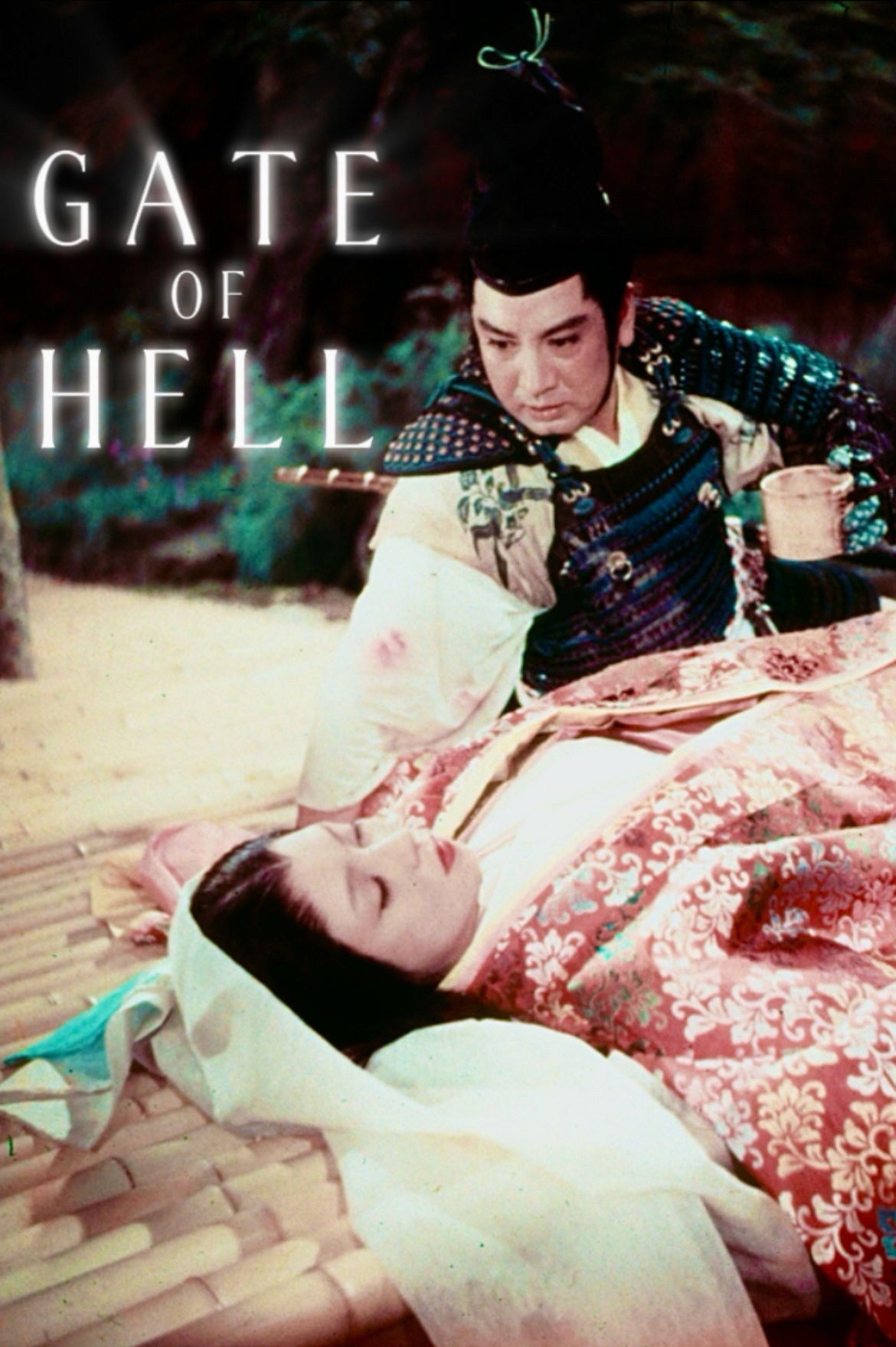
I find that “Gate of Hell” not only embodies the core of the jidai-geki revival but also furthers it in extraordinary, unexpected ways. Watching it, I’m always struck by how director Teinosuke Kinugasa pushes both thematic and technical boundaries. The film’s use of Eastmancolor—the first Japanese color film to gain wide international acclaim—is not a mere gimmick; it’s a kind of painterly revolution that transforms every frame into a living scroll. Personally, I experience its palette of burning golds, lush oranges, and saturated greens as more than just eye candy: they become psychological markers, amplifying the claustrophobia of obsession and the rigidity of feudal codes. The color design, paired with the refined choreography of movement and costume, immerses me in a world where aesthetic beauty collides with emotional violence.
Psychologically, what continues to fascinate me is how Kinugasa breaks from the tradition of jidai-geki that valorized warriors or delivered grand moral lessons. Instead, I find him drawn toward the ruins of human folly—the dangerous implications of single-minded desire within an unforgiving hierarchy. The way the film lingers on Morito’s desire, flowing between adoration and menace, makes it, in my eyes, a bridge between traditional Edo-period narratives and modernist themes of alienation, fixation, and emotional fragility. While the courtly setting dazzles, I can’t escape the sense of suffocation that the film generates—a sensation mirrored by the painterly use of enclosed spaces and static, almost theatrical blocking. For those who understand the movement, “Gate of Hell” is not just representative; it’s transformative, using the tools of the movement to draw new insights about the darkness lurking in all human affairs.
Influence on Later Genres and Films
- Influence 1 – Expansion of Color as Expressive Medium: One of the most profound influences I see stemming from “Gate of Hell” is the elevation of color from a novelty to an emotional and narrative device. After witnessing how Kinugasa used color to complement mood and symbolism, I find echoes of this ethos in later works like Masaki Kobayashi’s “Kwaidan” and even in Western epics like Kurosawa’s “Ran.” For me, the way the film fuses color to psychological states, rather than mere realism, opens the door for directors worldwide to experiment with chromatic storytelling. I see the DNA of “Gate of Hell” in how Zhang Yimou approaches palette in “Raise the Red Lantern,” blending visual seduction with a sense of emotional peril.
- Influence 2 – Psychological Complexity in Genre Film: Watching the film’s relentless focus on the consequences of unchecked longing, I can’t help but notice how it set a new bar for psychological subtlety in samurai cinema and costume dramas alike. Where prior jidai-geki often depicted characters as moral archetypes, “Gate of Hell” explores the destructive undercurrents lurking beneath beauty and duty. This, in my view, paves the way for the likes of Hiroshi Teshigahara’s “The Face of Another” or Shohei Imamura’s tales of existential unrest—films that trade simple honor for inner turmoil.
- Influence 3 – Global Aesthetic Cross-Pollination: The international acclaim that “Gate of Hell” garnered—it won the Palme d’Or and an Honorary Academy Award—feels, to me, like a watershed moment in the global circulation of Japanese aesthetics. Western directors began to look eastward with increased seriousness, not just for stories but for style, pacing, and restraint. When I see the controlled compositions of Peter Greenaway or the carefully modulated passions of Ang Lee’s “Crouching Tiger, Hidden Dragon,” I’m reminded of the restrained yet intoxicating stylization that Kinugasa brought to world cinema’s attention. To my mind, “Gate of Hell” helped introduce a visual and emotional alternative to classical Hollywood and European traditions.
The Movement’s Lasting Impact
Reflecting on the enduring significance of the movement that fostered “Gate of Hell,” I’m often struck by how its innovations continue to ripple across genres and national cinemas. To me, the postwar evolution of jidai-geki—with its fusion of traditional subject matter and radical formal solutions—demonstrates how cinema can process collective trauma while cultivating new creative vocabularies. This movement still matters for the way it invites modern storytellers to interrogate heritage with critical intimacy: by blending reverence for the past with visual bravado and psychological intricacy, it offers a template for making history alive and urgent. My encounters with contemporary directors—whether they’re working in hyperreal historical reimaginings or minimalist arthouse experiments—keep reminding me that the seeds sewn by films like “Gate of Hell” remain fertile. The marriage of painterly design, moral ambiguity, and a keen awareness of the human cost of obsession, as I see it, granted Japanese cinema a haunting resonance and international profile it never relinquished. More than just a phase in film history, this movement continues to provide artists with the means to reconcile beauty and brutality, tradition and modernity, surface and soul. I watch “Gate of Hell,” and I see not only the dazzling pageantry of a vanished era but also the restless modern eye of the director—forever asking what our devotion to the old ways is truly worth.
To connect style and technique with broader context, you may find these perspectives useful.
🎬 Check out today's best-selling movies on Amazon!
View Deals on Amazon