
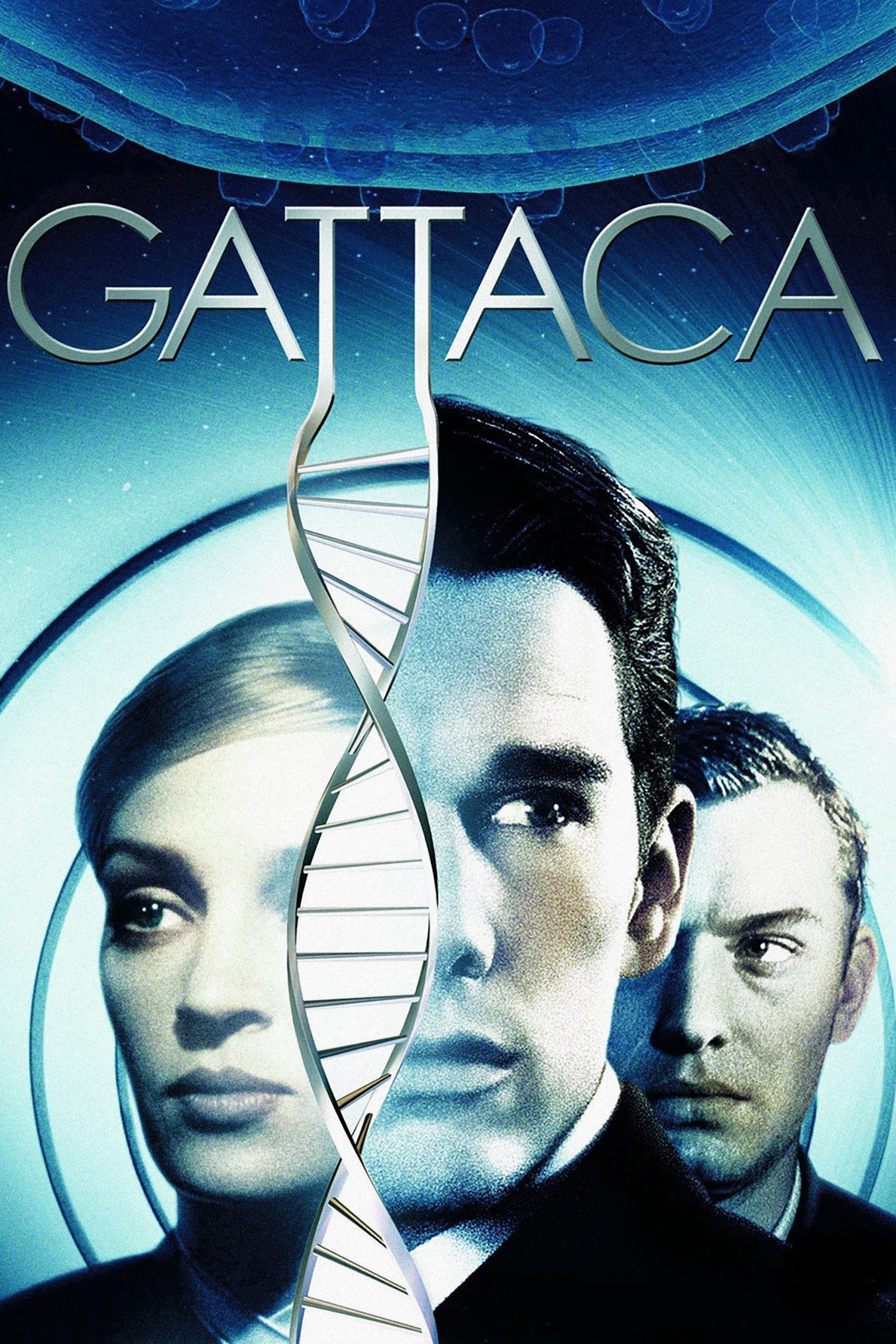
The Genre of This Film
Whenever I return to “Gattaca,” I’m reminded how science fiction offers perspectives that are both imaginative and disturbingly plausible. For me, “Gattaca” is pure, deliberate science fiction. That label isn’t just a convenient shorthand; it’s a clear way of identifying the film’s fascination with futuristic technology, a speculative social order, and the repercussions these have on the individual. The film’s setting—a genetically stratified near-future—draws me into a world that extrapolates from present realities, using imagined scientific advancements as both backdrop and catalyst to the drama. Though there are traces of mystery and romance woven into the narrative, it’s the speculative, forward-gazing nature of its storytelling, focused so keenly on genetic engineering and its consequences, that places “Gattaca” squarely in the realm of science fiction in my mind.
Key Characteristics of the Genre
-
Common themes
When I think of science fiction, what leaps out at me is its obsession with “what if?”—the genre always seems to prod at the edges of human capability and ethics. Within these stories, I frequently encounter themes involving the tension between individual agency and technological determinism, the risks and rewards of scientific advancement, and the fragility of human identity in the face of larger societal forces. “Gattaca” in particular circles around societal stratification born from genetic manipulation, the tension between determinism and personal ambition, and the search for authenticity in an era when one’s essence seems predetermined by DNA. I find that this genre, at its core, explores not only what future technologies might allow, but how these possibilities shape who we might become. -
Typical visual style
Science fiction films seem, to my eye, to wield visual language with special purpose—their look isn’t simply futuristic for the sake of novelty. “Gattaca” achieves this with a design sensibility that I’d call restrained and sterile. When I imagine sci-fi, I think of settings marked by cold precision, geometric order, and a palette that often oscillates between metallic, steely grays and sharply contrasting bursts of artificial color. In “Gattaca,” streamlined architecture and minimalist interiors reinforce the sense of control and uniformity, giving off an atmosphere at once inviting and chilling. For me, it’s that visual cleanliness—the immaculateness bordering on antiseptic—that instantly roots the viewer in a world shaped by discipline and surveillance. The genre as a whole, from what I’ve seen, frequently employs such clinical, otherworldly aesthetics to evoke questions about the cost of progress and the place of humanity in worlds ruled by systems. -
Narrative structure
Science fiction narratives, in my perspective, rarely unfold in a straightforward fashion. There’s a tendency toward layered storytelling—flashing forward and backward, inhabiting both present tension and speculative future. In “Gattaca,” I appreciate the way the story is pieced together through Vincent’s recollections, allowing viewers to grasp the significance of each hurdle he overcomes, knowing how heavily the weight of predetermined genetics hangs over him. A lot of science fiction I value embraces mystery; it will posit a future and then force its characters (and audience) to unearth or challenge the very rules that define it. There’s no shying away from philosophical subplots, from hard scientific logic, or from sweeping, epic arcs that position individual lives against the evolution of civilization itself. -
Character archetypes
Reflecting on the memorable characters that populate classic science fiction, I notice recurring archetypes that the genre seems to thrive on. I often see heroes who are outsiders, rebels, visionaries, or explorers—people who sense that the world is fundamentally broken and dare to imagine something better. In “Gattaca,” Vincent serves this familiar role for me: the striving underdog in a society that doubts his worth, forcing him to mask his true identity to pursue his dreams. Alongside him are the architects and enforcers of the social order—the scientists and bureaucrats who, whether willfully or not, uphold the system’s inherent injustices. Then there are companions and reluctant allies, each one shaped by the same technological forces that dominate the setting. It strikes me that within the parameters of science fiction, characters often come to embody central conflicts of the genre itself: free will versus programming, individuality versus conformity, human spirit versus machine logic.
How This Film Exemplifies the Genre
While the trappings of “Gattaca” are unmistakably rooted in the sterile corridors and sharp silhouettes I associate with speculative cinema, what draws me in is the way the film uses every element at its disposal to probe questions I can’t help but puzzle over: What does it mean to be human in a world where humanity is mapped to a code, manipulated in a lab, and sold as destiny? To my mind, the film’s approach is textbook science fiction—not because it’s filled with high-tech gadgetry or extravagant special effects, but because it ruthlessly interrogates the implications of a plausible future technology on society and individual identity. I see the society in “Gattaca” as chillingly authentic, composed of class structures dictated by the randomness or precision of genetic inheritance. This world is designed with a kind of surgical clarity—every shot is symmetrical, every surface gleams; it’s an ordered utopia that, for me, quickly reveals itself as a dystopia.
Another reason I consider “Gattaca” such a clear example of its genre lies in its treatment of determinism versus free will. I’m fascinated by how Vincent’s journey—fraught with subterfuge, resilience, and quiet rebellion—becomes a canvas for science fiction’s favorite existential debate: Are we nothing more than the sum of our data, or is there something irreducible and ineffable that sets us apart? I watch as Vincent feigns genetic superiority to bypass unjust barriers, and I can’t help but feel the genre’s pulse in the conflict between technology’s promise and its peril. The supporting players, too, reinforce the genre’s archetypes in my mind: the genetically engineered but dispirited Jerome, the suspicious investigator blocked by system rules, and an array of gatekeepers and facilitators who uphold, challenge, or suffer under the regime of genetic destiny.
Even the film’s dialogue and voiceover, when I pay attention to their cadence, ring with the questions and anxieties that seem to haunt science fiction: What counts as authentic achievement? If a system claims to measure human potential, what does it miss? These are, in my experience, classic sci-fi provocations—ambitious in their scope, concerned above all not with gadgets, but with the mind and soul. The world of “Gattaca” eschews spectacle for substance, drawing its speculative energies from social forces and ethical quandaries rather than explosions or chases. Every narrative choice, every bit of world-building, to me, is in service of the genre’s essential mission: imagining how technology might shape, liberate, or destroy what it means to be truly human.
Other Essential Films in This Genre
- Blade Runner (1982) – When I revisit Ridley Scott’s “Blade Runner,” I’m enveloped by its brooding, rain-soaked landscape; but what I really value is the way it blurs the line between human and artificial. For me, this is foundational to understanding modern science fiction: it’s a genre obsessed with testing the boundaries of what a human being is. “Blade Runner” crystallizes that concern by following replicants—genetically engineered beings indistinguishable from people—and asking, with never-ending poignancy, whether memory, emotion, or resilience marks our essence. Its atmosphere, visual ambition, and philosophical questioning embody everything I look for in science fiction.
- Children of Men (2006) – Alfonso Cuarón’s depiction of a future where infertility has upended society grips me every time I watch. To me, “Children of Men” takes one speculative leap—mass human infertility—and unspools every economic, social, and ethical ramification with relentless logic. I’m always struck by the way the film uses its premise to probe questions about hope, agency, and survival. Its gritty, naturalistic style may be a far cry from “Gattaca’s” cool precision, yet the underlying focus on how a single scientific or biological development reorders the world is, in my eyes, at the heart of what makes science fiction unforgettable.
- Ex Machina (2014) – Whenever I think about the possibilities and dangers of artificial intelligence, “Ex Machina” races to mind. Through a minimalist, claustrophobic setting and a handful of tense characters, Alex Garland drills into the ethical and emotional consequences of creating consciousness. The film’s focus on interrogation, surveillance, and manipulation of data reminds me of “Gattaca’s” own obsessions with systems that surveil and categorize. I consider “Ex Machina” an essential science fiction text for how it turns speculative technology into an urgent moral question about exploitation, empathy, and our responsibility toward what we create.
- Minority Report (2002) – Steven Spielberg’s vision of a pre-crime society, where predictions of criminal behavior can preemptively shape destiny, strikes me as an exhilarating—and chilling—expansion on themes of determinism and autonomy, much like those in “Gattaca.” I’m compelled by the way the film’s world is both familiar and alien, with advanced technology leading not to liberation, but to new forms of oppression and doubt. While the film employs a glossier, more action-driven visual style than “Gattaca,” the core concern with free will clashing against technological certainty makes it, for me, a defining work of the genre.
Why This Genre Continues to Endure
As someone who’s continually drawn to science fiction in all of its variations, I’m always asking myself why these speculative tales never really lose their grip on the public imagination. I suspect it’s because science fiction cracks open perennial human anxieties—about control, about destiny, about what separates invention from identity—and lets us see them, refracted and exaggerated, in a thousand different lights. In films like “Gattaca,” I find a reflection of fears that never quite fade away: How far can technology go before it undermines our sense of self? What freedoms do we give up in pursuit of order or improvement? These are questions that feel more urgent the faster technology accelerates in my own world.
But beyond the cautionary edge, there’s something fundamentally hopeful in the genre, too. When I watch science fiction, I see not just warnings but aspirations—a belief that the future, however fraught, is something worth contesting and shaping. Even in stories as tightly controlled and despairing as “Gattaca,” I’m left with the conviction that human spirit—resilience, drive, rebellion—can sometimes transcend systems no matter how rigid. The genre’s endurance, as I see it, lies in its belief that, whether confronted by utopias or dystopias, those old questions about dignity, possibility, and purpose keep evolving—and that sci-fi will always offer the imaginative space to re-ask and re-answer them.
If you’re interested in how viewers respond beyond technique, you may want to explore audience and critical reception.
🎬 Check out today's best-selling movies on Amazon!
View Deals on Amazon