
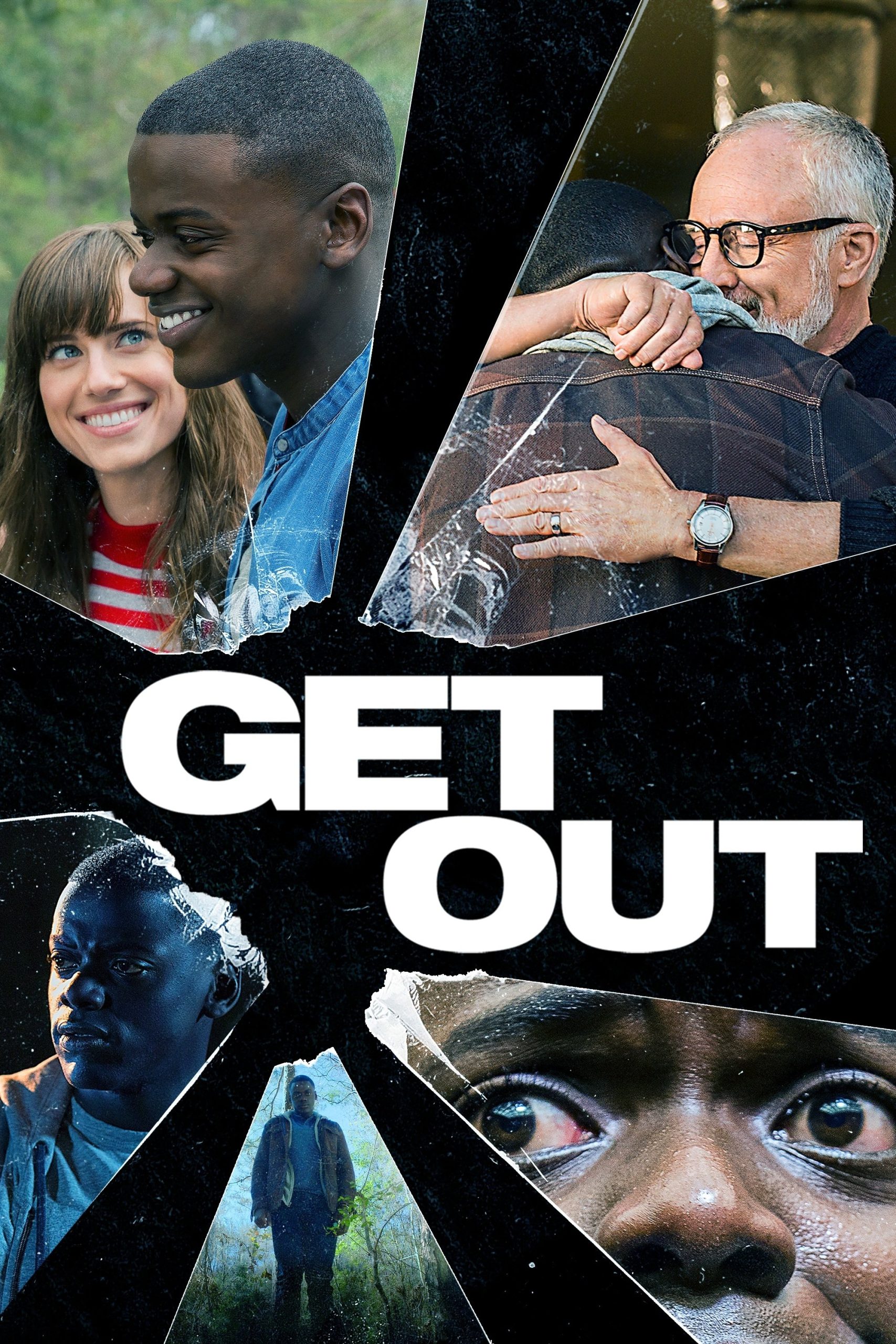
Film Movement Context
Staring into the swirling depths of Jordan Peele’s Get Out, I always see it as a pivotal entry in what I’d call Postmodern Social Horror—a film movement that both frightens and provokes, layering urgent cultural critique onto the textures of genre cinema. When I talk about movements, I see Get Out living at the intersection of contemporary horror’s resurgence and a cinematic wave often referred to as “social horror” or “elevated horror.” But these aren’t empty catchphrases to me; rather, I perceive them as marker beacons of a movement interested in weaponizing genre for sharp, unsettled, and intensely personal social commentary. For me, Get Out is also a prime example of post-Obama American anxieties—filtered through, and in dialogue with, the legacy of Blaxploitation, the discomfort of New Hollywood’s psychological thrillers, and the winking, intertextual awareness of postmodern genre cinema.
Historical Origins of the Movement
When I trace the lineage of social horror, I immediately think back to horror’s capacity for metaphor and transgression—the way films like Night of the Living Dead or Rosemary’s Baby used the trappings of suspense to sneak in social critique. However, when it comes to the explicitness and boldness I see in post-2010s “elevated” or “social” horror, I recognize very different conditions at work. Unlike the silent or subtextual metaphors of classic horror, this new wave seems, to me, profoundly self-aware and unashamedly direct about its commentary. The emergence I’ve observed is tied to both cultural exhaustion—our increasing intolerance for the same old jump-scare formulas—and to the political context of the late 2010s, an era riddled with racial, gender, and class anxieties that press relentlessly at the edges of the American psyche.
For me, “social horror” didn’t arise in a vacuum; I see its birth as a response to both the sanitized, franchise-focused horror of the early 2000s and the resurgent need to interrogate a society that professed progress while still shadowed by American contradictions. Peele, like his contemporaries Ari Aster and Jennifer Kent, seemed energized by the possibilities of horror storytelling as a way to speak to the unease of the times. Honestly, nothing about the rise of this movement feels accidental. I think about the cycles of American cinema—about how the paranoia of the 1970s or the dystopian panic of the Reagan era reflected and channeled cultural mood. In my view, Postmodern Social Horror is another such reflection: a mirror to a country grappling with its own unresolved traumas, projected onto the screen with razor-sharp clarity.
This Film’s Contribution to the Movement
Whenever I rewatch Get Out, I’m struck less by its surface plot than by the audacious way it turns the conventions of horror inside out, wielding them like a scalpel against the societal body. I don’t see Peele simply using horror’s tropes for cheap thrills. Rather, he seems to conduct a sort of cultural exorcism—inviting the viewer into a familiar setup, then forcing them to confront the rot lurking beneath. For me, the brilliance lies in the proximity of the familiar and the monstrous. The Armitage family’s suburban hospitality is rendered uncanny not by supernatural forces, but by the chilling plausibility of liberal racism: a smiling, hand-wringing complicity that echoes too closely the realities I recognize outside the theater.
I see Get Out not only as an indictment of “post-racial” America, but as a meta-commentary on horror’s own traditions. Peele cannily reworks the archetypes—subverting the “Black character dies first” trope, reclaiming genre space for Black subjectivity, and never letting his audience take refuge in ironic distance. In my experience, the film’s sense of unease comes partially from the way it implicates the viewer. The sunken place, with its jarring surrealism and claustrophobic terror, strikes me as more than a plot device: it’s an existential illustration of marginalized consciousness, of voicelessness and detachment experienced in real social structures.
This is what, to my mind, sets Get Out apart and places it centrally in its movement. I don’t just see it as a “message movie” dressed as horror, nor as a horror film with accidental depth. Instead, I recognize it as a carefully constructed fusion where every stylistic and narrative decision is mobilized in service of its critique. The spell of the film comes from its mastery of tone—melding comedy, satire, suspense, and nightmare logic into a single, disquieting whole. And, from my perspective, it is precisely this alchemy that advanced social horror, pushing the movement forward like few works before it.
Influence on Later Genres and Films
- Influence 1 – The Expansion of Social Horror as a Legitimate Mainstream Genre: I’ve observed directly how Get Out unleashed a cascade of filmmakers ready to treat horror as legitimate ground for cultural critique—something not only for cult audiences or niche festivals, but for mainstream awards and discourse. Seeing projects like Nia DaCosta’s Candyman (2021) or Boots Riley’s Sorry to Bother You embrace horror-adjacent, surreal, and satirical modes, I sense a new willingness across the industry to invest in works where social issues aren’t window dressing, but the core of the tension. In my view, it’s no accident that studios are greenlighting more “social thrillers”—the road that Peele re-paved is suddenly crowded.
- Influence 2 – Reshaping Racial Discourse in Genre Storytelling: What stands out most to me is how Get Out emboldened a host of creators to center racial experience within genre narratives, without apologizing or diluting their political urgency. Before Peele, Black horror protagonists were still exceptions, and so many genre films shied away from explicit racial critique. Now, I see a flourishing of work—from Mariama Diallo’s Master to the TV series Lovecraft Country—where Black anxiety, joy, and subjectivity are foregrounded. This feels like a seismic shift for horror and sci-fi, genres once complicit in perpetuating stereotypes and othering.
- Influence 3 – Hybridization of Genre and Cross-Pollination with Comedy and Satire: What excites me about the post-Get Out landscape is the experimental blending of genre boundaries it inspired. The film’s deft manipulation of tone—oscillating between cringe humor, slow-burn suspense, and outright horror—demonstrates to me the vitality of mixing stylistic registers. Post-Get Out, projects like Parasite, Bad Hair, and even Midsommar show a newfound confidence: why not fuse the political sharpness of satire with the formal rigor of horror? I see this as a challenge laid down to genre purists, a provocation for filmmakers to make their films richer and harder to pin down.
The Movement’s Lasting Impact
I often reflect on why the emergence and triumph of social horror—especially as embodied by Get Out—continues to shape the critical and aesthetic horizons of film. For me, this movement matters because it finally recognizes something audiences have long intuited: that horror is at its most powerful when it functions as a nervous system for the zeitgeist, not merely as escapist fare. Watching how social horror refuses easy answers or resolved catharsis, I’m moved by its capacity to keep audiences unsettled and thinking. These films teach me that cinema’s tools—mise-en-scène, sound, narrative perspective—can be sharpened into instruments of urgent inquiry, and that genre doesn’t have to be a cage but can become a lens that clarifies, distorts, and amplifies core anxieties.
To me, the legacy is also about voice and ownership. The resurgence of social horror, with Get Out as its beacon, has fundamentally shifted who gets to speak and how: voices previously marginalized are now able to turn the camera back onto society itself. As I see it, the movement has democratized storytelling within a genre long monopolized by formula and stereotype, allowing directors and audiences alike to experience the pleasures of recognition—and the productive discomfort of being implicated. I believe that this ongoing conversation between art and politics, horror and humanity, is part of what grants the movement its persistent urgency and relevance.
To connect style and technique with broader context, you may find these perspectives useful.
🎬 Check out today's best-selling movies on Amazon!
View Deals on Amazon