
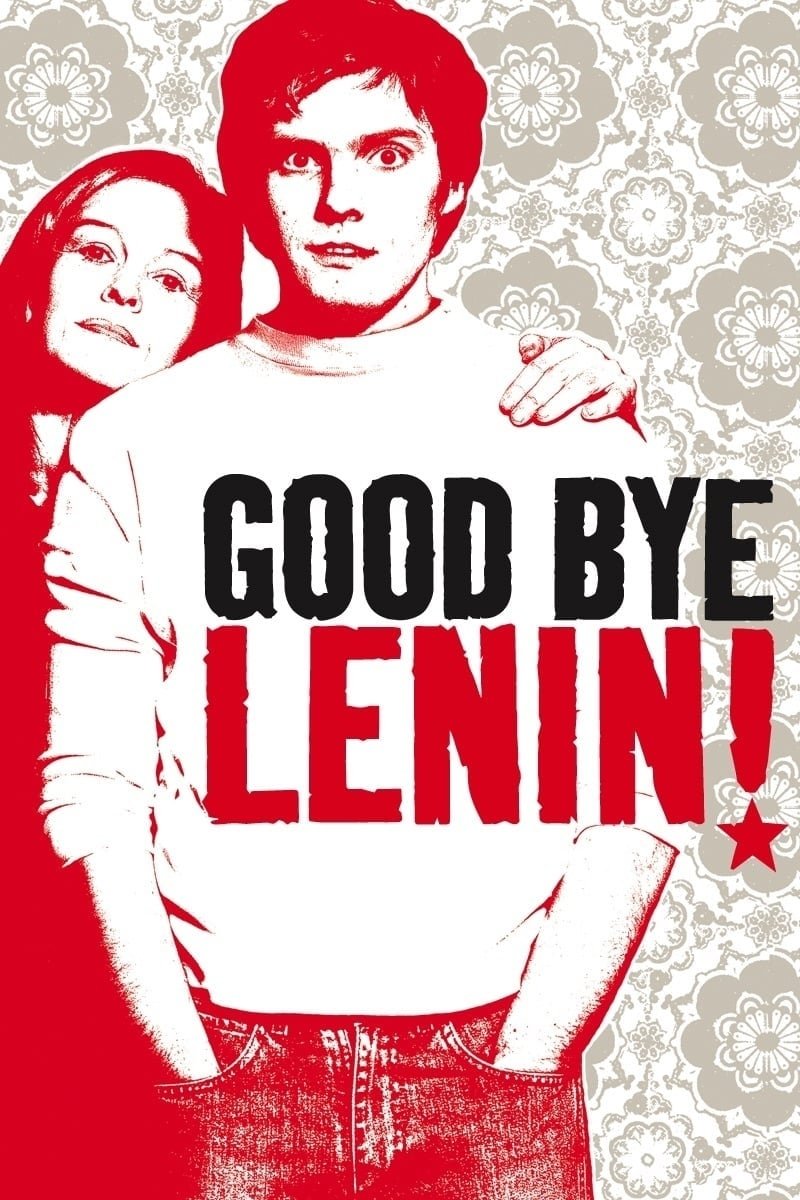
The Genre of This Film
Whenever I revisit “Good Bye, Lenin!”, I experience it as a deeply felt tragicomedy. For me, this film never fits neatly into only one category; however, it is the conventions of tragicomedy that most directly shape my emotional journey through the story. This blend of subtle, bittersweet humor with profound social and personal sorrow gives “Good Bye, Lenin!” its unique resonance. As I see it, the film’s ability to pivot between comedy and tragedy—often within the same scene—elevates it squarely into the domain of tragicomedy. That interplay isn’t just stylistic; it serves a thematic purpose, inviting me to laugh at the absurdities of history and circumstance while never letting go of the heartbreak at the story’s core. The collision of personal loss and political upheaval creates a space where joy and melancholy live side by side, and that tension is precisely what I associate with tragicomedy at its finest. While the film also borrows flavors of satire, historical drama, and coming-of-age tales, it’s this bittersweet tightrope walk that truly defines the experience for me and firmly places the film within the tragicomedy genre.
Key Characteristics of the Genre
- Common themes
- In my experience, tragicomedies often explore how individuals navigate personal crises against the backdrop of disruptive external events. These films examine the dissonance between intimate emotions and collective circumstances. I frequently recognize recurring ideas of loss, resilience, absurdity found in routine life, and transformation in the face of historical or familial change. The genre draws energy from human attempts to find dignity, hope, and even laughter amid sorrowful or chaotic moments.
- I also often notice themes of disillusionment, coping with disappointment, or attempts to preserve illusions for the sake of oneself or loved ones. Tragicomedies rarely settle into a singular emotional register; the stories hinge on paradoxes—how joy and grief coexist, and how laughter arises precisely because of pain or confusion.
- Typical visual style
- I’ve found tragicomedies are rarely as visually stylized as outright comedies or sweeping melodramas. Instead, I see an emphasis on grounded, everyday environments that subtly gesture to broader realities. The camera work often situates personal spaces within the context of wider social milieus. Interiors feel lived-in, while public scenes are rendered with a mix of humor and documentary authenticity.
- Lighting tends to favor a naturalistic approach—neither purely somber nor over-lit—helping me feel both the weight and the levity of the situation. Color palettes often lean toward muted or slightly faded tones, as if visualizing the blur between nostalgia and present distress. There’s a gentle intimacy to the settings, allowing humor and pathos to emerge from minute details of daily life.
- Narrative structure
- What stands out to me in tragicomedies is a structure that weaves between moments of sorrow and relief. These films do not follow a relentless march toward despair nor a straightforward comedic trajectory. Instead, I watch characters lurch between hope and heartbreak, with tension often residing in whether they can maintain a fragile equilibrium.
- I often encounter nonlinear elements—flashbacks, montages, or unreliable narration—that reflect the chaos of memory or the subjectivity of experience. The narrative shape can be circular or fragmentary, echoing how real individuals process upheaval. Surprise and irony are frequent allies, snapping me from laughter to soberness with little warning. Climactic moments rarely resolve all conflict; instead, they crystallize the simultaneous presence of joy and grief.
- Character archetypes
- When I watch tragicomedies, I look for protagonists who are fundamentally decent, yet flawed and uncertain. These characters are coping, sometimes comically, with forces beyond their control—be it family trauma, societal collapse, or shifting cultural standards. They improvise, make mistakes, lie out of love, or cling to fragments of the past, gaining my empathy through their imperfections.
- Secondary characters—often family members or close friends—embody opposing impulses: realism and denial, hope and cynicism, action and paralysis. There are usually individuals whose naive optimism, deadpan wit, or resigned wisdom counterbalance the hero’s struggles. And, as I often notice, humor emerges less from one-liners or slapstick and more from the situational awkwardness and human folly generated by these well-rounded personalities.
How This Film Exemplifies the Genre
For me, “Good Bye, Lenin!” functions almost as an ideal tragicomedy because it seduces me into both laughter and sadness, often at precisely the same moment. Every time I watch it, I can feel the fine line Jan Schomburg and Wolfgang Becker walk as they tell the story of Alexander and his mother. The humor is never superficial; it’s the kind of laughter that emerges when reality is so outlandish that it becomes a coping mechanism—like the ruse Alex must design to protect his fragile mother from a world that no longer exists. The film plays with the absurdity of post-communist East Berlin in a manner that’s both affectionate and gently satirical, but always grounded in the family’s pain and confusion.
I find the narrative deeply anchored in the historical transformation of East Germany, yet it resists becoming a dry period piece. Instead, I’m drawn to the shifting emotional ground under the protagonist’s feet. Alexander’s desperate attempts to maintain comforting illusions for his mother provide rich comedic material, but each deception carries the sting of impending heartbreak. The fact that so many of the funniest scenes also carry a melancholy undertone—that blend, to me, is the very lifeblood of tragicomedy.
Visually, when I look at the cramped family apartment, I’m struck by how the mise-en-scène captures both the warmth and the enclosure of domestic life. The surroundings mirror the contradictory emotions at the heart of the story—safety and stagnation, nostalgia and regret. I appreciate how the filmmakers favor grounded, everyday visuals. They do not distract me with stylized flourishes, instead inviting me to notice tiny, telling details: a jar of preserved gherkins, an old TV set, or childhood mementos that speak to the passage of time. The visual approach sustains a gentle, melancholic humor even as broader political changes loom outside the window.
Structurally, the film guides me through a pendulum of emotional high points and painful lows, all the while refusing to settle fully in hope or despair. The use of voice-over narration reveals Alexander’s own confusion and yearning for meaning, making the story feel more personal and unreliable. I’m not presented with neat answers or complete resolutions; instead, the film’s conclusion leaves me suspended in a feeling that is neither tragic nor comic, but a little of both. This open-endedness, filled with bittersweet and unresolved emotions, is something I recognize as fundamental to the tragicomic experience.
The characters themselves embody the messy contradictions of the genre. Alexander’s mother is, in my eyes, both admirable and misguided—her idealism is pure, yet it causes real-world complications. Alexander, meanwhile, is a protagonist who cannot bring himself to shatter his mother’s illusions, and his improvisations lead to ever more elaborate farce. Even the supporting figures—his sister, his girlfriend Lara, and their acquaintances—express both skepticism and support, embodying the internal conflicts familiar in stories where people try to balance truth and protection. Their flaws and affections are all exposed, and I find myself laughing precisely because the pain of change is rendered so recognizably human.
Ultimately, I see “Good Bye, Lenin!” as the rare film that captures the spirit of a historical era while never losing sight of intimate, everyday heartbreaks. It understands that entire worlds can implode inside a single household, and that family, like history, is never as simple as it appears. The film is always aware that in the struggle to preserve the past—and in the confusion of moving toward an unknown future—humor and tragedy are inseparable companions. That’s why, to me, it stands as a remarkable and exemplary tragicomedy.
Other Essential Films in This Genre
- The Apartment – For me, Billy Wilder’s “The Apartment” stands as a touchstone of tragicomedy, brilliantly balancing workplace satire, romantic disappointment, and unexpected moments of redemption. I appreciate how Jack Lemmon’s character, C.C. Baxter, navigates absurd corporate politics and emotional vulnerability, creating a world where laughter emerges from loneliness and hope stubbornly persists.
- Life Is Beautiful – When I first encountered Roberto Benigni’s “Life Is Beautiful,” I was moved by its audacity to mix slapstick and horror. The film’s humor is not escapist but an act of resistance, as Benigni’s character attempts to shield his child from the reality of a concentration camp. For me, the way the film exploits comedy as a defense mechanism while never undercutting the gravity of historical atrocity is the essence of tragicomedy.
- Lost in Translation – Sofia Coppola’s “Lost in Translation” resonates with me as a modern tragicomedy where awkwardness, cultural displacement, and existential longing create a delicate dance of alienation and intimacy. The awkward silences and tentative connections between Bill Murray and Scarlett Johansson reveal the absurdity and tenderness of navigating personal crises in an unfamiliar environment.
- The Royal Tenenbaums – Every time I watch Wes Anderson’s “The Royal Tenenbaums,” I’m reminded how tragicomedy can flourish in stylized settings as well. Anderson’s story of a dysfunctional family awash in regret, failure, and eccentricity manages to make me laugh at their bizarre antics even as I ache for their disappointments and lost dreams. The visual quirks underscore emotional truths, underscoring the genre’s power to unite comedy and melancholy.
Why This Genre Continues to Endure
As someone who returns to tragicomedy again and again, I believe this genre endures because it captures the tangled texture of real life with a directness that few genres can. Rarely do any of us experience unbroken periods of happiness or uninterrupted sorrow; most of the time, we live within a collage of opposing feelings, where humor collides with grief, and laughter soothes wounds we haven’t fully understood. Tragicomedy gives me space to hold these contradictions without having to resolve them neatly.
From my perspective, contemporary audiences are drawn to tragicomedy because it acknowledges life’s instability. We’re always improvising, often trying to protect ourselves or others from harsher realities, and sometimes we construct absurd scenarios simply to survive. The genre dignifies these efforts, honoring both the courage and folly embedded in everyday choices. I recognize my own moments of denial, my laugh-at-the-darkness tendencies, reflected in these films, which builds a feeling of solidarity with the screen.
Moreover, the flexibility of tragicomedy allows it to adapt to different historical moments and personal experiences. Whether the setting is a divided Berlin, a 1960s New York office, or a contemporary Japanese hotel, the mechanisms of coping—clinging to hope, managing disappointment, masking pain with humor—remain strikingly relevant. As times change, the genre transforms alongside them, making room for new anxieties, new kinds of absurdity, and fresh configurations of joy and sorrow.
When I introduce tragicomedies like “Good Bye, Lenin!” to students or fellow cinephiles, I see them connect not just intellectually but emotionally. The laughter that bubbles up in the midst of grief becomes a way of saying, “This is what it feels like to be alive.” That, to me, explains why tragicomedy is never outdated. It is the genre closest to the unsettled, bittersweet drama of ordinary existence—a testament to our capacity to find meaning, connection, and sometimes even joy, in the disarray that defines our collective humanity.
If you’re interested in how viewers respond beyond technique, you may want to explore audience and critical reception.
🎬 Check out today's best-selling movies on Amazon!
View Deals on Amazon