
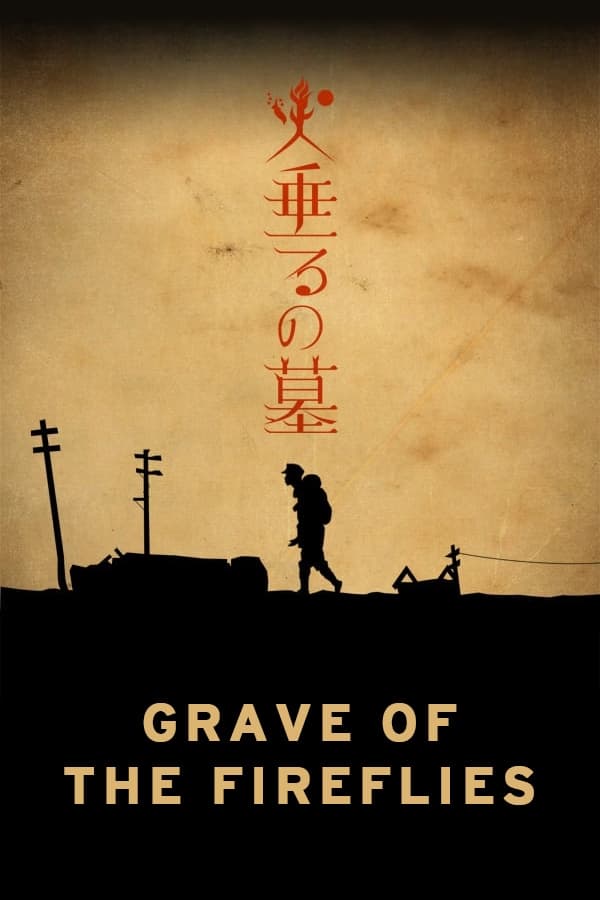
Film Movement Context
Whenever I rewatch Grave of the Fireflies, I’m struck less by genre conventions than by its immersive sincerity, a feeling completely different from the escapism I often expect from animated films. For me, this film belongs to the currents of postwar Japanese humanist cinema but also uniquely inhabits the realm of anti-war animation, a testament to the versatility of Studio Ghibli’s storytelling. I see its roots stretching back to the shōshimin-eiga (“common people’s cinema”) movement in live action, yet the film’s ability to evoke empathy and terror through animation also cements it as a pivotal work within the tradition of “realist anime,” a niche but potent strain within Japanese cinema. In my view, Grave of the Fireflies is a prime example of animation as artistry for social intervention, a movement that uses the expressive tools of the medium to ask deeply moral questions about war, trauma, and the costs of survival.
Historical Origins of the Movement
When I reflect on why films like this emerged, I can’t help but think about the aftermath of World War II and the complex, often painful reckoning Japanese society experienced in its wake. To me, the roots of Japanese humanist cinema go back to the late 1940s and 1950s, when filmmakers like Yasujirō Ozu and Kenji Mizoguchi started shifting their lens from grand narratives to intimate explorations of ordinary people, their suffering, and resilience. It always seemed to me that these directors sought to rebuild a national sense of self that had been shattered by war, occupation, and rapid modernization, grounding their stories in empathy for the disenfranchised and dignity for the powerless. The scars of wartime, whether literal or psychological, became the raw material through which these filmmakers interrogated the ethics of survival, loss, and familial obligation.
As I’ve studied the evolution of Japanese animation, I’ve noticed how anime’s early years were steeped in allegory and adventure, often aiming for escapism rather than realism. But by the mid-1980s, with directors like Isao Takahata and Hayao Miyazaki gaining prominence, animation in Japan began to mature as a vehicle for more serious, complex themes. Grave of the Fireflies arrived at a cultural moment when both the trauma of World War II and the medium of anime were ripe for nuanced, reflexive storytelling. For me, it sits at the intersection of two movements: the artistic legacy of Japanese postwar cinema’s interest in ordinary suffering, and the blossoming of anime as a form of social critique rather than pure entertainment. The result is a movement that refuses to let animation be dismissed as mere children’s fare, instead insisting it can bear the weight of national memory and ethical confrontation.
This Film’s Contribution to the Movement
The first time I encountered Grave of the Fireflies, I realized how powerfully an animated film could circumvent conventional emotional defenses. The work’s animation—a tapestry of vivid, lifelike detail—draws us into a harrowing world that somehow feels both painterly and journalistic. I see Isao Takahata’s approach as a deliberate refusal of the romantic and fantastical traditions that characterize much of anime’s output. Instead, he crafts cinema that operates in the same register of documentary-like empathy that I associate with great postwar humanist directors. In my mind, Takahata’s insistence on depicting siblings Seita and Setsuko without mawkishness transforms their suffering into a universal meditation on how war torments the innocent.
What I find most innovative is the way the film fuses subjective perception with stark realism. Takahata intersperses scenes of childlike wonder—such as the famous fireflies in the dark cave—with agonizing images of hunger and devastation. This alternation mirrors the push and pull of memory: fleeting moments of hope amidst relentless despair. The movement Takahata both embodies and advances is one that centers individual experience in the collective catastrophe, rejecting both melodrama and detachment. By harnessing animation’s flexibility, he draws forth emotions that would risk sentimentality in any other medium.
I noticed, too, how the film eschews clear moral binaries. There is no monolithic villain. The cruelty encountered by Seita and Setsuko comes not from a singular antagonist, but from apathy and the diffuse social disintegration brought on by war. Takahata’s realism becomes slightly expressionist when he visualizes the siblings’ internal worlds—fragments of happiness, the ethereal presence of ghosts, the delicate lines of a tin candy box. I interpret this as the very core of the movement: the belief that the most searing insights about history and morality emerge from small, everyday gestures and objects. For me, in advancing the postwar humanist movement into animation, the film asks audiences not to look away from suffering but to ask why we so often do.
Influence on Later Genres and Films
- Legitimization of Animated Trauma Narratives – After Grave of the Fireflies, I saw animation in Japan begin to embrace the depiction of real and even taboo traumas. Filmmakers and animators felt emboldened to use the medium for personal and collective memory work, evident in titles like Barefoot Gen and The Wind Rises. This film essentially shattered boundaries around what stories anime could tell, proving animated cinema could handle the gravest adult subjects with the gravitas of live action.
- International Perception Shift – My reading of industry discourse makes it clear that, before the late 1980s, Western audiences almost reflexively dismissed anime as juvenile or fantastical. Grave of the Fireflies upended that perspective, playing key roles at international festivals and influencing critics to approach anime with fresh seriousness. Its success opened the floodgates for global attention to diverse Japanese animated features with mature philosophical themes, from Satoshi Kon’s Perfect Blue to Masaaki Yuasa’s The Tatami Galaxy.
- Hybridization of War Film and Family Drama – Having studied cinematic trends, I see how the film’s fusion of the war genre with intimate family melodrama inspired both anime and live-action creators. Its method—telling the vast story of war through the smallest daily rituals—resonates in later works like Shinkai’s Children Who Chase Lost Voices and even in Western films such as the animated Waltz with Bashir. This hybrid narrative mode has transformed how contemporary filmmakers grapple with large-scale tragedy through the lens of human connection.
The Movement’s Lasting Impact
What stays with me most about this movement, and Grave of the Fireflies’ place within it, is the refusal to treat history as an abstraction or war as distant spectacle. The humanist and anti-war animation movement insists on the significance of individual pain, inviting audiences to grieve and remember with the characters, not merely for them. I’ve come to believe the movement’s legacy lies in its insistence on moral attention—on the responsibility not just to witness suffering, but to interrogate the social and ethical orders that produce it.
Looking around at cinema today, I recognize countless works animated and live action that owe their emotional candor, thematic ambition, and willingness to rupture taboos to the precedent set by this film and its movement. The movement’s impact lingers in every work that tries to reclaim realism—not through gritty visuals alone, but through the patient depiction of dignity, fragility, and the everyday heroism of survival. It doesn’t surprise me that these themes still resonate, because as I see it, the project of making meaning from atrocity, and of finding hope while refusing to sentimentalize the past, will always be central to meaningful cinema.
To connect style and technique with broader context, you may find these perspectives useful.
🎬 Check out today's best-selling movies on Amazon!
View Deals on Amazon