
Film Movement Context
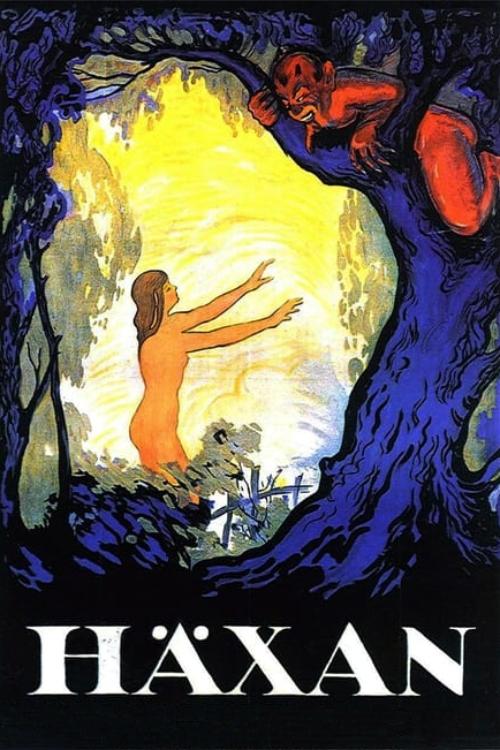
The first time I watched “Häxan,” what immediately struck me was how jarringly modern it feels despite its status as a 1922 silent film. In every frame, I sensed not just a fascination with the supernatural, but a wilful subversion of cinematic convention. For me, “Häxan” sits at a crossroads among several movements, but it’s most intimately tied to the era’s burgeoning European avant-garde and especially the Expressionist tradition in silent cinema. Although it was made in Sweden (by Benjamin Christensen, a Dane), what resonates with me is its kinship with German Expressionism: the shadowy tableaux, the distorted, nightmarish visions of hell, and the psychologizing of horror. Simultaneously, I see it as anticipating the essay film long before that genre had a name. There’s also something proto-surrealist about its episodic construction and the way it juxtaposes past and present, myth and medicine. “Häxan” doesn’t belong comfortably to only one movement; instead, it’s a symptom of the restless cinematic innovations echoing through European film culture after World War I.
Historical Origins of the Movement
When I reflect on where “Häxan” emerges from, I’m drawn to the wider currents driving filmmakers in the 1910s and 1920s to break with realism and classic narrative. Expressionism—chiefly German at first—was, for me, always about representing the world askew, filtered through inner states, psychic trauma, and social unrest. After the catastrophic dislocation of the First World War, artists rebelled against old orders and found themselves interrogating the irrational: fear, madness, spiritual crisis. When I look at the emergence of German films like “The Cabinet of Dr. Caligari” or “Nosferatu,” what I see is cinema transforming into painted dream—actors among exaggerated, stylized settings, shadows as malevolent as any villain. Meanwhile, Sweden had its own wave of spiritually and psychologically charged filmmaking (I think of Sjöström or Stiller), but with a stark, Northern severity. “Häxan” arises where those movements overlap. It channels the monstrous and the mystical—not just to shock, but to provoke critical examination of superstition, gender, and authority. For me, it is no surprise that “Häxan” emerged when it did; the early 1920s were a crucible for both visual invention and radical critiques of society’s dark corners, and Christensen drew from those flames to cast his own bewitching spell.
This Film’s Contribution to the Movement
Whenever I revisit “Häxan,” I feel the boundaries between documentary, fiction, and fantasy collapse. What I love most about this film is how aggressively it blurs genre lines, turning a supposed study of medieval witchcraft into a phantasmagoria of monstrous bodies, devilish rituals, and subversive humor. Unlike the expressionist films that preceded it, Christensen’s work intoxicates me not through abstraction alone, but through restless experimentation: stop-motion effects to turn witch’s brews into writhing life, sudden shifts between scholarly observation and lurid re-enactment, and tableaux that have the lurid logic of nightmares. Those early scenes—devils cavorting, nuns possessed, the grotesque Sabbath—explode with visual invention. But what moved me even more was Christensen’s audacity in questioning the very mechanisms of oppression and hysteria, using expressive distortion not just as an aesthetic, but as critique. The closing chapter, which leaps to early 20th-century asylums and hysteria diagnoses, is a staggering reminder that superstition morphs, but never vanishes. In this, “Häxan” advances Expressionism by marrying its feverish visual style to a sophisticated, almost Brechtian commentary—reminding me that horror and analysis can share the same body. It’s a film equally comfortable with grand guignol spectacle and sober empathy, expanding the movement’s reach by insisting that even the most wild-eyed nightmare is rooted in lived historical suffering. Watching it, I always sense new possibilities: documentary as hallucination, horror as sociology, vision as argument. This is why I see “Häxan” not just as exemplary, but as deeply subversive within its own movement.
Influence on Later Genres and Films
- Influence 1 – Horror and Fantasy Cinema’s Visual Boldness: One aspect of “Häxan” I always find exhilarating is how it set a precedent for visual stylization within horror. Much of the imagery—witches in shadowy attics, the sensuous and the grotesque intertwined, surreal images of Satan and the Sabbath—travels down the years into later films. When I watch Mario Bava’s “Black Sunday” or Guillermo del Toro’s “Pan’s Labyrinth,” I see the lineage clearly: an embrace of macabre beauty, an insistence that horror is not just to be shown, but to be experienced through atmosphere and sensory overload. “Häxan” gave future filmmakers permission to stylize their nightmares, unshackling genre films from mundane literalism.
- Influence 2 – The Essay Film and Docufiction: What most inspires me about “Häxan” is its hybrid structure. Mixing illustrated lectures, dramatic reenactments, and sharp polemical commentary, Christensen foreshadows what later generations would call the essay film. I can’t help but think of Chris Marker’s “La Jetée” and Agnès Varda’s “The Gleaners and I”—films where the director’s subjective voice shapes how history and imagination overlap. “Häxan’s” structure asserts that cinema can be both an argument and a vision, a stance which fundamentally transformed how later filmmakers approached nonfiction, blurring the boundary between real and invented worlds.
- Influence 3 – Gender, Hysteria, and Cultural Critique in Genre Cinema: My admiration grows for how “Häxan” doesn’t just titillate with tales of devilry, but ultimately indicts the misogyny and ignorance fueling witch hunts. Later horror—especially feminist horror—owes a debt here. I see glimmers of Christensen’s insights in films like Robert Eggers’ “The Witch” and even in segments of “The Love Witch” by Anna Biller—works that ask not what women are accused of, but who is accusing, and why. The link between accusation, hysteria, and social control, so starkly visualized in “Häxan,” reshaped horror’s ability to interrogate power and gender far beyond simple scares. For me, this makes the film more than a historical curio; it’s a touchstone for those seeking new uses for genre in social critique.
The Movement’s Lasting Impact
After years of grappling with films from this period, I return to Expressionism and avant-garde hybrid cinema for more than just their surface invention—I return because they unlocked ways to depict inner and outer darkness with honesty. What “Häxan” and its movement teach me is that film is stronger when it dares to break its own rules, to follow vision beyond narrative, to demand that form intensify meaning. Whether through shadow-wracked settings, slippery genre boundaries, or unflinching social critique, this movement’s legacy is everywhere: in horror that makes us think as well as shiver, in documentaries that hallucinate, in films that frontally address the historical and psychological demons haunting society. When I teach or write about cinema today, I often urge others to seek out these origins—not merely as artifacts, but as enduring provocations. Expressionism and its neighbors still matter to me because they insist that film can be as strange, unsettling, and revelatory as the human psyche itself.
To connect style and technique with broader context, you may find these perspectives useful.
🎬 Check out today's best-selling movies on Amazon!
View Deals on Amazon