
Film Movement Context
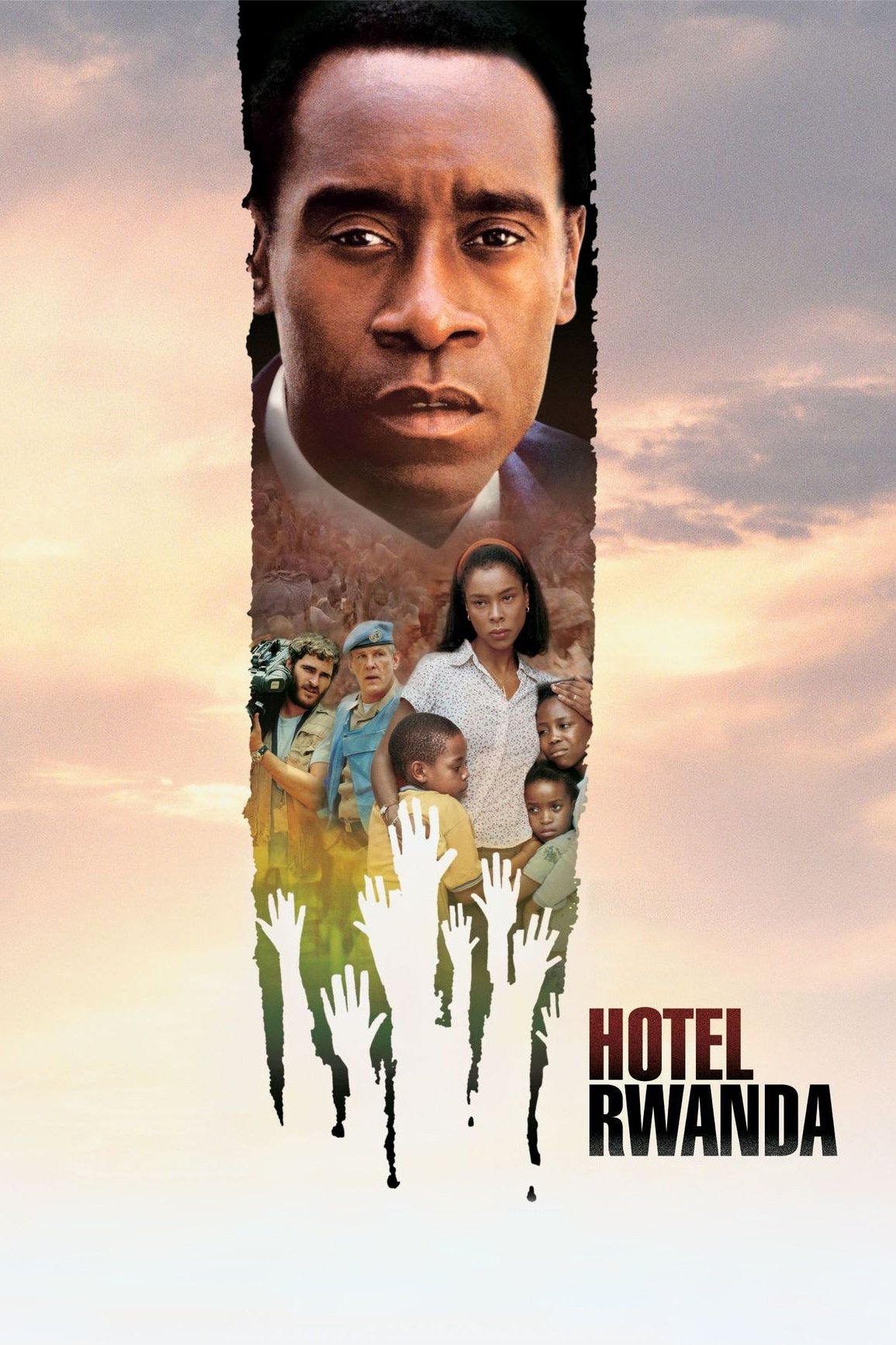
I’ve always experienced Hotel Rwanda as a deeply unsettling mirror of the global conscience—one that feels inseparable from the tradition of Political Realist Cinema. Although the movie is most often categorized as a historical drama, when I watch it, I find it participates in a broader lineage of social realism, merging with what I call the Human Rights Film Movement. It’s a lineage that owes a debt to earlier fact-based, politically engaged films but intermingles, too, with post-1990s international co-productions aimed not only at recounting current events, but at challenging viewers to question their own positions and responsibilities. The film’s persistent focus on moral ambiguity, personal agency in the face of atrocity, and the limitations of Western intervention signals its alignment with the kind of “witness cinema” that forced uncomfortable self-reflection in me, rather than mere historical education. Every time I return to it, I’m reminded that this movement is less about genre convention, more about ethical provocation and the subtle undermining of narrative comfort.
Historical Origins of the Movement
The genesis of the Human Rights Film Movement, as I perceive it, isn’t just a direct evolution from traditional social realism; to me, it’s the outgrowth of political traumas and media transformations in the late twentieth century. In the aftermath of Vietnam and then the Balkan wars, I watched filmmakers move beyond dramatized “issue films” toward a new urgency—one where the globalization of crises demanded not only awareness, but complicity from audiences. There’s a straight line, in my analysis, from the vérité-infused cinema of the 1960s and ‘70s—inspired by Italian Neorealism and the New German Cinema—through to the sharper confrontations with complicity in the works of Costa-Gavras or Gillo Pontecorvo. Yet, by the late 1990s, I noticed that filmmakers were grappling with the overwhelming scale of genocide, refugee crises, and ethnic cleansing as subjects not just for documentation, but for moral interpretation. This was partly because international news networks had burned the images of atrocity into public consciousness, leaving Hollywood—and European co-productions—to figure out how to respond, digest, and prompt action. The blending of Western production teams with stories rooted in non-Western suffering became a phenomenon, carrying all the baggage of representation, access, and power. For me, Hotel Rwanda stands out as one of the more harrowing manifestations of this impulse, interrogating guilt, helplessness, and heroism in a language that mainstream audiences cannot simply dismiss.
This Film’s Contribution to the Movement
Whenever I rewatch Hotel Rwanda, what strikes me isn’t merely the depiction of horror, but the uniquely intimate scale on which that horror is navigated. I see in Paul Rusesabagina’s choices—his hesitations, his negotiations with soldiers, even his calculated politeness—a reflection of Realist Cinema’s commitment to ambiguity over heroics. This is not the sweep of epic war cinema, nor the cold distance of documentary; this is, as I experience it, an attempt to force me into the immediacy of powerlessness and improvisation. The brilliance of the film lies in how it refuses to allow me the comfort of easy villains or redemptive closure. Instead, director Terry George employs restrained camerawork and understated performances to collapse any illusion that I am watching a story confined to another time or place.
Most importantly, Hotel Rwanda tests the boundaries of the Human Rights Film Movement by centering not on the international community’s response, but on the ethical contortions of one individual negotiating for his family and community’s survival. The movie doesn’t indulge my desire for catharsis. Instead, it exposes the frailty of “good intentions” and the grotesque inadequacy of international mechanisms. Unlike earlier depictions of genocide and atrocity, which sometimes offered the viewer a voice of moral clarity or, at least, rescue, this film thrusts me repeatedly into scenes where hope is bartered. This evolution—away from systemic condemnation and toward close-up, personal calculus—felt to me like the movement’s most sobering innovation. In my analysis, Hotel Rwanda doesn’t just tell a story; it cautions against my own wishful thinking about “what I would do” when faced with the unthinkable.
I found the film’s muted palette, unadorned production design, and documentary-like pacing to be not merely aesthetic choices, but ethical ones. Every stylistic restraint, to me, is a rejection of embellishment, demanding that I dwell in discomfort rather than be swept along by cinematic pleasure. The music, too, so often understated and mournful, serves as a reminder of what remains unseen or unsalvageable. I’m also compelled by the way the film reserves space for silences—moments where the camera lingers on faces, neither judging nor absolving, and allows me time to ask myself where I, as a spectator, fit in this tableau of suffering. That’s where I see the Human Rights Film Movement’s ethos most powerfully realized: in its insistence on implicating me, making me complicit through inaction, silence, or self-protective withdrawal.
Influence on Later Genres and Films
- Influence 1 – Reconfiguration of the Awards-Season Biopic: In my reading, Hotel Rwanda fundamentally altered how Hollywood and European studios approach the “true story” drama. After its critical success, I saw a shift away from shrink-wrapped, heroic narratives toward messier, morally uncertain films that do not grant easy closure. Movies like The Constant Gardener and Beasts of No Nation seem indebted to this reorientation—emphasizing ethical muddle, not triumph. These later films, much like Hotel Rwanda, leave the audience unsettled, preferring ambiguous endings that implicate us rather than congratulate us.
- Influence 2 – Mainstreaming of the Southern Global Perspective: I noticed that after the release of Hotel Rwanda, there was a pronounced increase in international co-productions that put African, Asian, or Middle Eastern voices at the center—even if mediated through Western directors. This subtle genre shift challenged the norms of exoticization and “white savior” narratives. Films such as The Last King of Scotland or Incendies clearly reflect, to my mind, an awareness that stories set outside the West need to privilege local protagonists and ethical agency. The resonance of Hotel Rwanda can be felt in these works’ refusal to flatten trauma into spectacle, taking their cue from its insistence on lived subjectivity.
- Influence 3 – Expansion of the Human Rights Docudrama: In analyzing broader trends, I have often returned to Hotel Rwanda as a catalyst for the surge in hybrid films—works that blend dramatic storytelling with factual frameworks reflecting real atrocity. This is apparent to me in the rise of films like Shooting Dogs and later projects such as City of Life and Death. They enact the same tension: between docudrama realism and cinematic style, between a call to witness and a refusal to comfort. In my view, this hybridization wouldn’t have achieved such mainstream visibility without the resonance and critical debate provoked by Hotel Rwanda.
The Movement’s Lasting Impact
For me, the Human Rights Film Movement—of which Hotel Rwanda is both a product and an intensifier—endures precisely because it does not permit me the luxury of emotional distance or historical abstraction. As a film historian with a deep stake in the ethics of cinematic representation, I’m convinced that this movement’s insistence on “bearing witness” keeps alive the possibility of transformation, even if that transformation is limited to discomfort and self-awareness. The movement matters because each new iteration—each film that foregrounds ambiguity, complicity, and the limits of empathy—compels me to question not only what I would do, but what I am doing right now, as part of a global audience. The films that have followed in this tradition continue to interrogate the intersections of storytelling, power, and moral action, often focusing less on answers than on urgent questions. My personal engagement with these works persists because they do not let me forget: the border between spectator and participant is always, in the end, a permeable one. The Human Rights Film Movement presses me, again and again, to recognize that cinematic style, narrative framing, and ethical response are inextricably entwined. Its relevance is not simply historical or aesthetic—it is, for me, a provocation that refuses to recede.
To connect style and technique with broader context, you may find these perspectives useful.
🎬 Check out today's best-selling movies on Amazon!
View Deals on Amazon