
Film Movement Context
Every time I revisit “Ikiru,” I’m struck by how effortlessly it captures the spirit and contemplative style of the Japanese postwar humanist movement—what I genuinely consider an understated chapter of world cinema. For me, “Ikiru” is still quintessentially bound to the Japanese Shomingeki tradition, a cinematic tendency that focused on the everyday existence of ordinary people, exploring their struggles, dignity, and aspirations within the rapid modernization and persistent trauma of postwar Japan. When I watch “Ikiru,” I see not just a story about a bureaucrat facing mortality, but an evocative case of Shomingeki’s profound empathy, its embrace of subtle storytelling, and its ability to turn the seemingly mundane into something transcendent. I often find myself reflecting on how Akira Kurosawa, the film’s director, rejects melodrama to favor emotional truth, a sensibility that, to me, elevates this film within its movement to a near-paradigmatic place. It’s this very grounding in Shomingeki—and Kurosawa’s gently radical approach to it—that draws me back, inviting a meditation on what genuine humanism in cinema can be.
Historical Origins of the Movement
If I try to trace the emergence of Shomingeki, I’m compelled to look to the 1920s and 1930s—a time when Japanese society was undergoing dizzying transformation. What fascinates me most is how directors, many working at studios like Shochiku, began to drift away from grand narratives about samurai or nobility and instead pointed their lens inward, onto the daily hopes and grievances of the lower middle class. In my research, I’ve seen Kenji Mizoguchi and Yasujirō Ozu regarded as early standard-bearers, using minimalist style and naturalistic scenarios to evoke a tender portrait of everyday endurance. These filmmakers, disturbed by political turmoil and rapid Westernization, sought in the ordinary a room to negotiate modernity’s discontents: alienation, generational divides, and societal fragmentation. After World War II, I notice how this movement picked up renewed urgency. The ravages of war and defeat rendered spectacle almost obsolete—what remained was just ordinary people, picking up the pieces and yearning for meaning. Within this frame, I suspect Shomingeki’s stripped-back aesthetics and existential queries weren’t just a style—they were a necessity. “Ikiru,” arriving just seven years after the war’s end, feels to me like the distilled expression of this ethos: understated, humane, and almost defiantly intimate.
This Film’s Contribution to the Movement
“Ikiru” is, I have always believed, a masterclass not merely in Shomingeki filmmaking but in expanding the philosophical depth of what this movement could accomplish. The moment I witness Kanji Watanabe—the aging, faceless bureaucrat confronted with his mortality—I find myself completely immersed in Kurosawa’s meticulous, unhurried storytelling. To me, “Ikiru” reframes bureaucracy, not as a comic or oppressive background, but as a character in itself—a force that both soothes and suffocates. What lingers with me is how Kurosawa refuses sensationalism: instead, he builds power through observational detail—the clatter of typewriters, the echo of hollow office voices, the persistence of triviality in the face of spiritual urgency. This is, to my mind, not just humanism, but an act of cinematic patience, a belief that profundity can spring forth from the humble and overlooked.
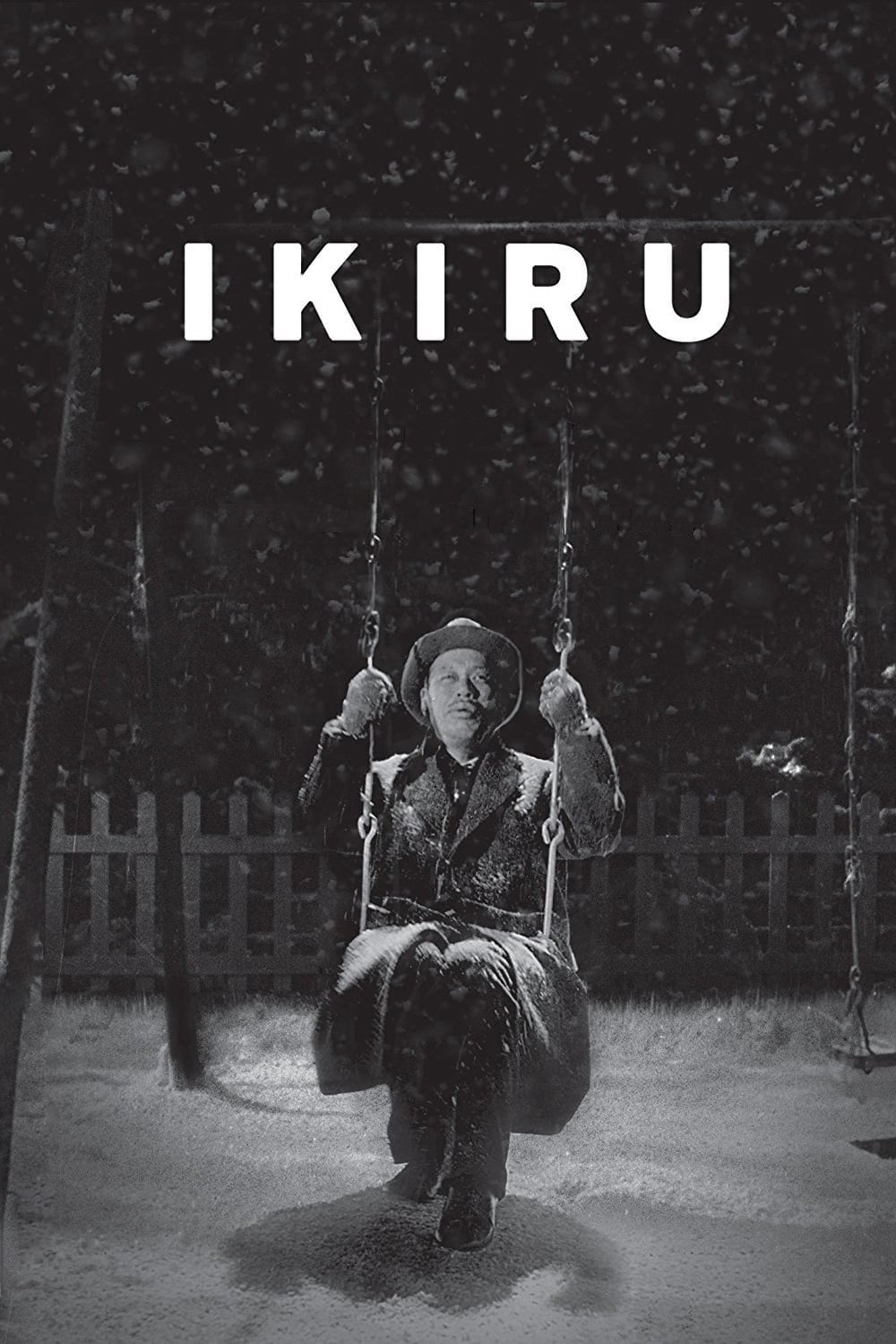
When I reflect on the turning point where Watanabe, stripped of all illusions by his terminal diagnosis, seeks purpose in the world, I recognize the signature maneuver of Shomingeki: the search for dignity in the everyday, and the possibility of redemption through small acts. To me, Kurosawa’s lens is mercilessly honest yet deeply compassionate. He captures the shame and inertia of a man lost in routine but also the moments—sometimes wordless—where a single gesture or fleeting kindness feels world-shaking in its significance. In one unforgettable sequence, Watanabe sits on a swing in a snowy playground, his song both woeful and hopeful; I’ve always felt that this moment alone justifies the movement’s commitment to exposing beauty in life’s quietest moments. “Ikiru” doesn’t simply inhabit Shomingeki; in my eyes, it elevates it, showing how the ordinary can serve as the crucible for the most profound human transformations.
What also strikes me, as I rewatch each time, is how “Ikiru” opens up the movement to a broader, existential dimension. Yes, it attends to the social and material realities of postwar Japan, but for me, it’s much more: a cinematic meditation on mortality, authenticity, and the hunger for meaning that transcends cultural boundaries. Kurosawa, through spare narrative devices and luminous character work, encourages me to ponder my own mortality, my own pursuit of significance. For those, like myself, who believe that cinema’s power lies in fostering empathy and self-examination, “Ikiru” stands as an essential touchstone within Shomingeki—revealing how the genre can be both intimately national and strikingly universal.
Influence on Later Genres and Films
- Influence 1 – The template for existential cinema: I can see how “Ikiru” provided a roadmap for films that want to grapple with existential doubt, anxiety, and the search for meaning in a secular world. Watching its influence ripple outward, I recall movies like Ingmar Bergman’s “Wild Strawberries,” which echoes Watanabe’s journey in its own protagonist’s reckoning with mortality and lost opportunities. I personally find that many international filmmakers returning to existential themes—be it Krzysztof Kieślowski in Poland or Asghar Farhadi in Iran—owe a narrative and tonal debt to Kurosawa’s patient, reflective artistry.
- Influence 2 – Reimagining bureaucracy and social critique: In my analysis, “Ikiru” pushed the representation of institutional life well beyond satire or despair. I think of later films across the globe—like Mike Judge’s “Office Space” or the Dardenne brothers’ Belgian social dramas—that balance critique with empathy, tackling the alienation bred by faceless systems while seeking out moments of grace. I’m convinced that the film’s method—detailed observation, gentle humor, commitment to character—has seeped into countless social realist works far beyond Japan.
- Influence 3 – Shaping the emotional grammar of melodrama: What always impresses me is how “Ikiru” quietly sidesteps the usual trappings of melodrama, favoring subtlety and psychological depth. When I watch works by Hirokazu Kore-eda or Edward Yang, I detect the lingering imprint of this restraint. These directors, to my eye, build upon Kurosawa’s insistence that emotional resonance can be more powerful if it’s earned slowly, with attention to everyday minutiae and deeply lived experience. I even spot traces of this philosophy in Western films that seek to capture the texture of ordinary life—think of Richard Linklater’s “Boyhood,” whose episodic structure and devotion to small moments feels kin to “Ikiru”’s approach.
The Movement’s Lasting Impact
I’ve long believed that the staying power of the Shomingeki movement, as embodied in “Ikiru,” comes from its unique ability to honor the humanity within the mediocrity of everyday existence. For me, its genius is quiet, so easy to overlook. Unlike movements that delight in spectacle or radical aesthetic bravura, Shomingeki’s influence works underneath, through a kind of narrative and emotional osmosis. Watching “Ikiru” today, I’m continually surprised by how modern it feels—the measured pace, the refusal of easy sentiment, the insistence that happiness might be found in late-blooming acts of generosity amidst systems seemingly designed to negate meaning. This is why, every time I teach or write about film movements, I return to Shomingeki as a standard-bearer for what cinema can do at its most honest: cradle the vulnerabilities of ordinary people; reject trite moralizing; and, above all, remind us of the dignity present in the most unremarkable of lives. To me, this movement’s influence is everywhere—in the best social dramas, in the resurgence of slice-of-life storytelling, and in any film that treats everyday pain and yearning as worthy of cinematic attention. “Ikiru” endures, I think, because it still asks the one question that matters most—“How should we live?”—and gives us, not answers, but the grace of genuine companionship along the way.
To connect style and technique with broader context, you may find these perspectives useful.
🎬 Check out today's best-selling movies on Amazon!
View Deals on Amazon