
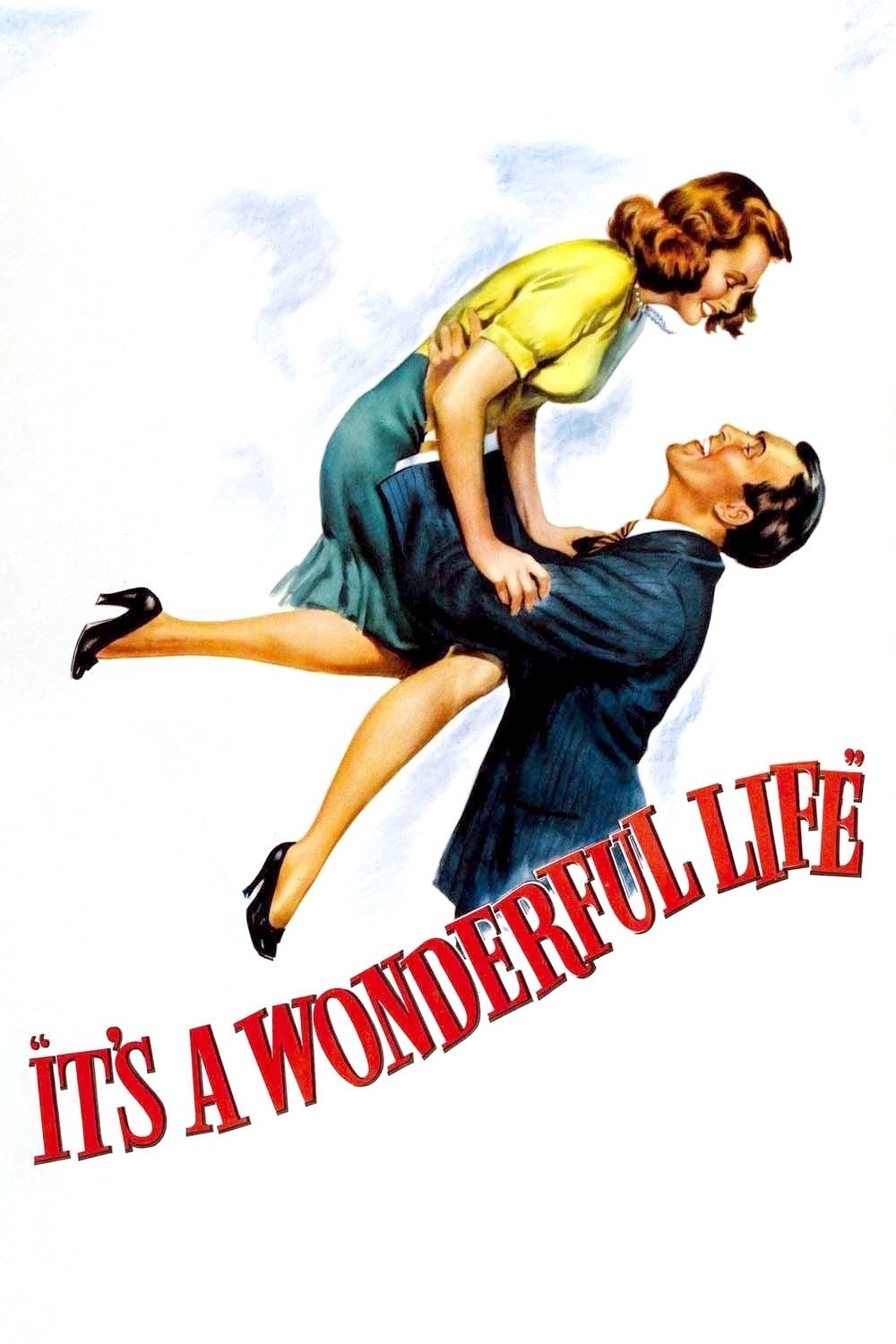
Film Movement Context
Every time I revisit “It’s a Wonderful Life,” I find myself pulled between the comforting glow of nostalgia and the turbulent undercurrents simmering beneath its surface—a tension that has everything to do with the film’s deep ties to the Classic Hollywood melodrama and, more specifically, to the Capraesque strain of American social-realist cinema. For me, the film doesn’t neatly slot into the postwar film noir movement, nor does it indulge purely in sentimental escapism. Instead, I see it as a product of a uniquely American film tradition that emerged from the studio system: a melodramatic, socially-conscious fantasy that channels the textures, moods, and ideologies of the late 1940s. When I analyze the film’s form and sensibility, I find traces of populist optimism juxtaposed with existential uncertainty—a kind of synthesis that only appears in what I call Classic Hollywood’s darkly-tinged melodramas.
Historical Origins of the Movement
I’ve always been struck by how Classic Hollywood melodrama arose not as a cohesive “movement” in the manifesto-laden sense, but rather as an organic outgrowth of the social and industrial circumstances of its era. In the 1930s and ’40s, studio filmmakers like Frank Capra, George Stevens, and William Wyler began infusing mass-appeal genres—screwball comedy, melodrama, even fantasy—with elements of social critique. I see this as a reaction to the anxieties and upheavals of the Depression and World War II, a period when American audiences needed reassurance yet couldn’t ignore the persistent specter of loss, disillusionment, and shifting moral values. The tension between hope and despair, which is so ingrained in “It’s a Wonderful Life,” draws from this very dialectic.
During and after WWII, the Classic Hollywood studio system reached its creative zenith. In my view, this was partially due to how filmmakers navigated the requirements of the Production Code, threading challenging ideas about society, class, and the individual’s place in the world through the accessible language of popular genre films. This is also the period when fantasy and supernatural elements—angels, alternate realities, miraculous redemptions—became metaphors for the anxieties and aspirations of ordinary Americans. In other words, the “movement” that anchors “It’s a Wonderful Life” is less a rigid art movement and more a distinctly American brand of socially-inflected, studio-crafted melodrama, where emotional realism is interwoven with magical realism, and everyman protagonists are faced with both dazzling promise and crushing despair.
This Film’s Contribution to the Movement
Whenever I watch “It’s a Wonderful Life,” I am reminded of how much more this film accomplishes than a simple tale of redemption or holiday cheer. I find its most radical gesture lies in how it frames despair and self-worth within the constraints of small-town America, all while preserving the conventions of mainstream entertainment. To my eyes, Frank Capra didn’t just recycle populist optimism; he interrogated it. The film exposes the cracks in the American Dream by focusing on George Bailey’s existential crisis—wrapping it, however, in the warm glow of nostalgia and community solidarity.
What fascinates me most is how Capra fuses the sentimentality of melodrama with a raw undercurrent of darkness. George’s journey through his alternate reality is more than a plot device; it’s a metaphysical trial questioning the value of individual existence within a collective framework. I believe this entwines the film firmly with the hybridized movement I associate with Capra’s mature period—where fantasy, melodrama, and social realism collide. In doing so, it advances the boundaries of what American melodrama was “supposed” to look and feel like by juxtaposing the light of redemption with the abyss of self-destruction. Every time George confronts the possibility of a world without him, I sense the pulse of postwar disillusionment—filtered, not erased, by the film’s magical conclusion.
For me, “It’s a Wonderful Life” is emblematic of a cinematic language where style serves substance: the expressive lighting, the tactile interiors of Bedford Falls, and the careful pacing all magnify the emotional stakes. This isn’t mere visual adornment; it’s Capra’s way of rooting fantasy in the sensory grain of everyday life. The film asks us—through uncanny distortions of reality—how individual worth is measured, and whether ordinary kindness might be the most radical salvation of all. Its contribution is as much philosophical as it is aesthetic, showing how the conventions of genre cinema can be harnessed for existential inquiry and social healing.
Influence on Later Genres and Films
- Influence 1 – The Social Fantasia Template: Watching contemporary American films that blend realism with fantasy, I detect clear echoes of “It’s a Wonderful Life.” The notion that supernatural or speculative devices can illuminate social anxieties and personal crises can be felt in films like “Groundhog Day” and “Eternal Sunshine of the Spotless Mind.” Both movies, in my mind, inherit Capra’s interest in forcing characters—and audiences—to confront alternative realities as a means to reappraise their values and choices. “It’s a Wonderful Life” paved the way for a subgenre where fantasy mechanics are intimately tied to lived experience and moral reckoning.
- Influence 2 – Reframing Melodrama as Therapy: The emotional candor I see in “It’s a Wonderful Life”—the way it’s not afraid to court despair alongside hope—shaped the contours of the so-called “feel-good” movie. More than once, I’ve noticed later family dramas and even romantic comedies borrow this structure of breakdown and healing. Whether it’s broad comedies like “Mrs. Doubtfire” or the tear-stained reversals in studio dramas such as “The Pursuit of Happyness,” the formula is traced back to Capra: lead the audience into emotional crisis, but return them transformed, fortified by empathy and community.
- Influence 3 – Television’s Embrace of Capraesque Sentiment: In my view, nowhere is the film’s legacy more apparent than in American television. Series ranging from “The Twilight Zone” to “This Is Us” have cribbed from the idea that a singular, seemingly ordinary life contains multitudes of cosmic significance. Television holiday episodes and series finales—the “what if?” alternate reality, the rediscovery of self-worth—routinely exhibit the blueprint established by “It’s a Wonderful Life,” using fantasy as a tool for communal healing.
The Movement’s Lasting Impact
As a historian of film movements, I am always aware that to understand why a movement endures, I must consider both its philosophical ambitions and popular appeal. The Capraesque extension of Classic Hollywood melodrama still matters to me because it demonstrated how mass-market entertainment can wrestle with the anxieties of its era—never settling for easy platitudes, even when it pretends to. In my encounters with contemporary cinema, I find this movement’s fingerprints everywhere: in how films approach personal crisis as something both deeply internal and inextricably linked to society at large; in how visual style is enlisted to render the ordinary both mythic and tactile; in how fantasy is not escape but confrontation.
This amalgamation of melodrama and social commentary—what I’ve come to call “everyday wonderment”—reminds me that genre conventions are most alive when they’re in flux, always stretching to address what audiences fear and yearn for. “It’s a Wonderful Life,” with its refusal to smooth over despair or cynicism, holds up a mirror to the very process of meaning-making in cinema. The movement it exemplifies remains vital because it continues to inspire filmmakers and spectators alike to imagine how everyday lives, when seen from a different angle, become epic in their significance. I return to the film, and to this movement, not just for reassurance, but for its insistence that what we most need from cinema is neither pure escapism nor unfiltered realism, but the space where fantasy makes sense of what reality cannot.
To connect style and technique with broader context, you may find these perspectives useful.
🎬 Check out today's best-selling movies on Amazon!
View Deals on Amazon