
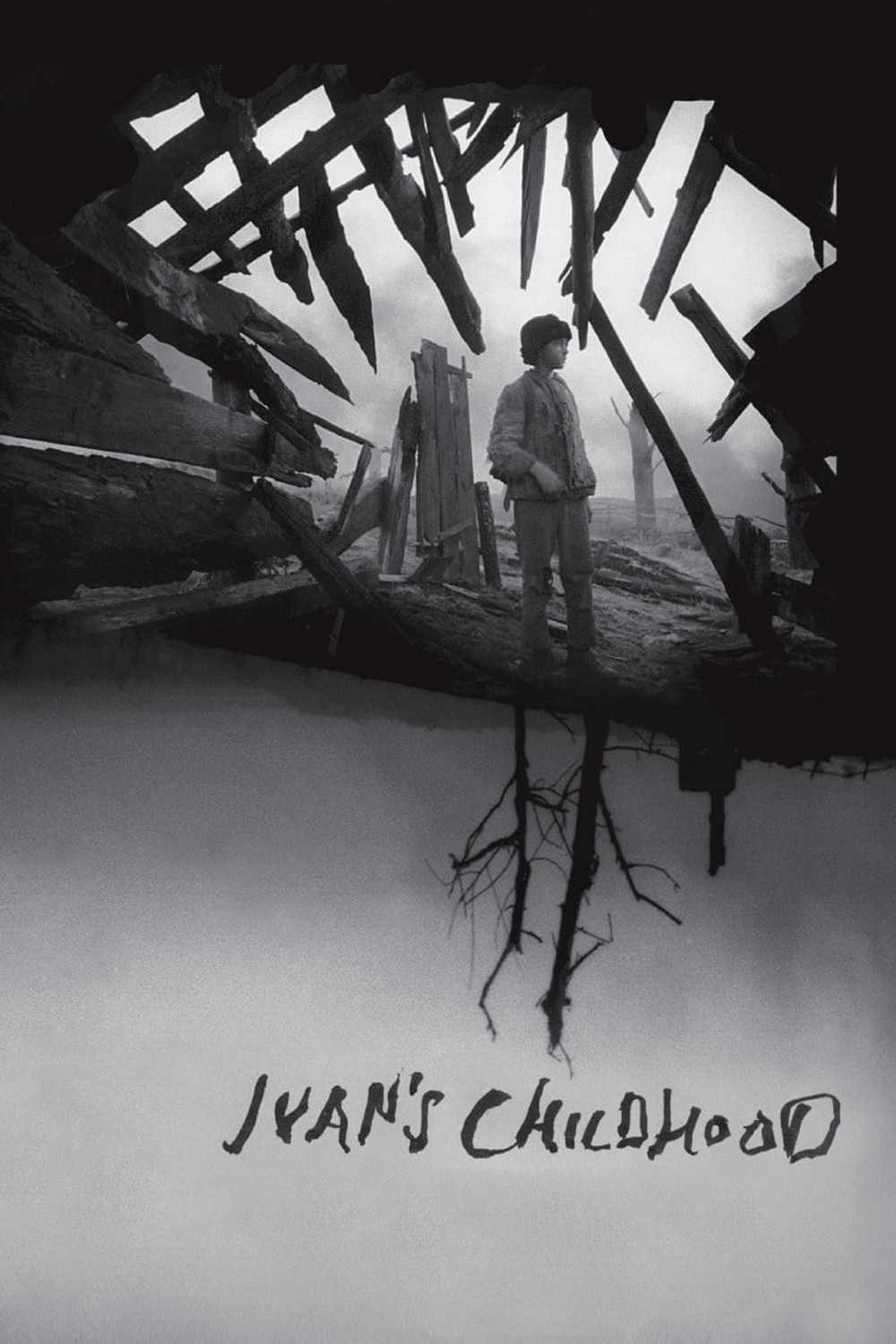
Film Movement Context
The first time I watched “Ivan’s Childhood,” I felt swept into a world where memory and trauma seemed to bleed into the present, each shot charged with poetic longing and moments of deep anguish. For me, this film unmistakably belongs to the poetic realist tradition rooted within the broader movement of the Soviet New Wave—a surge of postwar innovation in Russian cinema during the early 1960s. When I think about this cinematic era, what stands out is its relentless questioning of entrenched narrative conventions and its willingness to embrace ambiguity, subjectivity, and visual lyricism. “Ivan’s Childhood,” directed by Andrei Tarkovsky, is often paired with the movement known as the “Khrushchev Thaw,” a time when Soviet filmmakers broke free from the constraints of Socialist Realism and dared to give personal, dreamlike shape to collective memories and national trauma. I’ve always felt that Tarkovsky’s approach, with its dream sequences, associative editing, and meditative pacing, places “Ivan’s Childhood” at the very core of the Soviet New Wave—leaning heavily into poetic realism. This film’s power, for me, grows out of that fertile moment when Soviet cinema transformed, using style as a tool for piercing inquiry into the scars left by war and the fragility of childhood amid overwhelming historical forces.
Historical Origins of the Movement
Tracing the roots of the Soviet New Wave, I’m always struck by how intricately this movement is bound up with the political and cultural shifts of its era. In the years following Stalin’s death, the Soviet Union entered a period of guarded optimism and cautious openness known as the Khrushchev Thaw. When I reflect on this period, I see in its films a yearning to break free from the strictures of state-mandated Socialist Realism—a doctrine that had, for decades, forced filmmakers to produce ideologically “correct” narratives glorifying collective heroism and the omnipotent Soviet state. Suddenly, new possibilities appeared. For the first time, directors could explore the emotional aftermath of World War II from a stance of critical introspection rather than triumphalist agitprop.
What really fascinates me is the way these directors—Tarkovsky among them—embraced both international currents (like Italian Neorealism and French poetic realism) and distinctly Russian traditions of visual art and literature. I’ve long been moved by how directors of this movement wielded the camera not merely to record reality, but to question it; they questioned what it meant to remember, what it meant to suffer, what it meant to dream. The movement, as I see it, emerged in opposition to uniformity, drawing on deeply personal perspectives and prioritizing psychological and sensory truths. “Ivan’s Childhood” is not simply a product of studio policy; to me, it’s more like the cinematic blossoming of a society struggling to reckon with both its ghosts and its ideals. Every time I revisit the film, I’m reminded how, in this historical context, filmmakers began using cinema as fertile ground for both subversion and spiritual exploration, transforming Soviet film from a blunt instrument of propaganda into a lush, complex, and restless art form.
This Film’s Contribution to the Movement
Whenever I am asked to single out a film that embodies everything the Soviet New Wave aspired to, “Ivan’s Childhood” inevitably comes to mind. From the very first scene, I recognize Tarkovsky’s hand not in bombastic gestures, but in the careful balancing of the lyrical and the brutal—he explores the psychic toll of war through the prism of a child’s fractured consciousness. I find it compelling that the film resists any urge to present tidy resolutions or patriotic uplift; instead, it traffics in loss and ambiguity. Tarkovsky continually undermines clear-cut divisions between reality, memory, and dream. For me, this dislocation is not mere aesthetic flourish—it is the movement’s core strategy, a way of honoring the complex emotional truths the era’s censors had long suppressed.
I’m particularly enamored with Tarkovsky’s use of landscape and weather—the marshes, forests, and rain seem to me less like neutral setting and more like psychic extensions of Ivan’s inner world, bathed in shadows, lacerated by sudden shafts of light. The poetry of these elements—achieved through expressive, almost painterly black-and-white cinematography—pulls the film away from doctrinaire realism and toward the contingent, fleeting gaze of memory. This is where “Ivan’s Childhood” advances the movement: by refusing to reduce childhood to mere innocence or trauma to simple suffering, Tarkovsky opens a contemplative space in which the individual’s perspective complicates the state’s version of history. I see this as a central achievement of the movement—the ability to locate political critique in the very act of seeing and feeling. Even the editing style—those sudden, almost jolting transitions between dream and waking life—feels like a rebellion: a declaration that inner turmoil is itself a historical fact worth documenting.
I have always admired how the film weaves together highly aestheticized compositions and moments of raw documentary intensity. Tarkovsky’s camera lingers, floats, and observes, sometimes with an almost spiritual detachment. In these moments, I sense the filmmaker’s determination to chronicle not just events, but sensations and atmospheres. The film’s spare dialogue and expressive silences invite me, as a viewer, to interpret what isn’t said—to fill the gaps, to remember alongside Ivan and the adults who circle around him, themselves haunted by war. Where earlier Soviet cinema prescribed a single, coherent vision of heroism, “Ivan’s Childhood” offers only uncertainty, longing, and ineffable loss. It is this capacity for doubt—for persistent questioning of whose memories count, and how trauma reshapes us—that, in my mind, cements the film’s place as a foundational work in the Soviet New Wave and the larger poetic realist tradition.
Influence on Later Genres and Films
- Influence 1 – Elevation of Cinematic Subjectivity: If I had to pinpoint a single formal innovation that “Ivan’s Childhood” gifted to subsequent filmmakers, it would be its daring focus on subjective experience over linear plot. I see Tarkovsky’s combination of dream states and fragmented recollections echoed in later films worldwide, from the visually driven storytelling of Terrence Malick to the psychologically disjointed narratives of Ingmar Bergman’s later period. Even within Russian cinema, filmmakers like Larisa Shepitko and Aleksei German seem, to me, to have inherited this license to privilege the internal landscapes of their characters—using poetic visual language to explore memory, loss, and disconnection. The impact on art-house and festival cinema across Europe and Asia feels profound; “Ivan’s Childhood” offers a template for rendering the ineffable on screen, giving rise to new genres centered on memory work and trauma reflection.
- Influence 2 – Reimagining the War Film: Before encountering “Ivan’s Childhood,” my notion of a war film was permanently colored by bombast, battle sequences, and stories of military valor. Tarkovsky twists the genre: I notice how he rejects spectacle, focusing instead on aftermath, resilience, and psychic devastation. This shift, in my eyes, reverberates into the films of Elem Klimov (“Come and See”) and Michael Haneke (“The White Ribbon”), where war is no longer merely an occasion for physical conflict, but an environment corrosive to innocence and moral certainty. By redefining the contours of the war film, Tarkovsky encourages future directors to gravitate toward stories of coping, loss, and the slow, corrosive violence of fear and memory—genres that now often prioritize the unsayable over the explicit, and trauma over action.
- Influence 3 – Lyricism and Cinematic Pacing: What lingers for me, perhaps even more than the story, is the film’s patience—its embrace of long takes, suspended time, and painterly detail. This rhythm, I’ve observed, finds kinship in the “slow cinema” of directors like Béla Tarr or Apichatpong Weerasethakul, for whom time is a vessel rather than a constraint. “Ivan’s Childhood” dares to take its time, to revel in the play of light on water or the slow drift of mist through birch forests. When I see later films that insist upon contemplation over action, I can almost always detect Tarkovsky’s shadow, urging filmmakers and viewers alike to linger, to savor, and to return to the materiality of seeing. In this sense, the film acts as a bridge, not only between Soviet cinema and international art film, but between image and emotion—a legacy that ripples across genres encapsulating everything from existential drama to psychological horror and even the coming-of-age tale.
The Movement’s Lasting Impact
Every time I return to the films of the Soviet New Wave, and especially to “Ivan’s Childhood,” I’m reminded of the seismic shift that occurs when filmmakers are given license to privilege sensation, memory, and spiritual inquiry over prescriptive narrative. The movement’s refusal to let state-determined truths entirely colonize the field of vision feels radical even now. To me, the legacy is twofold. One, it demonstrates that film can be both an intensely personal and overtly political medium—capable of holding myths, histories, and nightmares in potent, unresolved tension. Two, by framing trauma and subjectivity as worthy subjects in their own right, the Soviet New Wave opened the floodgates for subsequent genres and global movements to explore interiority, doubt, and liminality in all their complexity.
I see the lasting impact not just in the direct descendants—those art-house films and elliptical coming-of-age dramas—but in the underlying confidence that cinema itself can function as the keeper of memory. The films of this movement, embodied by “Ivan’s Childhood,” help me recognize how cinema evolves: never simply a matter of technical progress, but of finding new visual languages for the hardest truths. It matters because the questions it raises—about what it means to remember, to endure, to witness—refuse to be answered only by history; they belong, endlessly, to the world of personal experience and collective imagination. Tarkovsky and his contemporaries made films that refuse easy closure, and for me, this resistance remains one of the greatest gifts any movement can offer: the courage not to settle, but to keep searching, camera in hand, for meaning at the boundaries of memory and myth.
To connect style and technique with broader context, you may find these perspectives useful.
🎬 Check out today's best-selling movies on Amazon!
View Deals on Amazon