
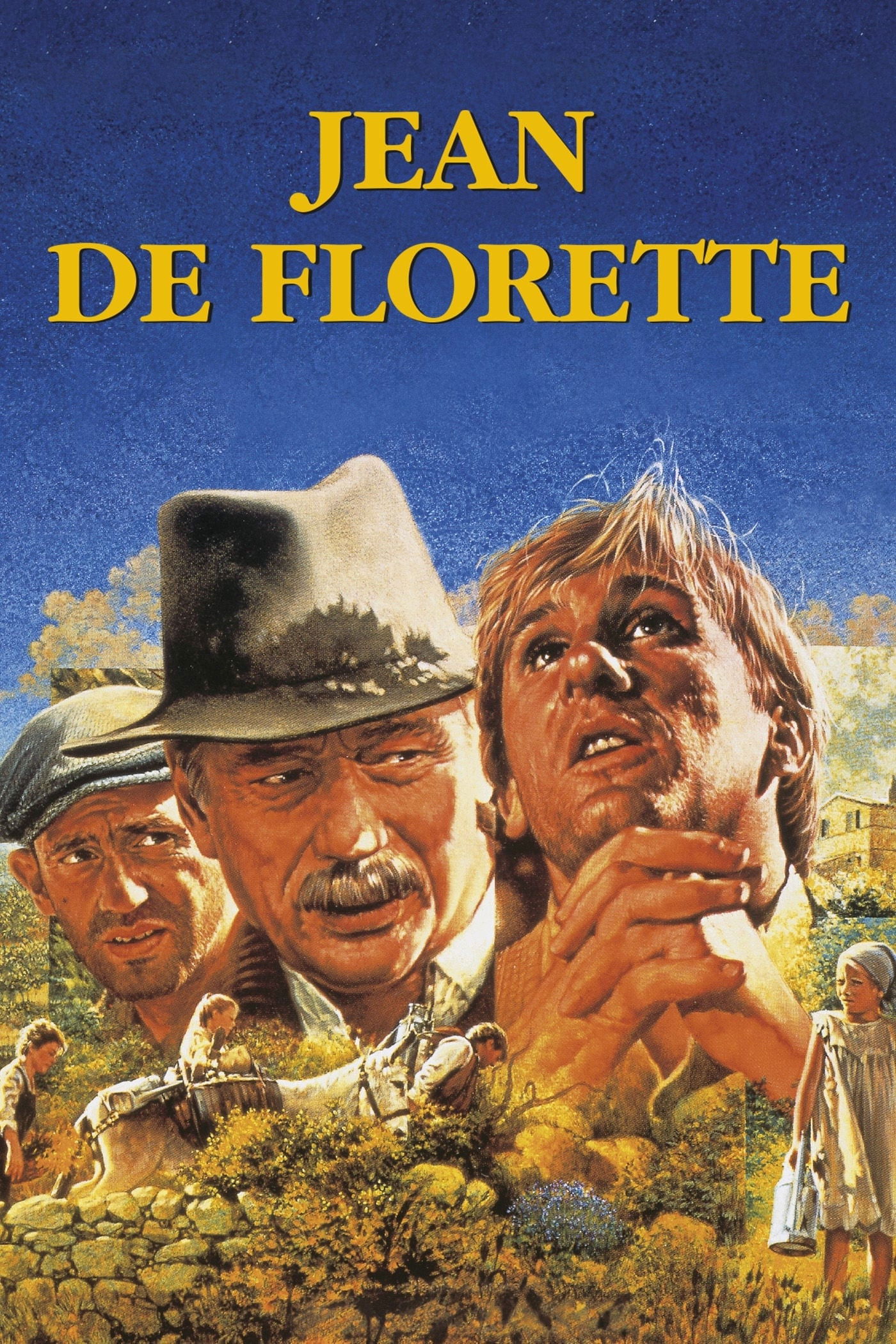
Film Movement Context
From the moment I first saw “Jean de Florette,” I couldn’t shake the sense that I was witnessing a cinematic bridge between the poetic landscapes of French tradition and the biting realism that defines so much of European cinema postwar. I see this film as an essential piece of the “Heritage film” movement—a wave that swept French and British cinema in the 1980s, reshaping popular and critical perceptions of literary adaptation, historical authenticity, and national memory. When people talk about the heritage movement, they often fixate on its lush, painterly visuals and love for rural nostalgia, and “Jean de Florette” absolutely envelops me in those bittersweet, sunbaked Provençal vistas. Yet, I never reduce it to a mere pretty costume drama; for me, the film’s true allegiance lies with its almost neorealist social consciousness, its capacity to wring drama and heartbreak from everyday life. In many ways, I view “Jean de Florette” as a dialogue between traditions: the lush pictorialism of heritage cinema married to the humane, sobering realism that pulses through works of Italian Neorealism and classic French poetic realism.
So when I place “Jean de Florette” on the map of film history, I anchor it within the French Heritage Cinema movement—while recognizing its complex relationship to prior French movements like poetic realism, as well as broader European trends toward realism and social critique. The film’s commitment to regional detail, its roots in literary adaptation, and its intricate evocation of national identity all cement its role in this significant, sometimes contested, cinematic tradition.
Historical Origins of the Movement
Whenever I revisit the context of Heritage cinema, I’m always struck by the deeply nostalgic currents running through 1980s France and Britain. For me, this movement was born not just out of a love for the past, but from a collective crisis of historical identity following the upheavals of the postwar decades. After the turbulence of 1968, French cinema seemed to fragment: the starkly political charge of the New Wave gave way to experimentation, while global co-productions often left behind local specificity. By the early 1980s, there was a palpable hunger for reconnection—audiences and filmmakers alike seemed to crave stories that would reaffirm national history, regional roots, and the mythic beauty of pre-industrial landscapes.
I always see Heritage cinema as bound up with the rise of state-sponsored film funding and a renewed appetite for prestige literary adaptations. In the case of “Jean de Florette,” the adaptation of Marcel Pagnol’s beloved novels was more than a tribute—it was an act of cultural reclamation. The film immerses me in the rhythms, accents, and tensions of rural Provence, functioning almost as an ethnographic document of a way of life lost to modernity. But the movement wasn’t just about visual splendor or nostalgia; to me, its best examples (including “Jean de Florette”) reckon honestly with the darkness and ambivalence lurking in the national past. The vivid cinematography of golden fields and ochre farmhouses never lets me forget the cost—personal, social, and ecological—of the old order’s preservation.
The evolution of Heritage cinema, in my view, was equally shaped by market forces: the global box office success of films like “A Room with a View” or “Chariots of Fire” convinced French producers that visually stunning, literate films could be both critically acclaimed and commercially viable. But the genre’s distinctiveness lies in its attitude toward history: it asks me not just to admire but to question how national mythologies are created and sustained.
This Film’s Contribution to the Movement
If I’m being honest, “Jean de Florette” feels to me like the quintessential French Heritage film—yet it never feels ossified or sentimental. Instead, its achievement lies in its relentless excavation of the tensions that haunt any nostalgic return. Every time I watch it, I’m struck by how Marcel Pagnol’s story, in Claude Berri’s hands, becomes not just a chronicle of rural life but a tragic drama of greed and dispossession. Here, the Provençal countryside is both luscious and cruel, the backdrop for an age-old conflict between tradition and change, community and selfishness.
As a film historian, I value how “Jean de Florette” almost anthropologically recreates the material culture of Provence circa 1920. Yet, what keeps drawing me back is the texture of daily labor and hardship—the struggle for land and water and a future. Gerard Depardieu’s Jean is no hero in gleaming armor; he’s a myopic dreamer undone by local cunning and fate. In the context of the Heritage movement, this isn’t just “pretty history”—it’s an unflinching portrait of how social worlds replicate their injustices across generations.
I’ll admit, there’s a degree to which the film adheres to the conventions of the movement—lavish cinematography, meticulous costumes, the prestige of literary adaptation—but, for me, its tone and seriousness set it apart. The movie refuses the easy redemptions or sentimental climaxes of lesser period pieces. The result, in my mind, is a kind of anti-nostalgia. It invokes the beauty of the past without ever letting me forget the costs of survival in that world. In the process, “Jean de Florette” both defines and subtly critiques the movement it represents; I see it as a testament to the dual power of film to enchant and unsettle.
Influence on Later Genres and Films
- Deepening Realism in Historical Films – What I’ve always admired is how “Jean de Florette” seems to open the door for historical dramas to embrace naturalism and genuine regional specificity. After this film, I noticed a marked shift in period pieces across Europe: directors became more invested in the tactile, daily realities of past lives, rather than just the pageantry. For instance, the atmosphere of hardship and stubborn hope in “Jean de Florette” can be traced forward to films like “The Wind that Shakes the Barley” and “Far from the Madding Crowd,” where history is not an abstraction, but a living, aching reality.
- Nuanced Literary Adaptation – Watching the subtlety and restraint of Berri’s adaptation, I can’t help but see its fingerprints all over subsequent heritage films, especially those grappling with morally ambiguous source material. “Jean de Florette” convinced me that literary adaptation need not be a safe translation; it could interrogate and even transform its source. I see echoes of this approach in later films such as “Atonement” and “The Remains of the Day,” which also survive on nuance rather than melodrama, and which let tragedy and ambiguity take center stage.
- Revival of Regionalism in Cinema – Personally, I think “Jean de Florette” reignited cinematic interest in the local—dialect, folklore, geography—within global art cinema. Long after the New Wave had eclipsed regional distinctions, this film made me realize how powerful a tool regional specificity could be for world-building and social critique. I’ve noticed that contemporary filmmakers—think of Alice Rohrwacher in Italy or the Dardenne brothers in Belgium—often deploy a similar approach, anchoring universal themes in meticulously realized local worlds. The ripple effects of “Jean de Florette” have given modern cinema permission to resist homogenization, to rediscover the drama within every hamlet and field.
The Movement’s Lasting Impact
I often ask myself why Heritage cinema, and especially works like “Jean de Florette,” still cast such an enduring spell. For me, it’s not the pretty costumes or idyllic scenery, but the searching, uneasy quality of the best films in this tradition. They offer neither safe escape nor tidy moral closure; instead, they wrestle with national histories—turning nostalgia into an opportunity for reckoning. What sets “Jean de Florette” apart, in my eyes, is the way it breathes new life into the relationship between artifact and storytelling, between landscape and memory. The film draws me into the folds of rural Provence and roots me in the dilemmas of real people, facing real—and unresolved—loss.
I believe the larger significance of the Heritage movement lies in its capacity to harness aesthetic beauty in service of moral clarity and critical reflection. Its lasting legacy, for me, is its refusal to let viewers become passive tourists in the past; instead, it invites us to question whose stories endure, and at what cost. As long as films like “Jean de Florette” are available to watch, I’ll continue to find new ways to reinterpret what it means to inherit, to remember, and to face the shadows of our shared histories on screen.
To connect style and technique with broader context, you may find these perspectives useful.
🎬 Check out today's best-selling movies on Amazon!
View Deals on Amazon