
Film Movement Context
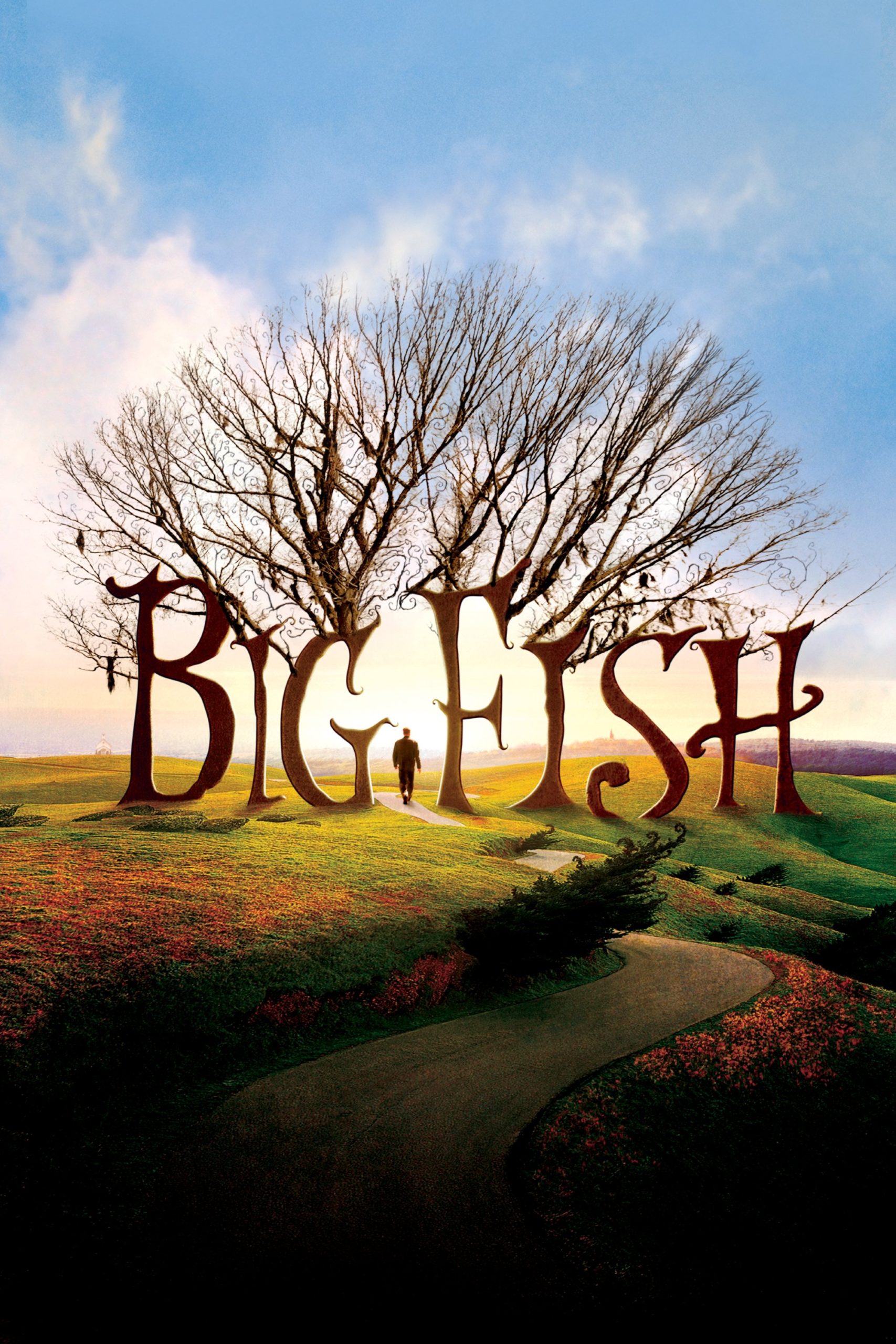
I remember my first experience with Tim Burton’s Big Fish as more than a standard movie viewing; it felt like I was stepping into a realm where the boundary between lived experience and imaginative storytelling dissolved entirely. For me, Big Fish stands unmistakably within the American tradition of magical realism, but it also absorbs currents from the fantastique, New Sincerity, and postmodernist cinema. What makes it fascinating is its commitment to the magical realism tradition—a movement most visible in world cinema but less common as a genuine mode in American film, especially at its scale and emotional directness. The film’s persistent balance between everyday reality and extravagant, mythic invention echoes the literary magical realism I first encountered in Gabriel García Márquez’s writing more than the classic Hollywood fantasy, and yet it feels tailored precisely to the American landscape, with its modern settings, familial dynamics, and generational storytelling. For me, the film’s choice to let the impossible feel emotionally resonant, rather than simply underlining its oddity, is what binds it to the magical realist approach—even though it is laced with the sentimental hopefulness and pastiche typical of the early-2000s New Sincerity revival.
Historical Origins of the Movement
Tracing the roots of magical realism in film is, for me, a journey through cultural anxieties and utopian longing. I see its literary birth arising in early- to mid-20th century Latin America, when novelists like Borges and García Márquez sought strategies for recounting a world where reality itself felt fractured. Their fictions refused the binary of fantastic versus real, instead infusing ordinary life with the proximity of marvel and myth. When I turn to cinema, especially globally, Italian neorealism and then the French New Wave seeded a taste for narrative ambiguity and poetic truthfulness. In films like Amélie (2001) or Brazil’s Central Station (1998), magical realism emerged in response to disenchantment—a way of reclaiming wonder from the grind of modern life. In American contexts, I find traces of this movement in earlier, more reserved forms—Frank Capra’s brand of sentimental utopianism, or the dazzling surrealism of films like The Purple Rose of Cairo (1985)—but never as lush and self-assured as Burton’s take in Big Fish. What I admire is how the movement became a cinematic language for both skepticism and yearning; it did not bypass reality, it embedded magic within it, offering the audience the option to believe without demanding certainty. This blending, at its root, felt like a rebellion against reductionist realism, a stance that, for me, opened new possibilities for emotional authenticity.
This Film’s Contribution to the Movement
When I reflect on what Big Fish brings to magical realism, I am struck by its generosity toward the act of storytelling itself. Unlike films that treat the collision of fantasy and reality as rupture or escape, Burton’s take, from my perspective, makes the integration seamless—even necessary. The movie’s narrative logic builds on the unstable boundary between fact and invention, as the protagonist’s tall tales become the stuff not just of legend, but of legacy. What stands out to me is how this film harnesses its stylistic excesses—the hyper-saturated color palette, the carnivalesque tableaux, exaggerated character types—to affirm the emotional truth behind invention, rather than undercutting it with irony. I see this especially in the film’s respect for subjective memory: it is less interested in “what happened” than in how stories bind a father and son across gulfs of misunderstanding. I can’t think of another big-budget American film from the early 2000s with such confidence in the power of myth to evoke empathy—instead of escapism, I find a sincere faith that tales, no matter how improbable, might clarify and deepen the mysteries of ordinary life. In doing so, Big Fish sidesteps the detached postmodern parody I associate with the late ‘90s and fully inhabits a space where wonder is grounded, accessible, and felt.
Another element that strikes me is how the film’s structure feels almost like a living folktale. Each sequence, whether it involves giants, witches, or impossible daffodils, is staged in a manner that invites the viewer to dwell in this dual reality—one foot in the plausible, the other in spectacle. For me, that is what distinguishes it from both classical Hollywood fantasy and the more literal-minded dramas that attempt to psychoanalyze storytelling. Burton’s direction, with his unmistakable visual sensibility, uses magical realism not just as an aesthetic, but as a philosophy: life itself, the movie seems to say, is always veering into the miraculous if you’re willing to look at it slantwise. The emotional power I find in the film’s climax, as the line between fiction and fact finally blurs into acceptance, comes from this melding.
I want to highlight, too, how the movement’s influence is emboldened here by the film’s thematic preoccupation with reconciliation and the persistence of legacy. The protagonist’s stories become, not evasions, but repositories of meaning—reminding me that for a story to matter, it must resonate, not ring true in the literal sense. I see Big Fish as staging an argument for the necessity, even the ethical value, of narrative embellishment in a culture prone to cynicism. For anyone, like me, who believes in cinema’s power to make the familiar bizarre and the bizarre familiar, this feels like an indispensable lesson from magical realism that the film embodies with uncommon clarity.
Influence on Later Genres and Films
- Influence 1 – Re-centering of Magical Realism in Mainstream American Cinema: What I observe most clearly after Big Fish is a more open embrace of magical realism’s devices in American storytelling. Later films such as Stranger Than Fiction (2006) and The Curious Case of Benjamin Button (2008) echo the commitment to weaving uncanny elements through everyday settings, and I can see traces of Burton’s strategy—using magic as a means to approach emotional truths rather than just to heighten spectacle. More recently, television series like The Leftovers or This Is Us pick up the baton by gently blurring lines between miraculous and mundane to deepen questions of faith, mortality, and familial memory. I attribute these shifts, at least in part, to Big Fish’s demonstration that American audiences could connect with stories that invite both suspension of disbelief and a mature engagement with life’s uncertainties.
- Influence 2 – The Rise of New Sincerity and Emotional Realism: I see Big Fish as a midstream current feeding the broader movement known as New Sincerity—the impulse in the 2000s and 2010s to move beyond arch, ironic distance in favor of direct emotional engagement. Directors like Michel Gondry in Eternal Sunshine of the Spotless Mind, Spike Jonze in Her, and, surprisingly, even blockbusters like Pixar’s Up embrace stylized, fantastical conceits to deliver emotional intimacy. What links them to Big Fish, in my eyes, is the shared ambition to use fantasy not as armor against sentiment but as a lens sharpening, and sometimes softening, raw experience. I often think of how the film’s celebration of exaggeration and embellishment paved the way for a generation of filmmakers to treat earnest emotion as both subject and aesthetic mode, untethered from the self-mocking tone that typified much of late-20th-century genre storytelling.
- Influence 3 – Integration of Myth and Folklore in Contemporary Drama: In the years following Big Fish, I have seen a noticeable uptick in films and series willing to draw from the deep well of myth, fairy tale, and oral tradition as organizing principles—not simply for period fantasy, but to structure contemporary dramas. Works like Pan’s Labyrinth, while undoubtedly rooted in Spanish tradition and Guillermo del Toro’s vision, gained broader critical and commercial reach partly because Western audiences had grown accustomed to the delicate balancing act of realism and fable. Even films like Beasts of the Southern Wild (2012) echo Big Fish’s mode by filtering regional American experience through the transformative lens of folklore. For me, Burton’s film helped make it credible, and even necessary, for American filmmakers to mine myth not only for its aesthetics but for its power to address modern themes—family, mortality, and the search for meaning under the weight of routine.
The Movement’s Lasting Impact
I keep returning to magical realism, in both world literature and film, because it continues to feel like one of the few cinematic languages with the flexibility to characterize both the immense and the intimate. Watching Big Fish, I’m reminded how this movement endures precisely because it legitimizes wonder—not as childish escapism, but as a sophisticated approach to those aspects of human existence that straightforward realism can render barren. In a world increasingly saturated with “true stories” and sobering authenticity, I still find myself craving the oxygen of cinematic experiences that admit the possibility of the impossible. Magical realism, for me, insists that the most outlandish embellishments, when pursued in good faith, can draw richer truths from the world than bare facts alone.
But it’s more than an aesthetic; it’s a worldview forged in a crucible of cultural uncertainty and longing—whether born from the political traumas of Latin America or the domestic mythmaking of the American South. Big Fish extends the movement, showing, as only cinema can, that fantasy need not diminish the seriousness of lived experience. On the contrary, I am persuaded that the legacy of magical realism is the possibility of reconciliation—between generations, between the rational and the enchanted, between what is lost and what might still be regained through the stories we insist on telling. Films like Big Fish remind me that cinema’s deepest magic is its ability to hold paradox without collapsing meaning, offering a model for future filmmakers anxious to speak honestly about a world that never truly banishes the miraculous—however quietly it dwells in our everyday lives.
To connect style and technique with broader context, you may find these perspectives useful.
🎬 Check out today's best-selling movies on Amazon!
View Deals on Amazon