
Film Movement Context
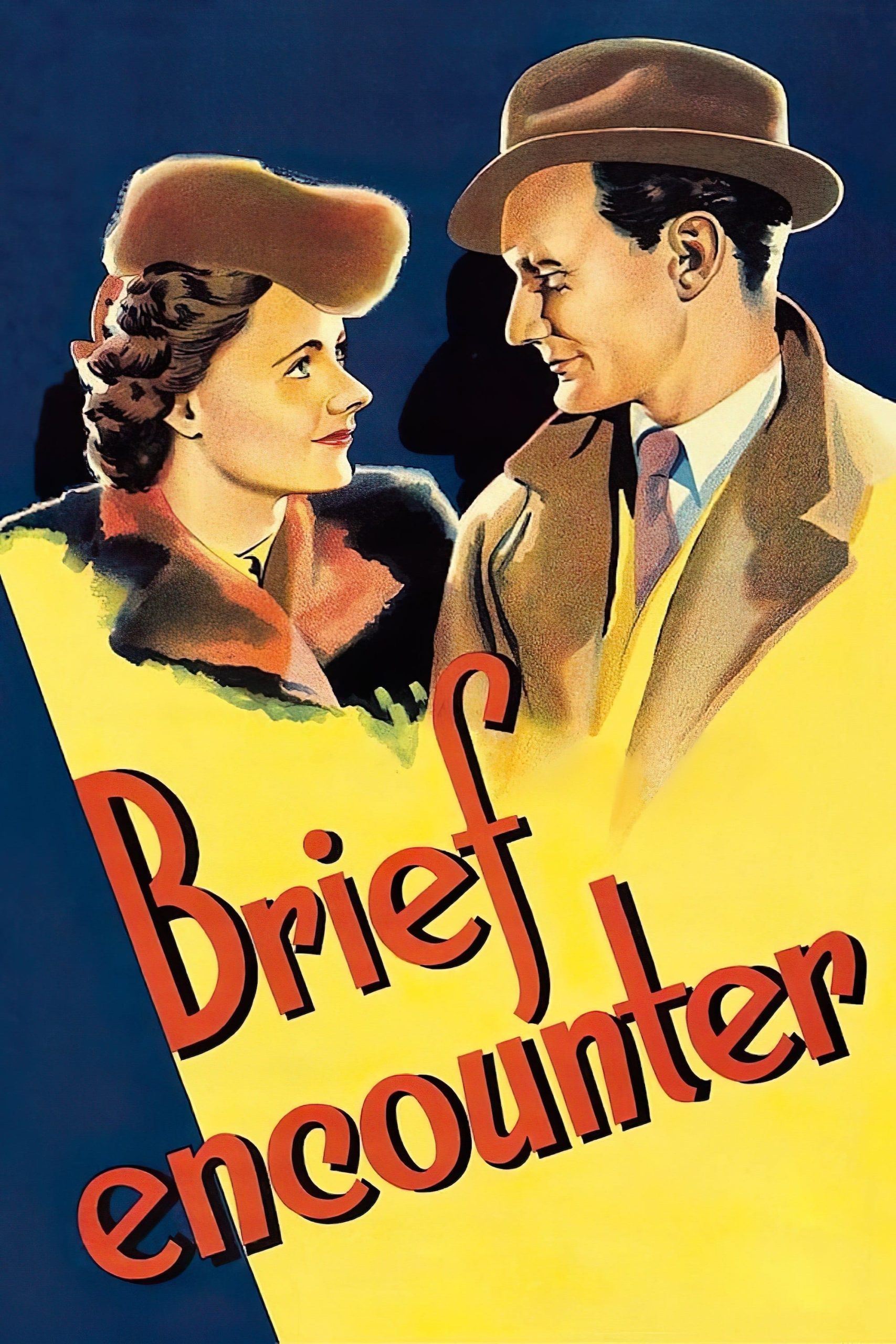
Nothing in my cinematic experiences has struck me quite like the restrained ache at the core of Brief Encounter, and for me, its emotional cadences remain unmistakably tied to the poetics of British Realism. When I first watched the film, I was struck not by ostentatious style but by a gentle precision—the kind that makes ordinary lives both visible and noble. For as long as I can remember, I’ve associated David Lean’s 1945 masterpiece with a distinctly British approach to realism, rooted in a postwar tradition that craved authenticity and emotional honesty, rather than escapist fantasy. Some might call it “kitchen sink realism,” and others frame it within the “quality cinema” of Ealing or postwar British drama, but for me, Brief Encounter sits at a crossroads: it takes the inner life of ordinary people, illuminated through quiet suffering, and suspends them in a delicately observed visual grammar. I see this film as an exemplar of British Social Realism, emerging slightly before the “Angry Young Men” would storm the late 1950s, but paving the cinematic path they’d soon tread. Its position in cinematic history—between the heritage melodramas of prewar Britain and the “New Wave” of the 1960s—is essential. It matters because this film, to my mind, makes the inner turmoil of unremarkable lives both visually lush and emotionally searing, blurring the border between realism and lyricism in a way few films dare.
Historical Origins of the Movement
Whenever I think about the origins of British Social Realism, I see it as a direct response to the anxieties and social disruptions that plagued Britain during and after World War II. I’m always amazed at how quickly British filmmakers, reacting to the devastating impacts of war, abandoned the frills of studio-bound melodrama for something truer to lived experience. The roots, for me, lie partially in the documentary tradition of figures like Humphrey Jennings and the GPO Film Unit—I see echoes of their methodical observation and muted lyricism in Lean’s film. But it wasn’t just documentary striving for veracity; there was a groundswell for films that foregrounded the dignity and struggle of regular people, particularly those shaped and shadowed by wartime rationing, separation, and loss. When thinking about why this movement emerged, I sense a deep societal impulse: the need to see real emotions—the kind not often depicted in Hollywood’s golden escapism—given cinematic space.
From my perspective, the postwar period in Britain fostered a collective hunger for art that confronted, rather than masked, the everyday trauma and compromises of life under duress. The war had flattened social hierarchies and brought a rude intimacy with mortality and hardship. Audiences no longer wanted tales of lords and ladies, but something achingly familiar. I suppose, for me, this period was about stripping cinema of its artifices to find emotional truth. The movement borrowed not only from documentary but also, tellingly, from the realism of stage plays by writers like Noël Coward (who famously wrote Brief Encounter’s source material, “Still Life”). It’s no accident, I think, that the film’s dialogue and narrative restraint echo the clipped communications of actual British daily life—a style forged under duress and held together by unspoken yearnings. British Social Realism, then, is to me not just about gritty urban decay or political protest—it’s about revealing what simmers beneath the polished surface of the respectable everyday. Brief Encounter invited audiences to see their own, quiet heartbreaks reflected back at them, and in doing so, it opened the door to more radical observations that would unfold in British cinema over the next decade.
This Film’s Contribution to the Movement
Whenever I return to Brief Encounter, I’m reminded of how cinematic style can complement themes, rather than overshadow them. Whereas other movements often seek revolution in form, Lean’s approach feels more like a gentle but determined evolution. For me, the film’s greatest contribution to British Realism is its commitment to emotional authenticity over spectacle. The choice to frame a forbidden romance not in passionate outbursts but in repressed glances and small, trembling gestures struck me as nothing short of radical. I felt it was as if the very air in the film—thick with longing, punctuated by the sound of trains—was charged with suppressed feeling.
I find it telling how Lean and cinematographer Robert Krasker use shadow, mist, and mundane locations not just as backdrops but as mirrors to the characters’ inner crises. The railway station, rendered simultaneously bleak and romantic, captures, in my view, the contradictions of middle-class British existence: so much occurring beneath the surface propriety, so much pain bound up in duty. I see the film’s technique—the careful modulation of lighting, the way the camera lingers on faces or objects—as not just a matter of taste but of ideology. It insists that suppressed emotion, the everyday tension of “what might have been,” has its rightful place on the screen.
From a personal standpoint, what I love most about the film is its refusal to judge or sensationalize. Its protagonists—Laura and Alec—are not fallen archetypes or doomed lovers in a film noir, but ordinary people with ordinary wounds, capable of immense self-restraint. When I watch Brief Encounter, I see a film that grants the mundane the same aesthetic dignity usually reserved for grand tragedy. The narrative, filtered through Laura’s inner voice, dissects the small-scale devastations of middle age, marriage, and unfinished possibility. In doing so, the film becomes a touchstone for a kind of realism that deals not with social revolt, but with emotional truth: life as it’s lived, not life as it’s fantasized. To me, this contribution is not just formal but deeply ethical; it compels the viewer to muster empathy for characters whose struggles might otherwise be dismissed as insignificant.
Every time I discuss the film with students or cinephiles, I return to this central paradox: Brief Encounter is realistic not because it shuns melodrama, but because it finds the melodrama latent in everyday routine. The sound of traffic, the taste of weak tea, the loneliness of a dimly lit station—these are rendered almost operatic through restraint. For me, the film’s unique power is its suggestion that dignity resides in endurance; heartbreak and beauty can coexist in the silences between words. This is not a realism of grit or poverty, but of subtle, persistent yearning—a realism of the heart.
Influence on Later Genres and Films
- Redefining Cinematic Melodrama – I’ve always been fascinated by how Brief Encounter transformed my understanding of melodrama on screen. Rather than treating strong emotion as spectacle, Lean’s film reveals that the most devastating moments are those carried in silence, in the glances and pauses between words. Later British dramas—from Jack Clayton’s Room at the Top to the slow-burn passion of Sunday Bloody Sunday—seem, to me, beholden to this subtle, contained approach. The film’s way of making the ordinary extraordinary gave license to later filmmakers to explore desire, loss, and social constraint through implication rather than explicitness. In my own writing, I come back to how Brief Encounter invites melodrama to live within rather than explode out of character, redefining the possibilities for emotional depth in genre filmmaking.
- Influencing the British “Kitchen Sink” Wave – As I trace the lineage of postwar British cinema, I’m repeatedly struck by how Lean’s film prefigured the grittier realism of the late 1950s and 1960s. Watching Brief Encounter feels, to me, like a quiet prologue to the “Kitchen Sink” movement—if not in subject, then in spirit. Films like Look Back in Anger and A Taste of Honey explored the private trials of ordinary people, but it was Lean’s meticulously observed emotional realism that, in my view, broke the early ground. These later works were angrier, more overt in their rebellion, but they owed something fundamental to the way Brief Encounter dignified everyday discontent and made working- and middle-class lives the center of the dramatic frame. For me, the movement as a whole became less about spectacle and more about the gravitational pull of the ordinary—a lesson first modeled by Lean and Coward.
- Global Echoes in Character-Driven Realism – On a personal level, I see Brief Encounter as a touchstone for realism far beyond Britain. I’m often reminded of its influence whenever I encounter films from the French New Wave or the American “New Hollywood” period. Directors like François Truffaut or Mike Nichols, in works such as Jules et Jim or The Graduate, appeared, to my eye, emboldened by the possibilities of understated, character-driven drama. Even in Asian cinema, with auteurs like Yasujirō Ozu, I feel echoes of Lean’s attentiveness to daily ritual and suppressed emotion. The sense that what’s left unsaid is every bit as profound as what’s shown—that’s a lesson innumerable filmmakers seem to have learned from Brief Encounter. Thus, I see the film’s DNA scattered throughout the cinematic globe, wherever intimate realism seeks to uncover enormous feeling in the smallest moments.
The Movement’s Lasting Impact
For me, British Social Realism remains a necessary counterweight to the persistent pressures of spectacle in modern film. As I reflect on Brief Encounter and its kin, I’m reminded of why I first fell in love with cinema: its ability to generate empathy, to slip quietly beneath the surface of daily life, and to dignify the struggles of those who might otherwise remain invisible. The movement endures because, at its best, it offers a blueprint for truthful storytelling—one that finds heartbreak, courage, and grace not in the grand gesture, but in the act of carrying on. In a world obsessed with instant gratification, I find the patience and depth of British Realism more relevant than ever. Its insistence that ordinary lives possess extraordinary inner worlds has shaped not just film but my own expectations of what art can and should do.
Whenever I advocate for the continued study and revival of this tradition, I point to films like Brief Encounter—works that trust their audience enough to inhabit quietude and uncertainty. I believe the reason this movement still matters is because it reminds us, insistently and tenderly, that the everyday is always worth watching. The unresolved, the unfinished, and the barely spoken: these are the joys and heartbreaks the movement elevates to art. For me, that’s its most radical and enduring gift.
To connect style and technique with broader context, you may find these perspectives useful.
🎬 Check out today's best-selling movies on Amazon!
View Deals on Amazon