
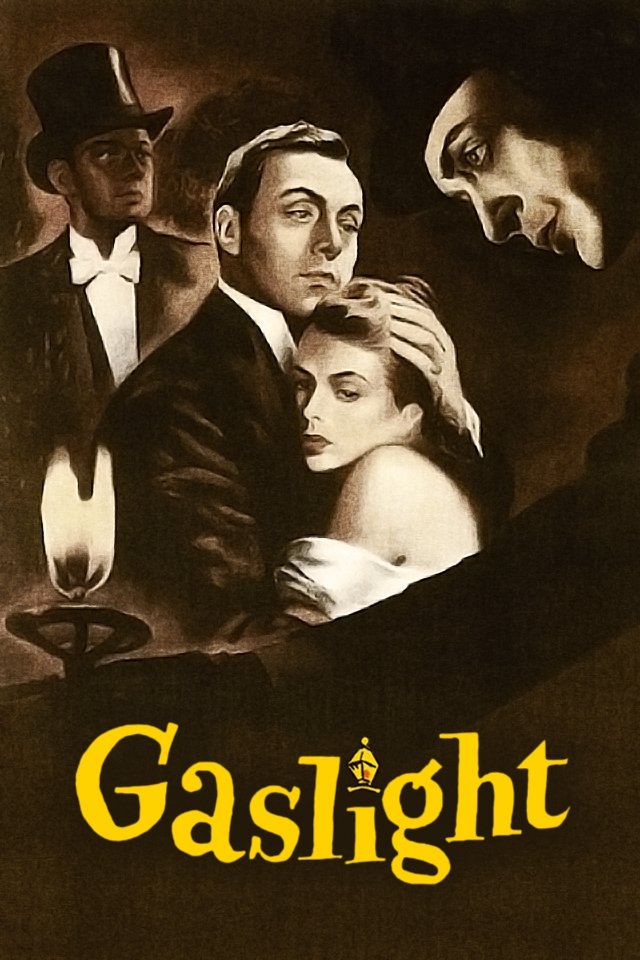
The Genre of This Film
Gaslight (1944) left an indelible mark on my understanding of genre cinema the first time I watched it. While promoters often touted its mystery credentials, to me this film is a textbook example of psychological thriller, dressed in the garments of a period melodrama. Its lasting impact comes not from outward spectacle but from the intricate manipulation of the mind. I’ve always connected to this genre because it doesn’t just present a threat—it burrows inside the mind of the viewer, unsettling my sense of reality, much as the film’s protagonist finds her own perceptions undermined. Gaslight’s deliberate blurring between what’s real and what’s imagined immerses me squarely in the psychological thriller realm, where narrative tension is crafted through emotional instability and intellectual uncertainty, rather than external action alone.
Key Characteristics of the Genre
-
Common themes
For me, psychological thrillers center on perception, doubt, and manipulation. Themes often circle around anxiety, paranoia, and the fragility of reality; I’m drawn in by stories testing the limits of trust, both in others and in oneself. Control is a frequent motif, with power wielded through language, suggestion, and deceit, rather than brute force. Obsession, isolation, and the search for truth often underpin these narratives, leaving me unsettled long after the credits roll. -
Typical visual style
Whenever I revisit classic psychological thrillers, I immediately notice their meticulous use of lighting, mise-en-scène, and camera movement. Shadows loom large, both literally and metaphorically. Films in this genre, like Gaslight, favor expressive lighting—deep pools of shadow, glimmers of light scarcely illuminating the dark corners. The sense of confinement or entrapment is often heightened through heavy, ornate interiors and claustrophobic compositions, making me feel as much a prisoner as the protagonist. Close-ups dwell on flickering expressions, while mirrors and glass reinforce the theme of fractured reality. -
Narrative structure
I’ve found that psychological thrillers thrive on ambiguity. The narrative is rarely linear or straightforward; instead, I’m pulled into a maze of half-truths, red herrings, and unreliable perspectives. Tension escalates gradually—the threat seldom emerges all at once, but seeps into the story like a rising tide. Revelations are carefully rationed, often placing the audience in a position of simultaneous omniscience and helplessness: I might know more than the protagonist, yet feel equally powerless to change events. Psychological disruption often drives the structure, with moments of revelation timed to maximize suspense and emotional payoff. -
Character archetypes
One pattern I find irresistible is the dynamic between victim and manipulator. The protagonist is typically a sympathetic figure—frequently isolated, uncertain, or emotionally raw—whose credibility is systematically eroded. The antagonist is often charming, authoritative, or insidiously persuasive—someone I would never expect to be a threat at first glance, yet who reveals a poisonous intent beneath a composed façade. Supporting characters tend to occupy ambiguous moral territory; I find myself wondering who can be trusted, or if anyone is truly innocent. The psychological thriller asks me to question motives, observe micro-behaviors, and empathize with vulnerability.
How This Film Exemplifies the Genre
Gaslight, more than almost any film of its era, exemplifies the very essence of psychological thrillers as I experience them. What separates it from conventional mysteries is how the suspense is cultivated not from external puzzles or locked-room schemes but from the methodical destruction of a woman’s trust in her own senses. Watching Paula slowly lose her confidence—her very grip on reality—feels like a direct assault on my own emotional stability. The brilliance of the film lies in how its antagonist controls the environment: changing the levels of light, hiding objects, subtly nudging Paula towards self-doubt. Every time I watch Gaslight, I share in her disorientation, plagued by a gnawing fear that what I see and hear can be so easily manipulated.
Visually, the film immerses me in shadow and opulence, reinforcing that sense of claustrophobia that I associate with the genre. The heavy, Victorian decor, those oppressive chandeliers, and the encroaching darkness of the attic all serve to reinforce Paula’s isolation and my own sympathetic dread. Its slow-burning structure is a masterclass in suspense—scenes extend just a beat longer than my comfort allows, and seemingly innocuous details acquire new meanings as truths are gradually unveiled. The characters are archetypal yet deeply unsettling: the manipulator, suave and composed, gradually reveals his sadistic underbelly; the victim, whose agony is portrayed with extraordinary rawness, becomes a symbol for anyone who’s ever doubted their own reality. I find that Gaslight’s enduring tension comes not only from its chilling villain but from the psychological authenticity of its victim—a person tricked not just by others, but by her own senses.
Every time I reflect on Gaslight’s legacy, I remember feeling deeply unsettled, not because of physical peril, but because the film demonstrates how easily reality can be rewritten by those who wish to dominate. That, for me, is the beating heart of psychological thrillers.
Other Essential Films in This Genre
- Spellbound (1945) – Alfred Hitchcock’s foray into psychoanalysis, Spellbound enthralled me with its intense examination of guilt and suppressed trauma. While the story revolves around amnesia and murder suspicion, what truly draws me in is its use of surreal dream sequences and subjective point-of-view shots, which elegantly capture the internal battles of its protagonist. The way the film manipulates my own perceptions, unraveling the mystery step-by-step, is quintessential for the genre.
- Rebecca (1940) – Watching Rebecca always reminds me of how psychological suspense can be evoked without overt violence. The unnamed protagonist’s emotional unraveling amid the lingering presence of Maxim de Winter’s first wife taps directly into my fears of inadequacy and uncertainty. The atmosphere reeks of dread, and the deceitful housekeeper Mrs. Danvers is one of the most unnerving manipulators I’ve encountered, further cementing Rebecca as a pillar of the psychological thriller canon.
- Suspicion (1941) – I find that Suspicion lives up to its name by having me, as a viewer, constantly doubt what I’m seeing and hearing. Joan Fontaine’s character is married to a man whose affections are laced with mystery and danger. The genius of Hitchcock here, in my eyes, is his ability to make me question each character’s true intentions, deploying small gestures and ambiguous events that pile up into almost unbearable tension.
- Sorry, Wrong Number (1948) – Starring Barbara Stanwyck as a chronically ill woman who overhears a murder plot, this film plunges me into a world of paranoia and creeping dread. The use of claustrophobic interiors and the slow unraveling of the protagonist’s emotional state places me right in the eye of psychological turmoil. I’m struck by how the suspense is derived as much from telephone conversations as from the protagonist’s fear that her reality is slipping away.
Why This Genre Continues to Endure
In my own experience as a fan and analyst of film, I’ve repeatedly noticed that the psychological thriller genre never fades from relevance. What excites me most is how these stories tap into primal anxieties that lie beneath the surface of everyday life. They give form to doubts I sometimes try to ignore: What if my senses fail me? What if those closest to me are not who they say they are? What if my perception of reality could be twisted by subtle pressures or outright manipulation?
Viewers, myself very much included, return to these films because they transcend the boundaries of time and place. The period settings or historical details fade away, leaving only the raw, universal fears of loss, betrayal, and madness. Even as filmmaking techniques evolve, the basic components—tense pacing, unreliable viewpoints, morally ambiguous characters—remain gripping. I think it’s because the genre doesn’t depend solely on spectacle; instead, it asks me to investigate, to question, to grasp at a coherent narrative in the midst of confusion and uncertainty. In a world where trust and stability often feel elusive, these stories grant a cathartic release: I’m terrified, yes, but by confronting the chaos on-screen, some echo of it in my own mind is briefly exorcised.
Gaslight, and films like it, endure because they force me to contemplate the limits of my own knowledge and the inherent instability of perception. Each revisit is a chance to negotiate that internal maze once again. As both a cinema educator and lifelong genre enthusiast, I find unwavering relevance and psychological stimulation in these works. They don’t just entertain me—they challenge my assumptions, and that’s why the psychological thriller continues to thrive.
If you’re interested in how viewers respond beyond technique, you may want to explore audience and critical reception.
🎬 Check out today's best-selling movies on Amazon!
View Deals on Amazon