
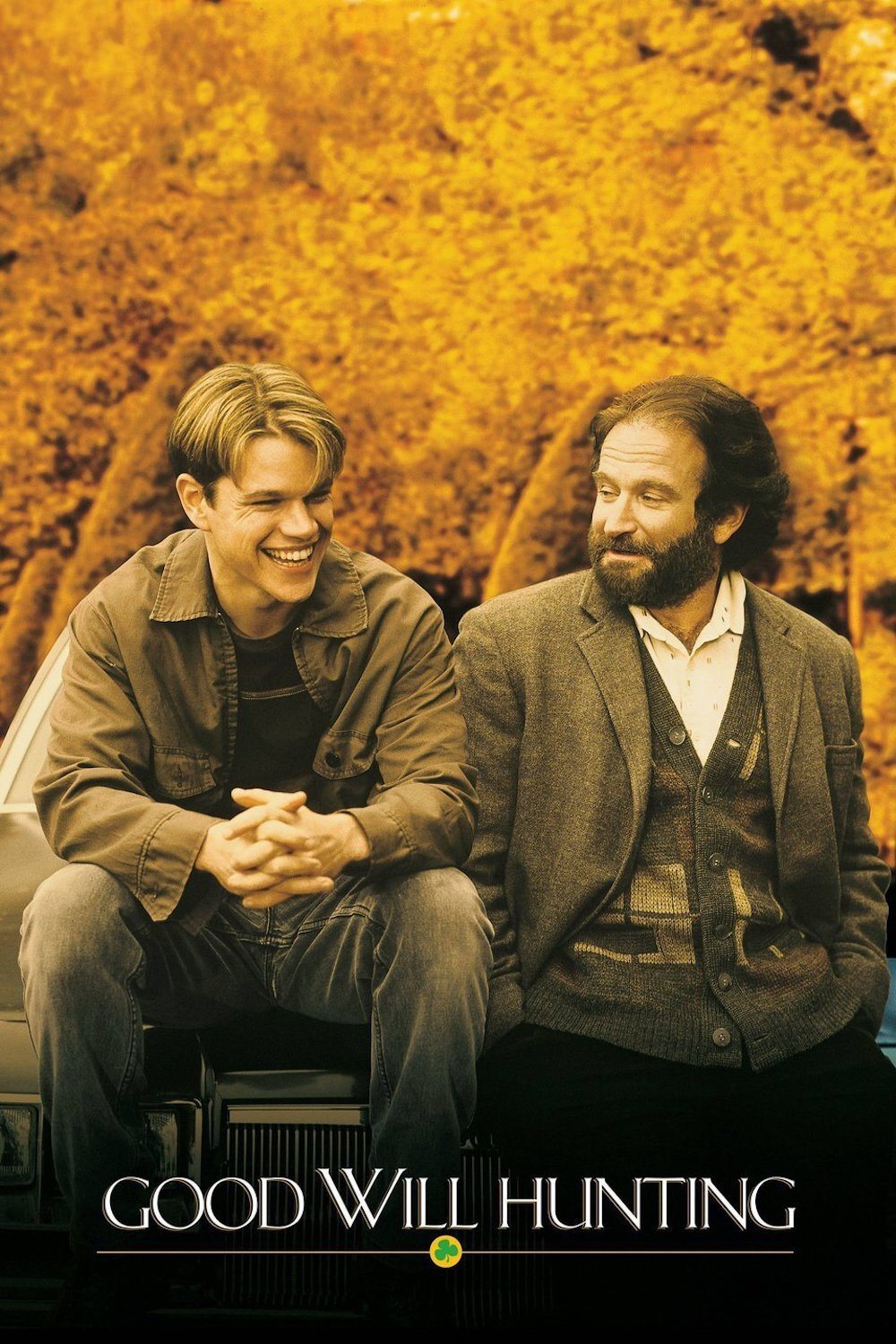
Film Movement Context
Whenever I revisit Good Will Hunting, I’m struck by how seamlessly it belongs to the tradition of the American 1990s indie film renaissance—a loose, sometimes amorphous movement that, for me, is less about strict rules or unified aesthetics than about a hunger for authenticity, vulnerability, and the everyday. When I first watched the film, I sensed right away that there was a certain rawness, a distinctly un-Hollywood flavor perfuming its heart, echoing the broader spirit of American independent cinema that surged during the late ‘80s and into the ‘90s. This movement, which I often think of as a confluence of the New Hollywood renegade spirit with the economic vitality sparked by festivals like Sundance, was—and remains—a direct response to the more commercial, formulaic studio fare. In my view, Good Will Hunting stands as a crystallization of this movement, both stylistically and thematically. Its focus on character growth over spectacle, nuanced human conflict over high-concept narratives, and a script that pulses with lived-in honesty all point straight back to the indie ethos. It’s more than an anomaly; it is an emblem of that movement’s core values, blending unvarnished realism with genuinely affecting drama. For me, this is what sets the film apart, rooting it so firmly in the landscape of American independent cinema.
Historical Origins of the Movement
I always see the roots of the 1990s American indie wave as tangled up with dissatisfaction—a pushback against the bloat of Reagan-era blockbusters, echoing the rebellion and artistic freedom of the ‘70s. My own sense is that this explosion wasn’t simply about smaller budgets or DIY production, but about a collective yearning for alternative voices and stories that felt ignored by the studio machine. In the late ‘80s, filmmakers like Spike Lee, Jim Jarmusch, and Steven Soderbergh wrestled the spotlight into the margins, carving out space for narratives centered around overlooked communities, oddball protagonists, and raw emotional honesty. I remember reading about how the Sundance Film Festival became a crucible for these efforts, an incubator for mishmash aesthetics and storytelling risk, culminating in a wider audience suddenly hungry for truth rather than gloss.
By the time Matt Damon and Ben Affleck wrote Good Will Hunting, this movement was in full bloom, shaped by the commercial successes of films like Clerks, Slacker, and Pulp Fiction. These films didn’t just introduce new visual styles or low-fi technical standards; to me, they legitimized the telling of previously marginalized stories, granting audiences emotional immediacy through authentic dialogue and underdog narratives. The movement fractured expectations for what American cinema could be—no more untouchable heroes or storybook endings, but rather, a tentative hope shot through layers of real pain. Within this context, I see Good Will Hunting as not only a beneficiary of this cultural shift but as an active catalyst, challenging expectations by making authentic, lived-in human struggle a universally compelling spectacle.
This Film’s Contribution to the Movement
When I think about Good Will Hunting as a defining text of the indie movement, what stands out most is its commitment to sincerity and interiority. Rather than leaning on melodrama or contrived plot twists, the film roots itself in the grit of daily life, the stifling limitations of class, and the burden of unaddressed trauma. Unlike the overworked narratives of standard studio productions, here, the characters’ emotional complexity takes center stage. I’ve always been struck by how the film, especially in its portrayal of Will’s relationships—with his friends, with Skylar, and most impactfully with Sean—refuses to settle for surface-level resolution.
The film’s visual style directly participates in the indie tradition; there’s a subtle humility to Van Sant’s direction—his camera doesn’t interrupt with showy movement or glossy polish. Instead, it lingers, invites, and absorbs. So many scenes are constructed around conversation, the rhythm and cadence reminiscent of the unpolished but deeply heartfelt dialogue found in so much ‘90s independent work. I see the South Boston setting as more than mere backdrop; it’s rendered with such specificity and texture that the film’s grounding in working-class realism is inescapable. This is another way it builds upon the indie legacy: the city is a living character, pulsing awkwardly and beautifully in tandem with Will’s journey.
It’s also important to recognize how Good Will Hunting relies on a kind of performative transparency. For me, Damon and Affleck’s script doesn’t try to hide the seams or sand away the rough edges—there’s a palpable feeling of two passionate young writers trying, with vulnerability, to translate their own hunger and self-doubt onto the screen. When Robin Williams, as Sean, matches that vulnerability with soft gravity, I see the generational bridge created by the indie movement: transmitting the lessons and hopes of new filmmakers to established auteurs willing to come along for the emotional ride. This is the ethos of the ‘90s indie wave—movies as creative spaces, messy and alive, where human imperfection is the story itself. Good Will Hunting isn’t just a participant in this movement; it is one of its most memorable articulations, embedding small-scale personal struggle within a narrative accessible—and resonant—to millions.
Influence on Later Genres and Films
- Influence 1 – The Humanistic Character Study: Whenever I notice contemporary dramas foregrounding nuanced, troubled protagonists, I catch glimpses of Good Will Hunting’s legacy. To me, the film’s popularity emboldened a generation of filmmakers to center emotional truth and interior complexity over external spectacle. Movies like Manchester by the Sea and Lady Bird echo this ethos—ordinary people carrying extraordinary pain, handled with patience and respect. I think of how these films invite us into everyday wounds and small redemptions, a blueprint refined by Van Sant’s approach to Will Hunting.
- Influence 2 – The Integration of Therapy and Mental Health Realism: I vividly remember how unusual it felt, watching Will’s therapy sessions with Sean—it was tender, combustive, and, for a ‘90s mainstream release, remarkably genuine. In my view, this candid depiction of therapy shaped later media; films like A Beautiful Mind, Silver Linings Playbook, and even streaming series like BoJack Horseman approach personal trauma and counseling with less stigma and more nuance. The earnest portrayal in Good Will Hunting helped clear a path for deeper explorations of healing and vulnerability, lasting far beyond the initial indie scene.
- Influence 3 – Elevating the Blue-Collar American Narrative: I always appreciated how the film’s love letter to South Boston challenged Hollywood’s glossed-over settings—rooting the drama in neighborhoods, jobsites, and rundown apartments. After the film’s success, I see reflections of this aesthetic in works like The Fighter, Winter’s Bone, and series such as The Wire. There’s now a greater willingness to embrace realism, to foreground local flavor and accent. For me, this opened the floodgates for a more democratic notion of whose stories “deserve” cinematic attention, coding blue-collar America as worthy of myth and poetry.
The Movement’s Lasting Impact
Looking back, I find the indie movement of the ‘90s responsible for nothing less than a second American film renaissance. This tradition, which Good Will Hunting so powerfully exemplifies, liberated cinema from market calculations and formulaic blockbuster templates. My fondness for its influence lies in how it democratized both movie-making and movie-watching: it invited unknown voices and unvarnished stories onto the stage, and taught audiences to expect—indeed, to demand—something richer than escapism. When I teach or write about the enduring value of this period, what still moves me is the shift from spectacle to substance, from archetype to individual. Films like Good Will Hunting don’t endure because they solved narrative structure or pioneered innovation for innovation’s sake, but because they remind me (and I believe, many of us) that cinema’s greatest power is not to distract, but to reveal, to offer shelter for our hardest truths, and to demand, with humility, that our own vulnerabilities have a right to the screen.
To connect style and technique with broader context, you may find these perspectives useful.
🎬 Check out today's best-selling movies on Amazon!
View Deals on Amazon