
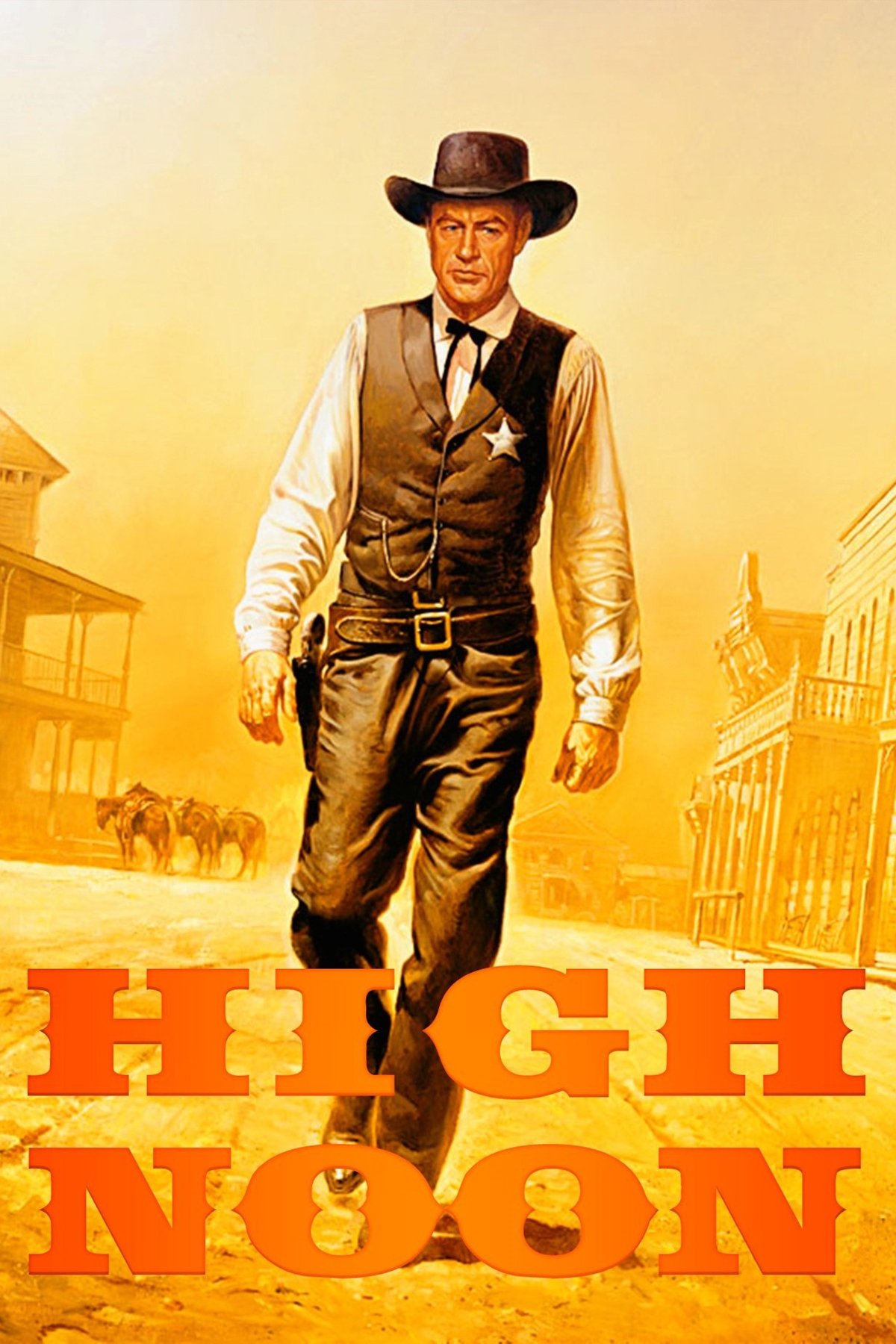
The Genre of This Film
“High Noon” has always felt, to me, like the prototype of the American Western. In my view, the film doesn’t just belong to the Western genre—it actively shapes and elevates what the term means. While there are undercurrents of suspense, drama, and even political allegory, its primary identity is undeniably Western. When I sit with “High Noon,” the conventions of law versus chaos, frontier justice, and stark moral confrontation seem not only present but essential. It trades in the raw, moral starkness that, for me, has always defined the Western genre: a lone individual fighting for justice under the harsh glare of an unyielding sun, hemmed in by uncertain allies and mounting threats. It is the landscape, the social isolation, and the moral ambiguity of the American frontier—these are the atmospheric and narrative backbones that mark “High Noon” as pure Western in my estimation.
Key Characteristics of the Genre
- Common themes
When I consider what sets the Western apart from other genres, themes of personal honor, integrity, and individual courage always leap to mind first. Westerns, to me, are preoccupied with the struggle between civilization and lawlessness. I often see them asking: Can organized society impose order, or does genuine justice hinge on one person’s willingness to stand alone? Codes of honor, loyalty, and duty get tested under fire, both literally and metaphorically. It fascinates me that Westerns routinely turn on questions of community responsibility. Do bystanders step up when evil arrives, or does fear silence them, heightening the loneliness of the protagonist’s crusade? In my experience, these films linger on the frontier tension between freedom and the need for communal rules, posing uncomfortable questions about what price must be paid for peace.
- Typical visual style
Visually, the Western genre is unmistakable in my eyes. Expansive, sun-bleached landscapes, the omnipresent dust of remote towns, the weather-worn faces of settlers and sheriffs—the sense of place is always palpable. I often feel the genre draws its power from the way it frames bleak horizons, evoking both promise and threat. The framing of shootouts is spare, never crowded. Wide shots emphasize emptiness or impending violence, while close-ups are charged with tension, laying bare the psychology of conflict. Sometimes it’s the way shadows fall across a sheriff’s badge, or the austere lines of wind-whipped buildings—it all works to create an atmosphere both mythic and grounded. In my own viewing, the color palettes often move between muted earth tones and harsh sunlight, leaving little room for sentimentality, matching the films’ moral clarity or ambiguity.
- Narrative structure
Most Westerns, as I’ve come to appreciate, revolve around a central crisis that tests the protagonist’s mettle. There’s usually a time limit—a train arrival, an approaching gang, or a looming showdown—that compresses the story into a fraught, real-time ordeal. I notice that the plot tends to escalate through a buildup of obstacles for the hero, often involving wavering allies, ethical quandaries, and public indifference. Storylines can follow a “lone protector vs. invading force” pattern or dramatize the founding of new communities under constant threat. I find that many Westerns rely on linear, clear storytelling, but some, like “High Noon,” subvert this expectation with real-time pacing or by focusing as much on the build-up as the climax. The genre privileges narrative simplicity, making the characters and their conflicting values the true subject of scrutiny.
- Character archetypes
The Western, to me, is a genre of sharply defined personalities. At its core is the lawman—but not just any lawman: one who is marked by rugged individualism and moral struggle. I frequently encounter the weary sheriff, haunted by past disappointments but compelled to do what is right, even when abandoned by his town. Lawless outlaws are the natural antagonists, embodying the threat of chaos and predatory might. There are also archetypes like the loyal deputy, the skeptical townspeople, and the bystander who prefers comfort to confrontation. The women I notice in Westerns can be schoolteachers, barmaids, or wives—often symbols of civilization, domestic order, or the costs of violence. Some, like Grace Kelly’s character in “High Noon,” represent pacifist values in tension with the call to arms. The genre almost always rituals the solitary hero’s isolation, which, to me, feels both epic and deeply intimate.
How This Film Exemplifies the Genre
Every time I revisit “High Noon,” I am struck by how thoroughly it embodies everything I’ve ever associated with the Western. The setting is archetypal: a sun-baked town, its street stretching towards the railroad depot, and the clock ticking towards an unavoidable reckoning. It’s the paragon of narrative tension. The entire film, in my estimation, is structured around the quintessential Western showdown, but where many films fill the journey with shootouts, “High Noon” dwells on anticipation and psychological crisis. I love how the real-time format compresses the narrative, designed to make me feel the relentlessly closing trap around Will Kane, its protagonist. The suspense isn’t merely in whether he’ll survive, but whether anyone will stand with him. For me, this makes the film as much about communal responsibility and civic failure as frontier violence.
The character work here is, in my opinion, among the most profound examples of genre archetypes at their limit. Marshal Will Kane, as Gary Cooper plays him, is both the classical Western sheriff and something more—an everyman haunted by conscience. He refuses to run, not out of machismo, but from a painful sense of duty. I have always admired how the film doesn’t lionize or romanticize the role of the gunman; Kane’s courage feels heavy, laced with doubt and fear. The townspeople, whose support he seeks, become the silent majority whose inaction grants evil its power—a motif I’ve found central to the genre’s enduring social critique.
Visually, “High Noon” delivers everything I anticipate: long, empty streets under an oppressive sky; isolated figures dwarfed by the town’s seemingly indifferent emptiness. The iconic image of Kane alone in the street, badge glinting, is just as evocative of the Western’s core iconography as anything I’ve witnessed elsewhere. The cinematography’s interplay of light and shadow, the stark contrasts, all serve to heighten the tension while reinforcing the movie’s existential drama. I can almost feel the heat, the dust, the weight of time bearing down with each relentless telegram chime or tolling clock. Even the film’s spare, memorable score, to me, carries the mournful, fatalistic undertones characteristic of the genre. There’s no mistaking that “High Noon” is a Western down to its DNA, as exemplified through its themes, visuals, story, and characters—not in an abstract sense, but through hard, specific choices that define what the Western means to me.
One detail I can never ignore is how “High Noon” plays with expectations. Rather than an external enemy, the greatest threat to order is communal apathy. That, in my reading, is a powerful inversion of genre, yet it fits perfectly: the West is not just a place, but a proving ground for moral action. For me, the film’s relentless ticking clocks and isolated protagonist are not just stylistic choices, but amplifications of the Western ethos. Every element—down to the supporting characters and the pacing—demonstrates what I see as the Western’s most vital traits made fully, and unforgettably, manifest.
Other Essential Films in This Genre
- Shane (1953) – When I watch “Shane,” I see a Western that leans heavily into themes of redemption, violence, and the unknowable past. The protagonist, a mysterious gunfighter seeking peace, is drawn into a conflict that forces him to confront his violent nature, echoing the same moral gravity I found so riveting in “High Noon.” The film’s wide, lush landscapes and iconic gunfighter-versus-evil-rancher structure are a classic genre blueprint.
- The Searchers (1956) – “The Searchers” stands out in my mind as one of the most psychologically complex Westerns ever produced. John Wayne’s Ethan Edwards is far from a traditional hero; his relentless pursuit on the Texas frontier is fueled by vengeance and prejudice as much as by love. The film’s use of Monument Valley, its sweeping vistas and iconic closing shot, give me the feeling that the Western, as a genre, can say as much about exclusion and obsession as about heroism.
- Stagecoach (1939) – The ensemble of “Stagecoach” always fascinated me, with its melting pot of outcasts forced together as their stagecoach traverses hostile territory. It strikes me as a film that helped codify the Western’s interest in moral ambiguity: who is the real outlaw, who deserves protection, and who decides what justice means? The archetypes here become more than stereotypes—they’re vehicles for examining society’s anxieties and hopes at the edge of civilization.
- Rio Bravo (1959) – In “Rio Bravo,” I find a direct counterpoint to “High Noon”—here, the sheriff is beset by danger but buoyed by a small circle of loyal friends. The film’s leisurely pacing, rich character interplay, and humor offer me a broader look at the Western’s capacity for camaraderie and endurance under siege. It rarely loses sight of the central genre dynamic: the defense of order in the face of chaos, rendered with unmistakable charm and suspense.
Why This Genre Continues to Endure
For me, the Western resonates today because it is both simple and infinitely adaptable. Whenever I return to the genre, what stands out most is how its central dilemmas—questions of justice, loneliness, sacrifice—transcend the nineteenth-century setting. I think audiences, myself included, keep coming back because Westerns distill human conflict to its elemental form. The image of one person choosing to stand or turn away, regardless of the odds, remains eternally compelling. The scenery, with its inhospitable beauty, still feels like a zone of possibility and peril—much like our unpredictable world.
The Western also endures because it gives us room to explore the tension between the desire for order and the costs of achieving it. I find that the best Westerns never romanticize violence, but instead present it as a last, desperate measure when law and negotiation fail. They recognize the seduction of force, the numbing power of fear, and the ability of a single act to galvanize or shame a whole community. Personally, I respond to how the genre is both mythic and moralistic, giving us heroes who are flawed, weary, sometimes broken, but still driven by a sense of responsibility. These kinds of figures remain deeply relatable, even—and perhaps especially—in eras rife with ambiguity.
I also believe the Western’s stylistic clarity—the clean lines of its storytelling, the measured pace of its confrontations—lends itself to reinterpretation. Some modern films crisscross genres or impose revisionist perspectives, but I’ve noticed even the most innovative works pay homage to the elemental codes and visuals that made the classic Western enduring in the first place. No matter how society changes, the drama of accountability, of who chooses to risk themselves for others, remains as urgent as ever. That’s why, for me, the Western never grows old. In each new viewing, the genre’s essential drama—so powerfully embodied in films like “High Noon”—continues to speak with fresh resonance and clarity.
If you’re interested in how viewers respond beyond technique, you may want to explore audience and critical reception.
🎬 Check out today's best-selling movies on Amazon!
View Deals on Amazon