
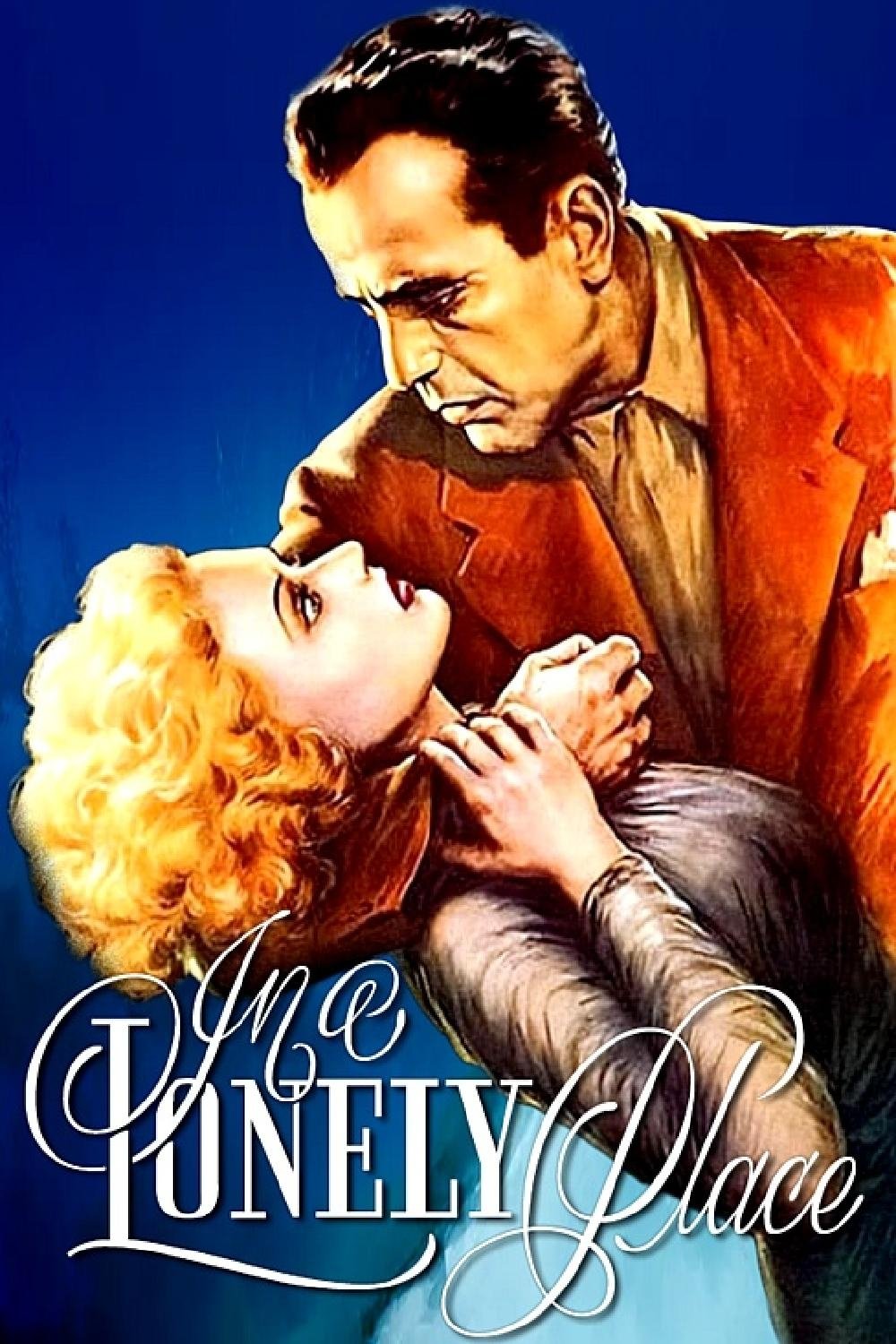
The Genre of This Film
Every time I revisit “In a Lonely Place,” I am pulled into its uniquely charged atmosphere—a sense of suspicion and longing that feels inextricably tied to its place in film noir. It’s not just that the movie shares the surface trappings of this style; I feel its entire emotional framework is constructed around noir’s principles. For me, the tragic ambiguity, the relentless scrutiny of human flaws, and the tantalizing unease of every interaction cement “In a Lonely Place” as a quintessential film noir. While it’s been discussed alongside melodrama and psychological thriller genres, I continually return to its deeply noir soul—restless, shaded, and rife with existential uncertainty. I can’t help but interpret its haunted energy as the pure expression of noir’s most persistent moods.
Key Characteristics of the Genre
-
Common themes
When I think of film noir, certain motifs immediately come to mind: doomed romance, unbearable moral ambiguity, and the menace of fate tightening around despairing lives. These films, in my experience, are obsessed with the blurry ethical lines people cross when confronted with desperation. There’s always that sense that no one is entirely innocent, yet some are more damned than others. I so often notice themes like alienation, self-destruction, and mistrust—sometimes set against postwar urban landscapes, or within the psychological mazes characters build around themselves. The tension between what is true and what is performed, both for others and oneself, is itself a kind of dramatic engine specific to noir, in my view. -
Typical visual style
Visually, I find film noir irresistible for its use of shadow, deep contrast, and oblique compositions. Whenever I settle into one of these films, I expect—and hope for—low-key lighting, with slivers of brightness cutting across faces half-claimed by darkness. Allowing myself to simply experience that play of gloom, punctuated by sudden illumination, always creates a mood that’s somewhere between claustrophobia and mystery. The world of noir, as I see it, is carved out with Venetian blind patterns, rain-soaked nighttime streets, and interiors where light barely penetrates the corners. This style doesn’t just serve atmosphere; I think it embodies the psychological state of the characters as well. -
Narrative structure
What I’ve always found most alluring is that film noir often forgoes typical Hollywood clarity. Instead of comfortingly resolved stories, these movies thrive on uncertainty and reversals. It’s not unusual for the narrative to unfold as a kind of puzzle, sometimes using flashbacks or unreliable narration (either overtly or by way of characters whose motives are never fully transparent). There’s a tightrope walk between plot and character study; in my viewing, the story is as much about why people destroy themselves as whether or not justice is served. I see noir stories as inherently open-ended—they rarely offer neat conclusions, instead preferring unresolved tension or ironic closure. -
Character archetypes
When I recall the essential inhabitants of film noir, I think immediately of the hard-boiled, haunted protagonist—sometimes a detective, sometimes a writer or a drifter—whose sense of self is always at risk. He is often matched by women whose roles veer between salvation and threat: the so-called “femme fatale” or the equally damaged partner. I love that these archetypes are resistant to simplification; the boundaries blur constantly. Supporting characters—corrupt authority figures, loyal sidekicks, or suspicious neighbors—populate a world where trust is a scarce commodity. I find that motivations are always messier than they appear, with nearly every character straining against their limitations or failures.
How This Film Exemplifies the Genre
Every time I return to “In a Lonely Place,” I am struck by the emotional density and taut atmosphere, which, to me, epitomize the heart of film noir. What solidifies this film’s place within the genre, in my experience, is its unwavering focus on psychological unease and the gnawing presence of doubt—whether it’s the world’s doubt about Dixon Steele’s innocence or the self-doubt that gnaws at Gloria Grahame’s Laurel Gray. The moral fog that hovers over every scene puts me intimately in the shoes of both the accused and the accuser. Instead of providing clear answers, the film encourages me to question every motive and glance. It doesn’t matter how many times I’ve watched Bogart’s performance; I’m always uncertain whether his violence is a product of injustice or a deep-seated flaw.
The visual choices—those sharp shards of light falling into rooms, the shadowed silhouettes of figures cast against walls—are, in my opinion, textbook examples of noir’s signature aesthetics. What captures me most is how the cinematography simultaneously reveals and conceals, echoing the uncertainty that sits in my chest throughout the film. I am haunted by the way scenes unfold in intimate, claustrophobic spaces where escape—emotional or literal—becomes impossible. That sense of urban isolation, found in the film’s nightclubs and apartments, always reminds me that noir’s world is built for the lost and wounded.
Perhaps what resonates with me most is how “In a Lonely Place” resists simple resolutions. The narrative teases the possibility of love as salvation, but ultimately it is suspicion and violence that define the fate of the characters. I am left with a profound feeling of loss—hope undermined by the relentless gravity of doubt and failure. I don’t watch this film looking for answers; I watch it for that bittersweet ache, the sense that, in this genre, the very act of searching for truth or redemption is what damns the characters. In my estimation, nothing could be more classically noir.
Other Essential Films in This Genre
- Double Indemnity (1944) – When I first encountered “Double Indemnity,” I was mesmerized by its uncompromising examination of greed, obsession, and destructive romance. This film set many of my expectations for the genre—the insurance investigator’s narration, the flashback structure, and the femme fatale whose charm is matched only by her ruthlessness. For me, every element comes together to establish a noir world where trust is an illusion, and fate is inescapable.
- Out of the Past (1947) – Watching “Out of the Past” is like wading into an inescapable fog of destiny and regret. The switching timelines, layered betrayals, and doomed love story hit me with the full force of noir fatalism. The protagonist’s longing to escape his past, countered by the magnetic pull of his former life, encapsulates, in my view, why these stories still grip the imagination.
- The Big Sleep (1946) – To me, this film remains a dizzying labyrinth of secrets and withheld motives. I’ve always found its disjointed narrative and motley array of suspicious characters to be a perfect emblem of noir’s love for confusion and moral murkiness. The chemistry between Bogart and Bacall simmers with danger, and every shadowy corner seems to threaten new duplicity.
- Detour (1945) – If ever there was a film that distilled the nightmare logic of noir into its purest form, “Detour” would be it, in my opinion. The low-budget aesthetic only heightens its sense of desperation and doom. I frequently find myself caught up in the protagonist’s cascading stream of bad luck and sketchy choices, convinced that the universe itself is untrustworthy.
Why This Genre Continues to Endure
When I reflect on what keeps film noir alive in the modern imagination, I believe it is the genre’s unwavering honesty about the shadowy parts of human nature. Unlike genres that seek to reassure or restore order, noir accepts chaos, and, to me, this resonates more and more as time passes. The world these films present is recognizably imperfect, peopled by characters who fail and flounder. I am continually moved by noir’s refusal to prettify experience or scold its inhabitants for their flaws. The longing, the missteps, the unanswerable questions—these aren’t relics of the past; they feel as contemporary as any modern existential worry.
Another reason I find myself hungry for these films, year after year, is their sheer sensual allure. There’s something almost tactile about the interplay of light and darkness, the elegance with which every gesture or lie is concealed. For me, noir’s style is not just an affectation but a proclamation: that we all wear masks, that what we see is always shaped by our own hopes and fears. Even now, in a digitally oversaturated world, that aesthetic—simultaneously beautiful and unsettling—stirs my imagination and holds me captive.
I am also drawn to the genre’s willingness to leave stories open-ended. Unlike narratives that force closure, noir, as I experience it, trusts me to sit with uncertainty and doubt. There are few comforts in these films, but the opportunity to look unflinchingly at life’s complications is, paradoxically, a kind of freedom. Whenever I watch something like “In a Lonely Place,” I am reminded that the genre’s enduring legacy is not just in its imagery or plots, but in its sympathy for those who wander through life as if searching for a light that may never appear.
If you’re interested in how viewers respond beyond technique, you may want to explore audience and critical reception.
🎬 Check out today's best-selling movies on Amazon!
View Deals on Amazon