
Film Movement Context
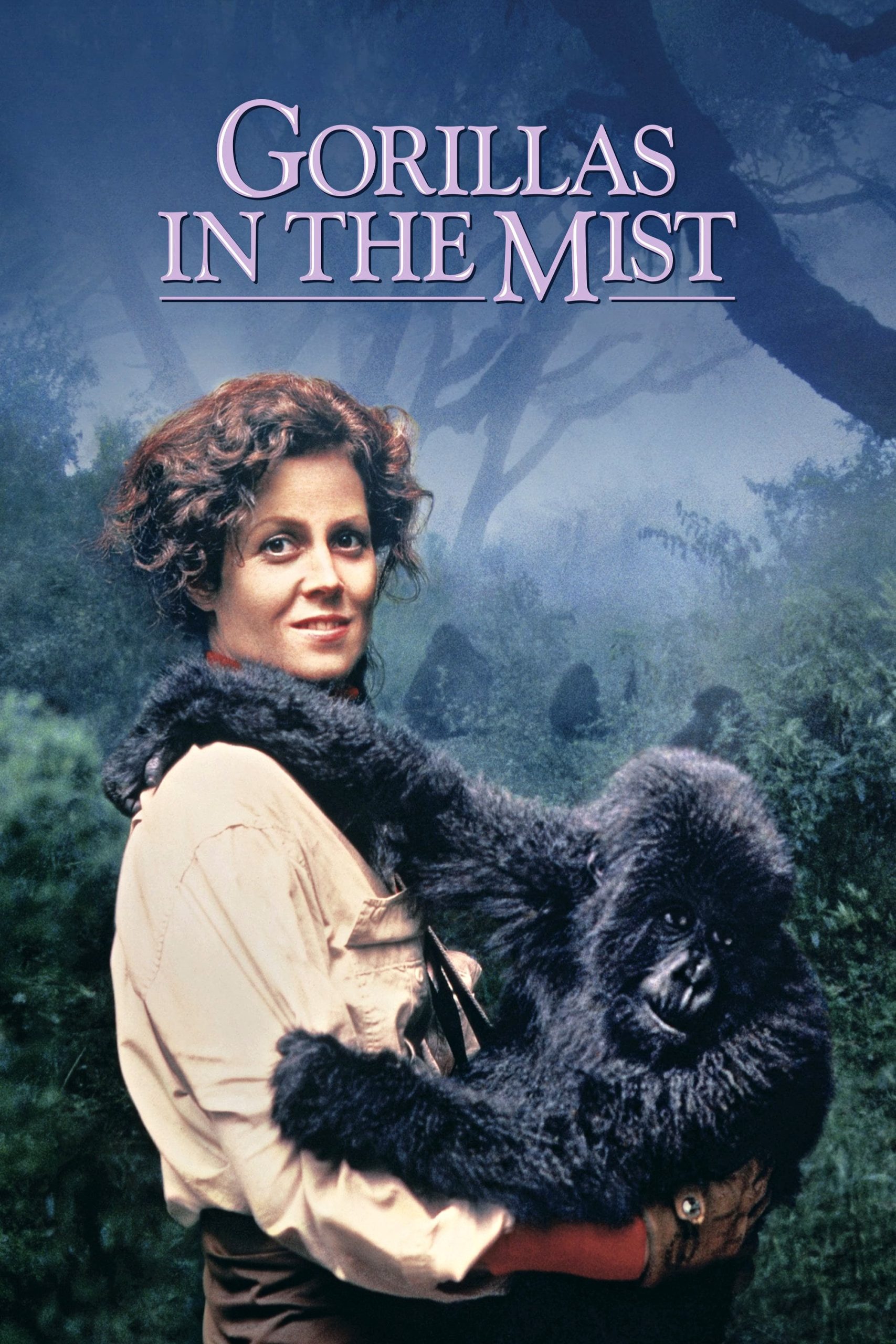
Every time I revisit Gorillas in the Mist, I’m struck by how it straddles the line between the biographical drama and the ecological film movement that started gaining artistic momentum by the late 1970s. I don’t see it fitting neatly into any single stylistic category, but to me, the film is most compelling when examined as a key work within the environmentalist cinema tradition—a movement that foregrounds humanity’s complex bond with the natural world and non-human life. This isn’t the kind of environmentalist film built around a hackneyed “man versus nature” motif; instead, it roots us in a lived biography, inviting us to experience the boundaries—sometimes forcibly—between research, activism, and the animal subject. For me, its tactile style, slow-burn pacing, and integration of location shooting with real gorillas also echo the influence of New Hollywood’s reverence for authenticity and the emergent docudrama subgenre, which increasingly blurred fiction and nonfiction in the 1980s. So, I classify Gorillas in the Mist as part of the environmentalist cinema movement, specifically the maturation of the docudrama tradition, with strong leanings toward eco-realism—a movement intent on bridging ethical witness with character-driven storytelling.
Historical Origins of the Movement
I see the roots of environmentalist cinema stretching deep into 20th-century film history, but its articulated movement status starts to crystallize around the late 1960s and 1970s, during the era of environmental awakening—a period when increasing anxiety about the planet’s future began to shape not just politics, but also the arts. In my view, the publication of Rachel Carson’s Silent Spring and the proliferation of activist documentaries planted the seeds for filmmakers to address environmental crisis on screen. Films like The Hellstrom Chronicle (1971) and Swan Lake (1977) felt, to me, like cinematic statements against global indifference—a demand that audiences consider themselves complicit in the fate of the Earth. What really cemented the movement’s forward momentum, though, was the introduction of character-driven non-fiction hybrids. By the time New Hollywood took shape, directors were less content with overt didacticism and sought to ground big environmental questions in stories about specific individuals whose lives reflected urgent ecological questions. This hybridization led to the blossoming of the docudrama format, which, in the hands of visionary filmmakers, erased the distinction between advocacy and art. In the 1980s, as species extinction and conservation grew into household concerns, the movement had carved out a place for itself; biopics like Gorillas in the Mist inherited and advanced that tradition, turning one woman’s crusade into a lens for understanding planetary crisis.
This Film’s Contribution to the Movement
When I watched Gorillas in the Mist for the first time, I was taken aback not just by its commitment to Diane Fossey’s story, but by its visual and ethical insistence on ecological intimacy. To me, this film does not simply narrate the facts of Fossey’s activism or retell the drama of her life; it carves a space for the viewer to feel implicated in every encounter—with animals, landscapes, and the specter of violence that hovers over the Rwandan mountains. What makes the film truly participate in the environmentalist cinema movement, from my perspective, lies in its steadfast refusal to sever human struggle from the fate of the non-human world. The direction by Michael Apted, drawing on nearly ethnographic techniques, places the camera at the gorillas’ eye level, sometimes holding well past what would be comfortable in a traditional narrative drama. This formal patience, I believe, is what gives the film its documentary texture—it chooses to observe rather than simply narrate, making me acutely aware of the gaze, the watcher, the responsibility of bearing witness.
I notice especially how the film frames poaching, governmental complicity, and colonial legacies not as mere obstacles for Fossey, but as ripples affecting the entire ecosystem. Its treatment of these realities feels grounded in a late 20th-century belief that environmental cataclysm is less a momentary threat than a slow, often invisible unraveling. To me, this aligns Gorillas in the Mist with the eco-realist branch of the movement—for unlike earlier, melodramatic nature films, it refuses to flatten the struggle into a simplistic binary of good and evil. Instead, I experience a persistent ethical ambiguity: Fossey’s tactics are sometimes as aggressive as her antagonists’, and the line between protector and trespasser is deliberately blurred. What lingers with me is the sense that the camera, much like Fossey herself, both disrupts and records the balance it seeks to save.
I regard the film’s achievement as its ability to integrate real-life footage with dramatized sequences—allowing Sigourney Weaver’s performance to emerge not as mimicry, but as a channel for the movement’s core concerns. When the film lingers on gestures—the cautious approach of a gorilla, the trauma of injury, the tactile interplay of mud, hair, and skin—I feel that I am invited to share, viscerally, in a world not entirely my own. It is here that the docudrama form, so central to environmentalist cinema, finds its highest expression: fiction interwoven with the urgency of documentary, collapsing the boundary between the ethical imperative to intervene and the cinematic impulse to bear witness. For me, this is what places Gorillas in the Mist at the heart of the movement—it insists that seeing is never neutral, and that the cinematic gaze has the power to both protect and endanger the worlds it enters.
Influence on Later Genres and Films
- Influence 1 – Reconfiguration of Biopic as Environmental Advocacy: What strikes me most about Gorillas in the Mist is how it reimagined the possibilities of the biographical film, turning what could have been a straightforward “great woman” narrative into a fervent piece of ecological advocacy. After this film, I saw a clear shift where filmmakers realized a real-life story could be used not just to honor a historical figure but also to provoke urgent social conversations and ethical reflection. Movies like Erin Brockovich (2000) and Lorena, Light-Footed Woman (2019) follow in these footsteps, employing the protagonist’s journey as a vehicle for ecological critique and inviting viewers to consider the interconnectedness of activism and selfhood.
- Influence 2 – Advancement of Eco-Thriller Genre Tropes: In my experience, the tension in Gorillas in the Mist—between personal obsession and the larger political stakes of conservation—helped set the template for later eco-thrillers. The way the film counterbalances moments of wonder with scenes of real threat, both to the heroine and her animal subjects, provided a model for films like The Constant Gardener (2005) and The East (2013). These later works borrow not just the narrative scaffolding of activism-in-crisis but also the stylistic hallmarks of on-location shooting, non-professional actors, and panoramic representations of crisis zones. I see in them the same mingling of dread, awe, and ethical calculus that Gorillas in the Mist championed.
- Influence 3 – Integration of Documentary Realism in Mainstream Narrative: I cannot overlook how, after Gorillas in the Mist, Hollywood films increasingly imported documentary conventions—such as handheld cinematography, environmental soundscapes, and the blending of scripted and unscripted moments—into big-budget dramas. From Into the Wild (2007) to Born to Be Wild (2011), a distinct lineage emerges. These films, regardless of their genre label, owe their immersive power to the trail blazed by environmentalist cinema’s insistence on authenticity and its refusal to construct nature as mere backdrop. I notice that this style not only makes the struggles depicted more immediate, but also asks viewers to become implicated, to carry the burden of observation themselves.
The Movement’s Lasting Impact
Whenever I reflect on the environmentalist cinema movement, especially works as arresting and conflicted as Gorillas in the Mist, I can’t help but think that its most enduring legacy is the ethical texture it brings to film as a form. The movement asked both filmmakers and audiences to contemplate their own place within ecological systems, dissolving the false comfort of distance between observer and observed. For me, its impact is most profound in how it forced a reckoning with the way cinematic representation itself can be an act of stewardship—or, if unchecked, a contribution to harm. Even as contemporary discourse edges closer to climate anxiety and the Anthropocene, I see the movement’s techniques reborn in new guises: the popularity of eco-horror, the explosion of films shot on real locations with non-human subjects, and a persistent interest in hybrid forms that oscillate between fact and fiction.
I’m continually moved by the way environmentalist cinema, in its finest hours, manages to make stories about other species intimately our own without flattening their difference. Gorillas in the Mist matters not just for what it says about Fossey, gorillas, or Africa, but for how it teaches us to see—through a glass darkly—the political, ethical, and aesthetic entanglements that define “nature” as a space for human longing and loss. The movement’s impact, for me, is measured in the number of filmmakers and cinemagoers who now approach the natural world with humility and attention, alert to the stories that pulse beneath the surface of things. In a time when environmental storytelling has become both a necessity and a battleground, this legacy feels ever more urgent and alive.
To connect style and technique with broader context, you may find these perspectives useful.
🎬 Check out today's best-selling movies on Amazon!
View Deals on Amazon