
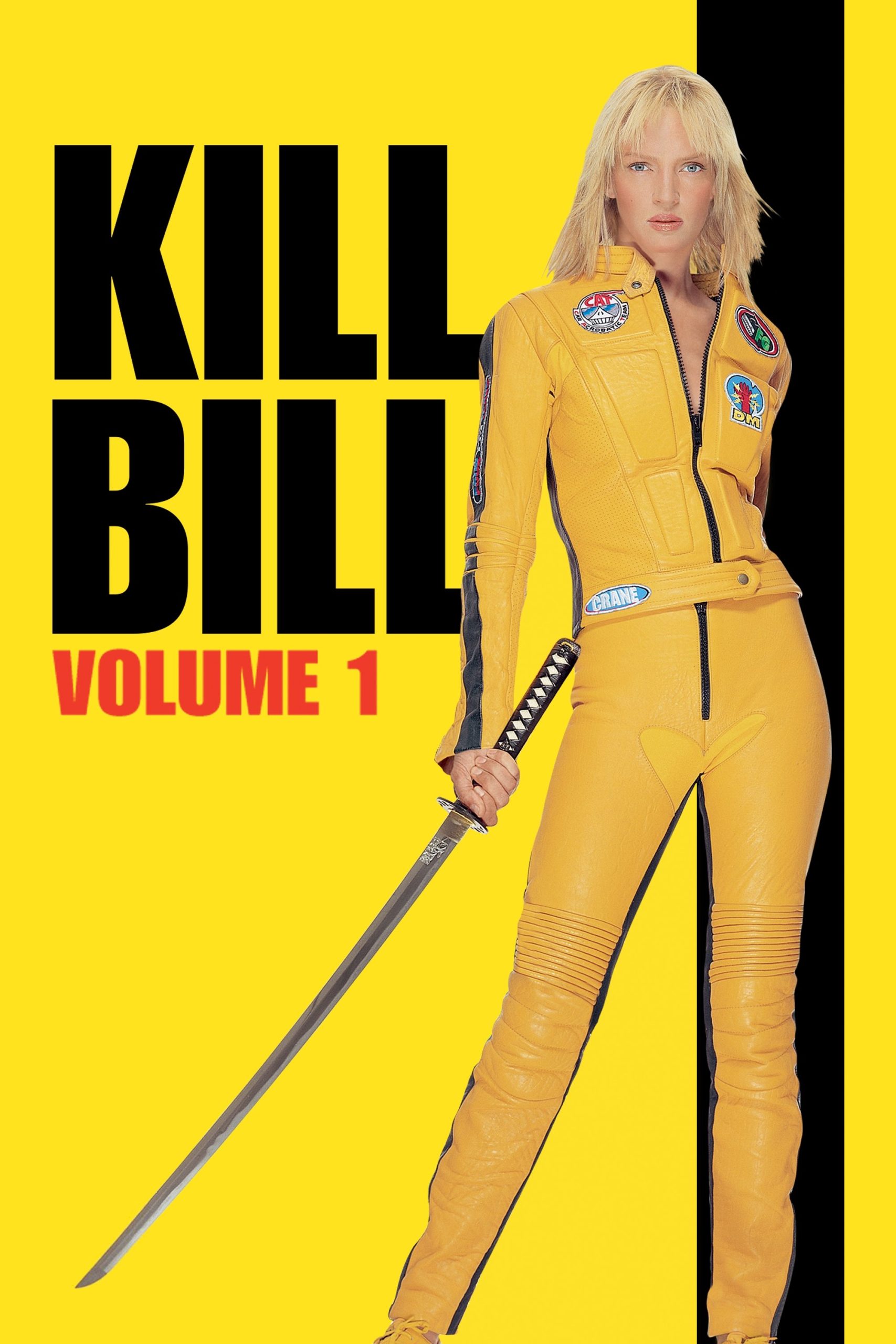
Film Movement Context
Whenever I return to Kill Bill: Vol. 1, I’m struck by how the film fuses so many cinematic traditions that to tether it to just one movement feels limiting. Yet, if I had to anchor it to a larger context, I see it most intently as a work lodged in the postmodern cinema movement—specifically a postmodern pastiche that is deeply intertwined with exploitation cinema, martial arts films, and the spaghetti western tradition. For me, Tarantino’s visual and tonal language is a collage, an active assemblage of sly references and stylized quotations, where homage is never just decorative but transactional—a dialogue with the whole history of genre cinema. Kill Bill: Vol. 1 isn’t just a film that nods to its ancestors; it’s one that reconstructs their DNA for a contemporary, self-aware filmgoing generation. I regard it as a distillery of genre—exploitation, samurai, kung fu, western—filtered through the lens of postmodern pastiche, where the line between sincerity and ironized tribute always blurs.
Historical Origins of the Movement
When I think about postmodernism in cinema, I always recall how the late twentieth century brought an erosion of the old boundaries that had once contained and defined genres. Directors from the 1960s onwards began to question classical Hollywood’s narrative orthodoxies, culminating in a new breed of filmmakers who mixed symbols, borrowed motifs liberally, and wove meta-commentary into the narrative texture of their films. Postmodern cinema, for me, emerged as both an act of rebellion and affection. It built itself on juxtaposition, contradiction, and the persistent recycling of earlier filmic languages, but it didn’t do so to mock what came before. Instead, it opened up the past, inviting viewers to participate in a new, referential cine-literacy where understanding the threadwork of homage and citation became part of the pleasure.
This movement arose in tandem with the global spread of popular and cult cinema from different regions. When Hong Kong martial arts cinema, Japanese samurai epics, and Italian westerns flooded American and European screens and video stores from the 1970s forward, I noticed that a new cinematic fluency started to flourish among filmmakers who grew up on these imports. The old monocultural hierarchy of American film was slipping. This enabled directors like Quentin Tarantino to embrace non-linear storytelling, excessive stylization, and deliberate, self-conscious genre splicing. Postmodernism in film was about recontextualization: the creation of worlds as much built from the memory of old movies as from any real historical or social referents.
This Film’s Contribution to the Movement
Whenever I watch Kill Bill: Vol. 1, I see Tarantino constructing a cinematic labyrinth—a glossy, gory puzzle box built from the tropes and iconography of twentieth-century genre fare. What I find so exhilarating is how he doesn’t just paint in broad strokes; he borrows with purpose. To some, the movie might seem like an exuberant, hyper-literate mixtape, but to me, it is a manifesto on the vitality of filmed violence when stylized to the point of abstraction. Tarantino’s synthesis is not a cynical exercise. I catch an almost romantic reverence in the way he films katana duels, choreographs geysers of blood as balletic spectacle, and delivers dialogue that gleefully cribs from both Shaw Brothers films and Sergio Leone westerns.
But it is not only about what he references—it’s about how these references function. The stylization is so extreme it forges a new emotional grammar: action beats play not for realism, but as pop-operatic expressions of grief, vengeance, and catharsis. In my view, Kill Bill: Vol. 1 wields postmodern technique as an act of creation rather than reduction. Every extended set piece—the animated interlude depicting O-Ren Ishii’s origin, the monochrome massacre at the House of Blue Leaves—demonstrates how Tarantino metabolizes exploitative extremes into spectacles of mythic suffering and endurance. This is more than a detached game of spot-the-reference; it is a film where meaning arises from the method of quotation itself.
The movie never lets me settle into a passive spectatorship. The constant oscillation between solemnity and camp, between cherry blossoms and arterial spray, forces an active engagement with the cinematic surface. To me, Tarantino foregrounds the artificiality of violence so explicitly that I am invited not just to be shocked or thrilled, but to reflect on the act of spectating itself. It is this interplay between nostalgic immersion and critical distance that makes Kill Bill: Vol. 1 a postmodern text par excellence. As a result, the film extends the parameters of genre, warping and rewriting conventions for an audience fluent in cinematic syntax.
Influence on Later Genres and Films
- Influence 1 – Re-centering Female Protagonists in Action Cinema – What electrifies me most about Tarantino’s approach in Kill Bill: Vol. 1 is his radical recentering of the female avenger. While exploitation genres have exploited women as surfaces for violence, Tarantino inverts the dynamic, allowing The Bride to embody both vengeance and vulnerability within a universe that continuously acknowledges—and then subverts—its own sexist underpinnings. I see echoes of this approach in later works like Atomic Blonde and John Wick—films where the emotional register of violence is encrypted in the protagonist’s body, and narrative agency is complicated by the intertextual past. It’s impossible for me not to notice the way subsequent genre films pursue female-driven narratives with a self-aware edge, as if consciously tracing lines back to The Bride’s yellow tracksuit and cold resolve.
- Influence 2 – Weaponizing Genre Hybridity in 21st Century Blockbusters – For me, Kill Bill: Vol. 1 staked out new territory in the art of genre hybridization, and its legacy is inscribed in everything from the visual exuberance of Scott Pilgrim vs. the World to the maximalist tone of Marvel’s Deadpool. Each of these successors seems to grapple with Tarantino’s lesson: to maximize impact, embrace the pleasure of metatextual play, merge comic-book sensibilities with tactile, analog violence, and never apologize for stylization. It’s a movement away from rigid genre borders toward a more liquid, remix-friendly modality where text and subtext dance in tandem. The doors opened by Tarantino’s hyperconscious “remix” aesthetic have become a blueprint for visually and tonally eclectic cinema that’s both referential and self-generating.
- Influence 3 – Elevating Visual Excess and Cartoon Violence – When I watch movies like Kick-Ass or even the manga-influenced animation of anime crossovers, I sense that they draw from the precedent Tarantino set for embracing visual excess with joyous abandon. Where violence in mainstream action films historically aspired to a certain grit or intensity, here it goes operatic—grand, balletic, absurd. In Tarantino’s hands, violence becomes both spectacle and satire. This has emboldened subsequent filmmakers to push their own aesthetics further, treating action choreography and vibrant bloodletting as opportunities for creative statement and audience catharsis. The films that followed do not merely imitate Tarantino’s formal extremes—they treat the acceptance of excess as a badge of honor and an invitation to renegotiate the line between entertainment and provocation.
The Movement’s Lasting Impact
I find myself consistently drawn back to the postmodern mode of filmmaking, not only for its technical flourishes or canny wit, but for the way it invites me to be both a cinephile and a critic in the moment of watching. The movement matters because it insists that film history is not a museum but a marketplace—a riot of ideas to be sampled, combined, and repurposed endlessly. Tarantino’s work in Kill Bill: Vol. 1 crystallizes this idea by reminding me that engagement with cinema’s past is not mere nostalgia; it is a radical method of survival, reinvention, and ongoing dialogue between makers and viewers. There’s a distinct exhilaration in watching filmmakers like Tarantino refuse to downplay their obsession with the medium’s artifacts and oddities, transforming them instead into engines of new meaning. Postmodern cinema, to my mind, remains relevant because it actualizes a form of literacy, a participatory game, where every image, every frame, is threaded into a wider fabric that I—a viewer and analyst both—help to complete.
To connect style and technique with broader context, you may find these perspectives useful.
🎬 Check out today's best-selling movies on Amazon!
View Deals on Amazon